
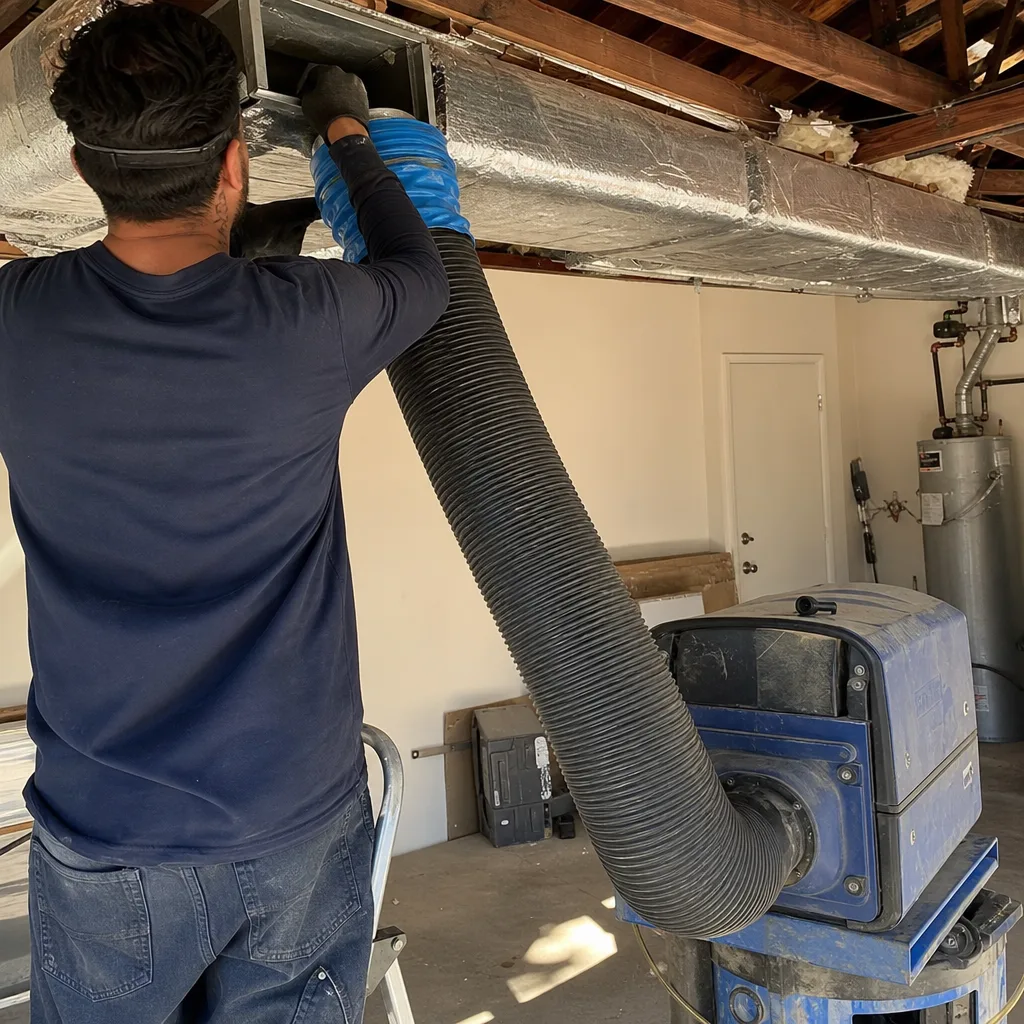
Last updated November 2, 2026
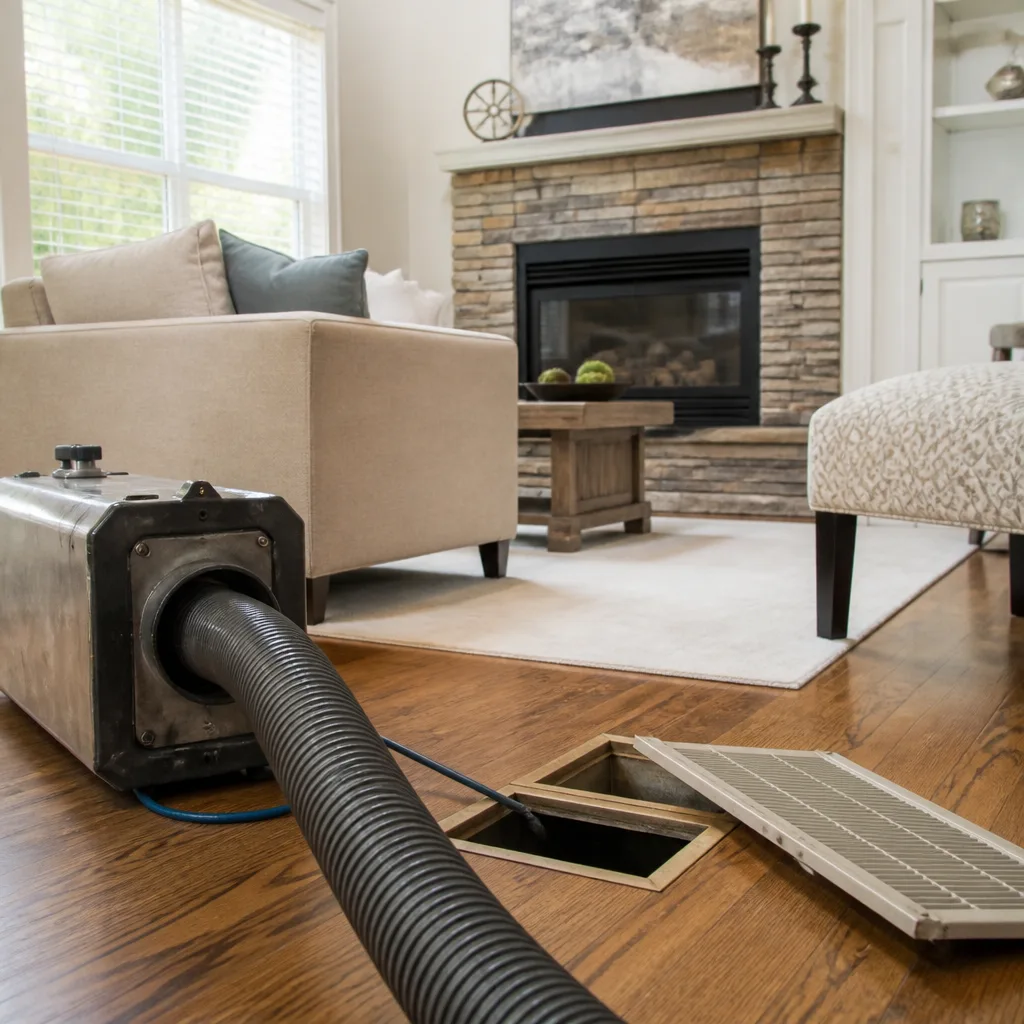 Whole-home duct cleaning
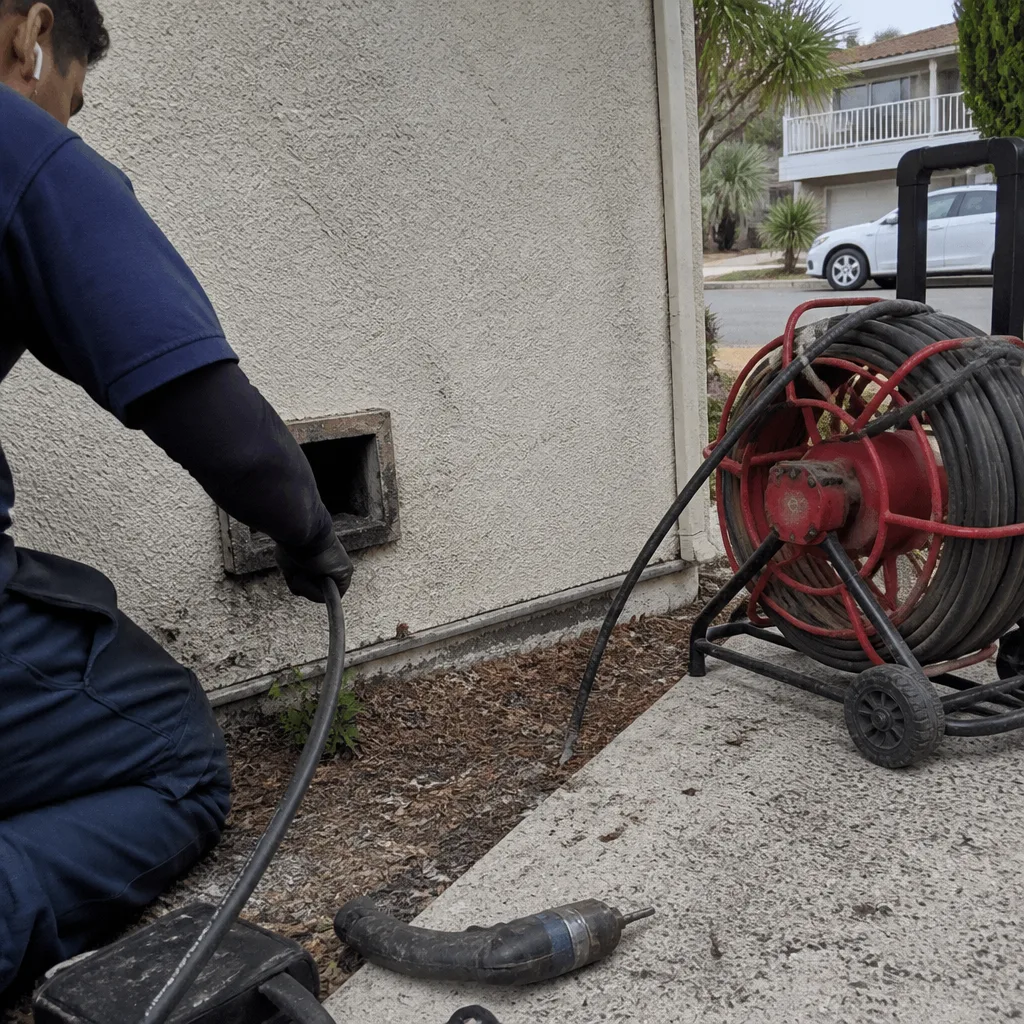
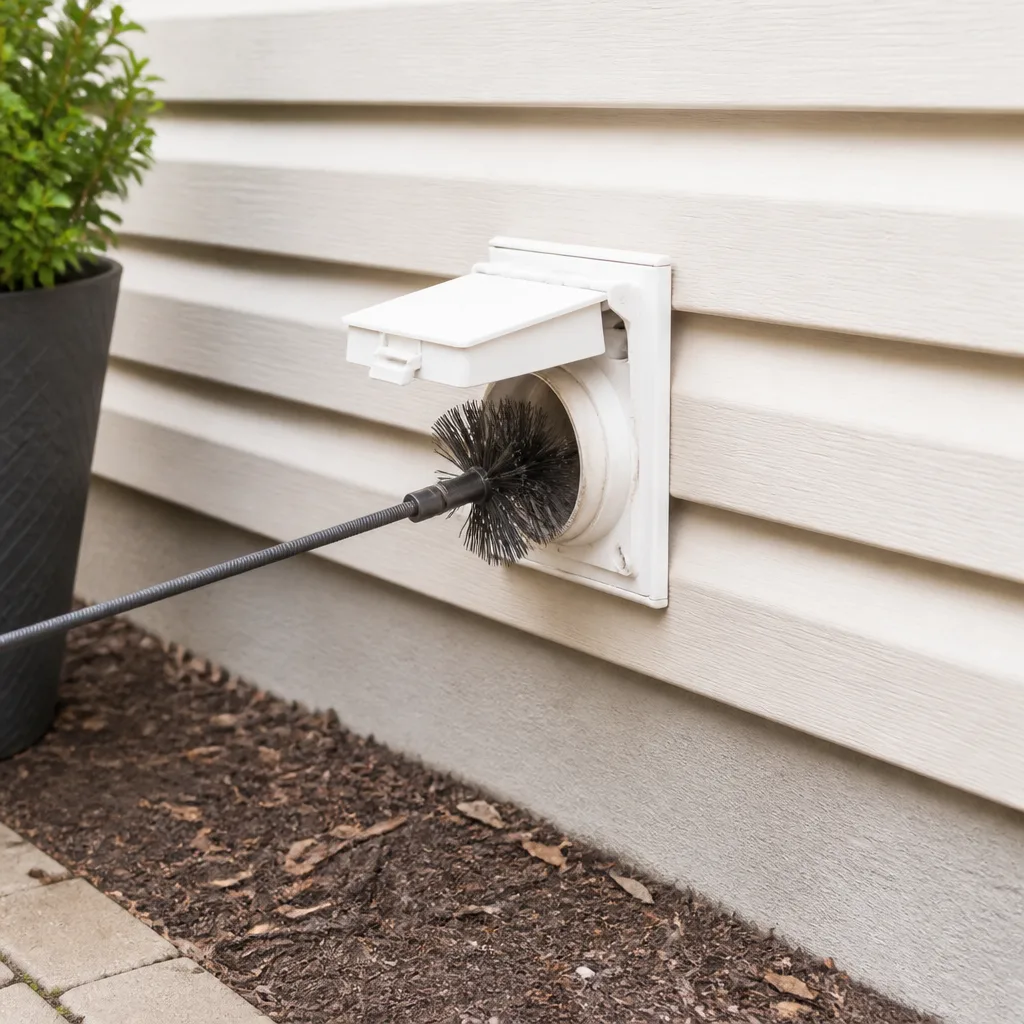 Dryer vent cleaning
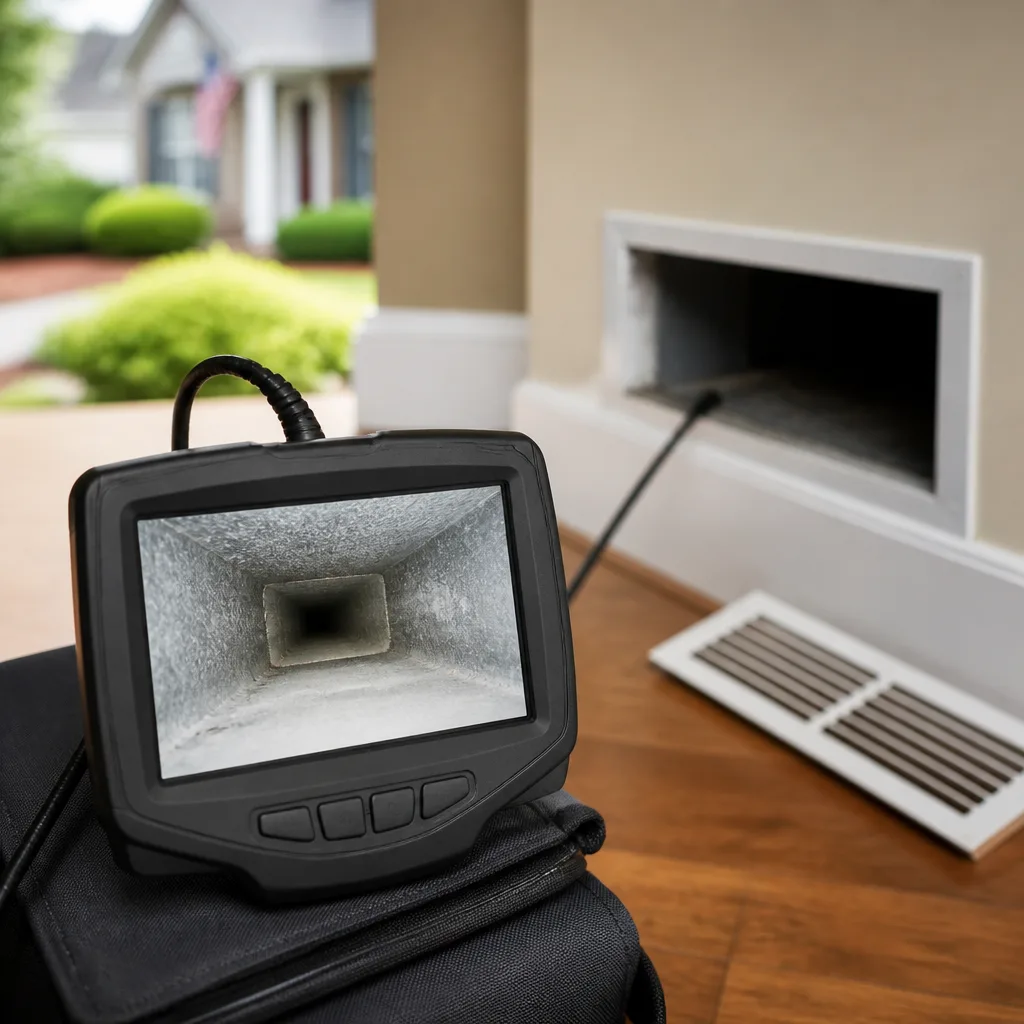 Camera inspection
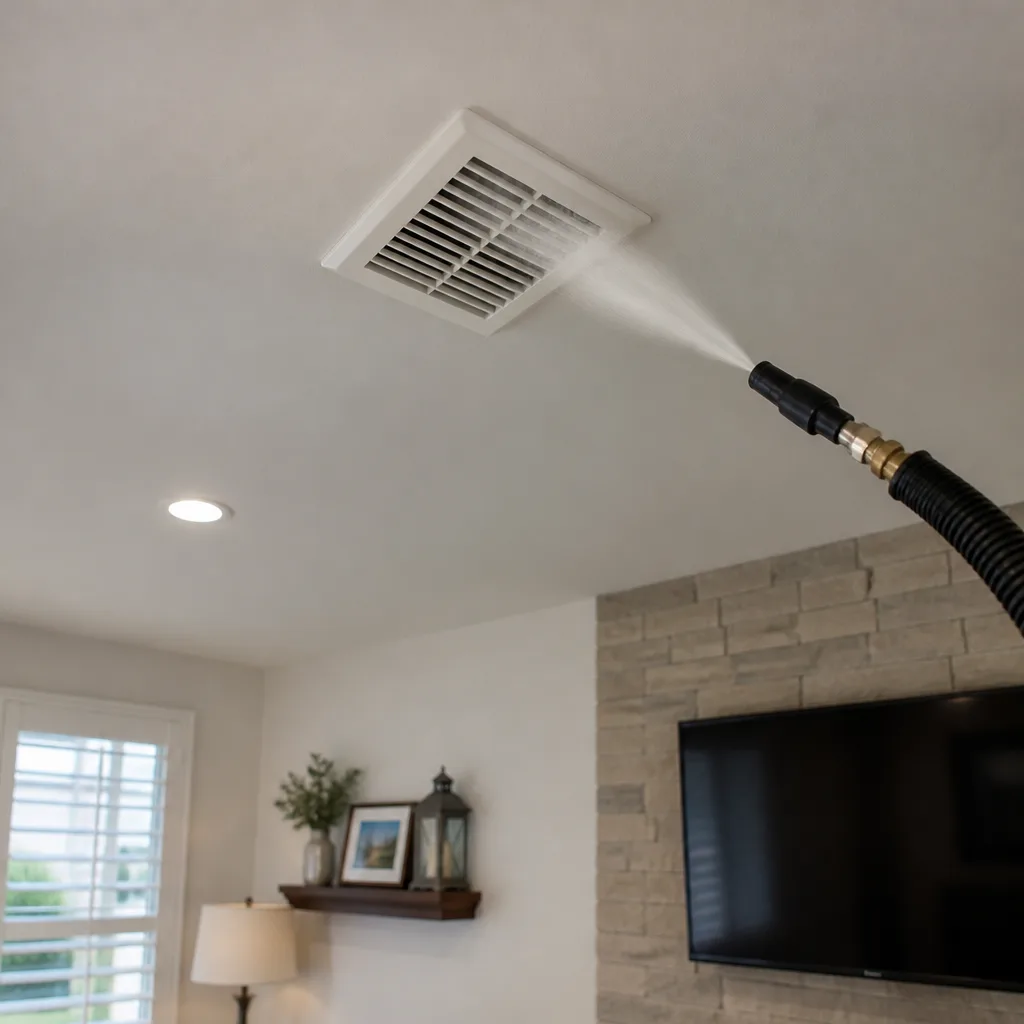 Sanitizing & deodorizing
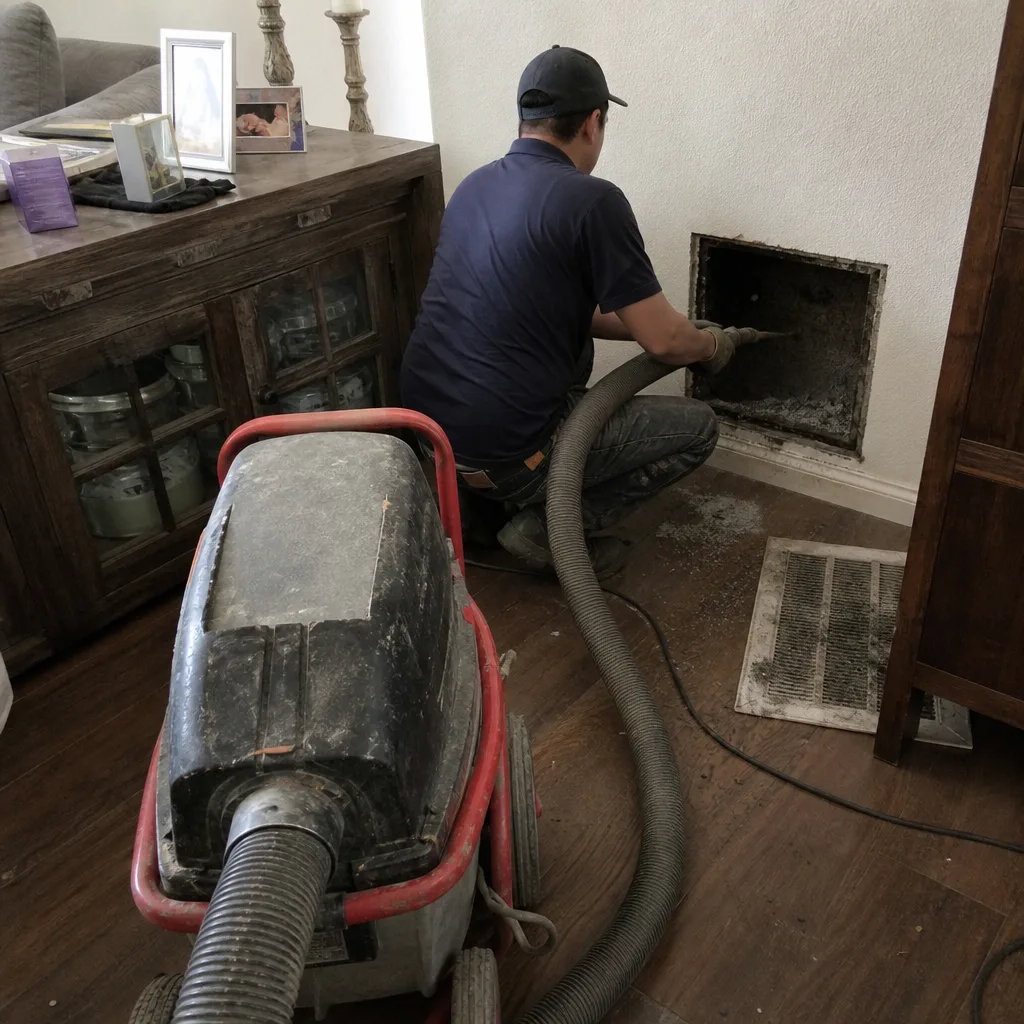
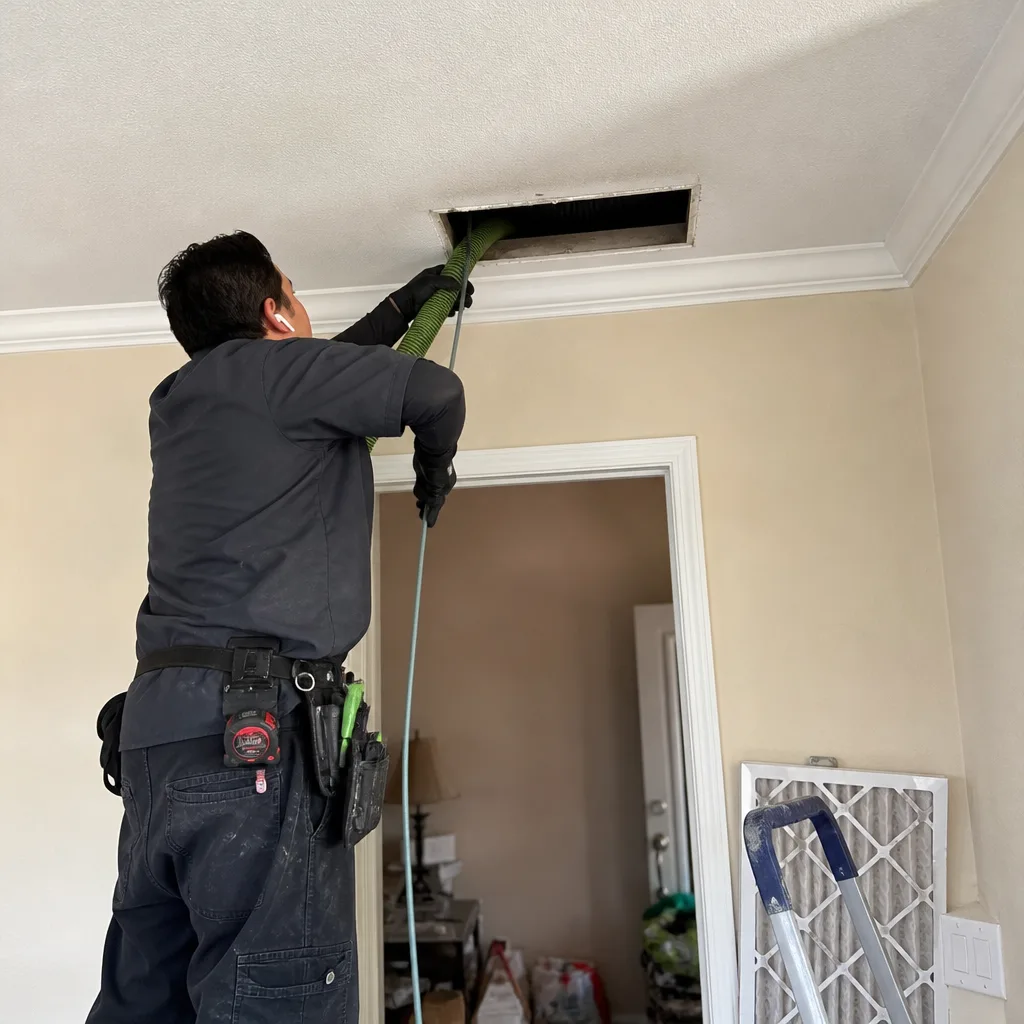
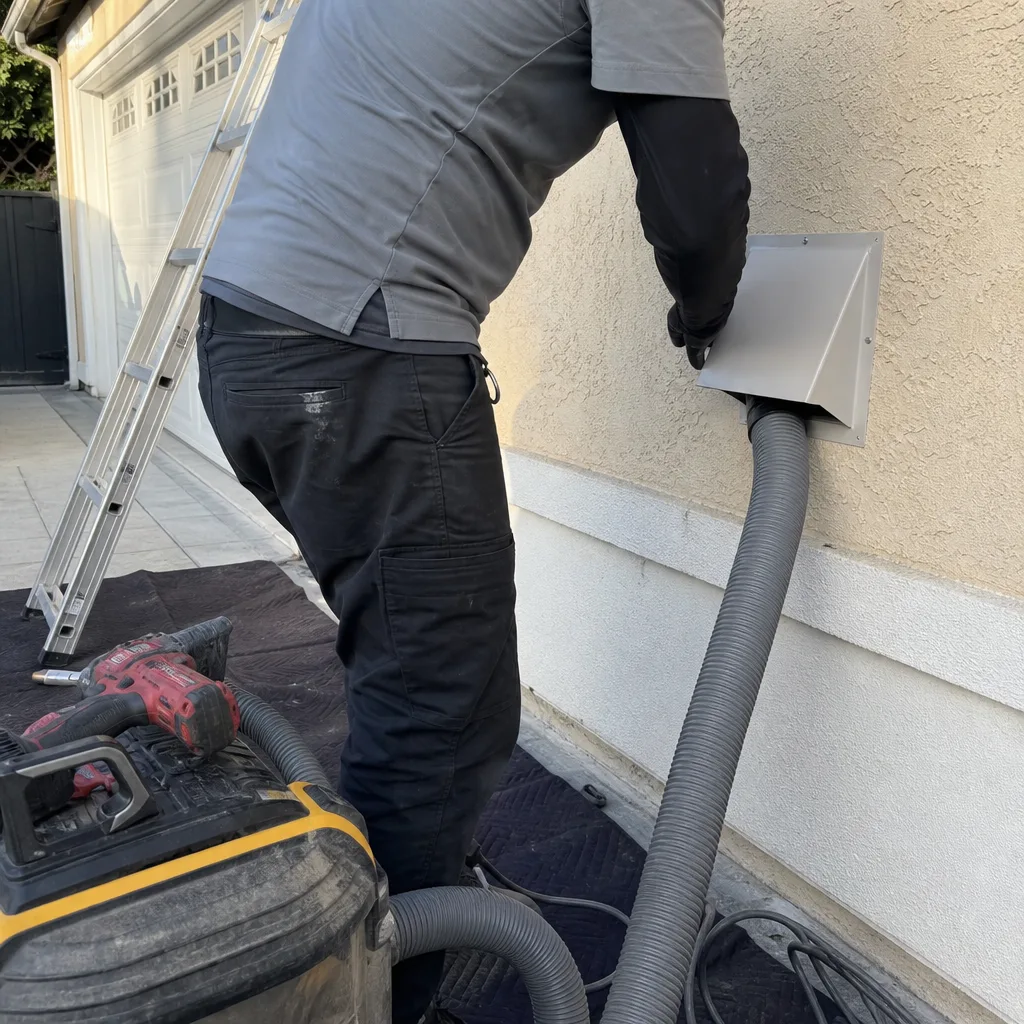
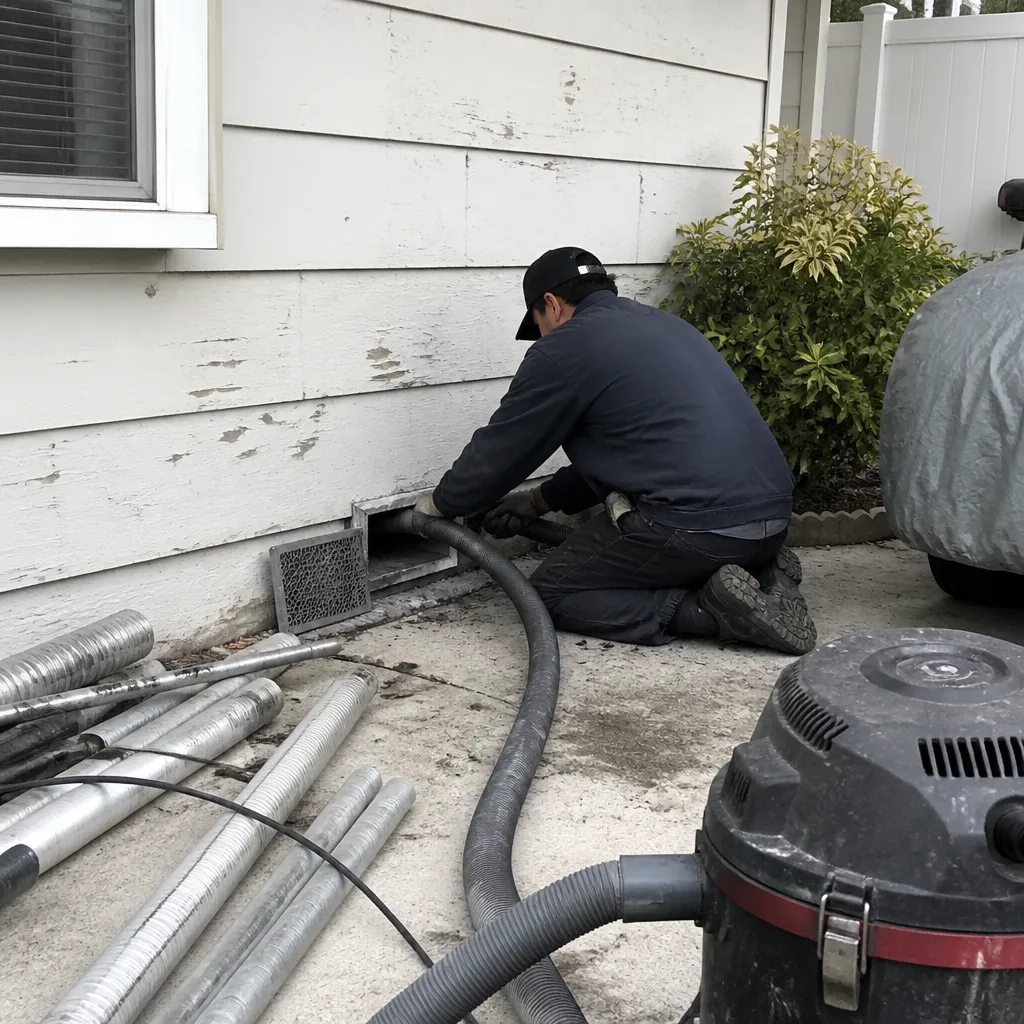
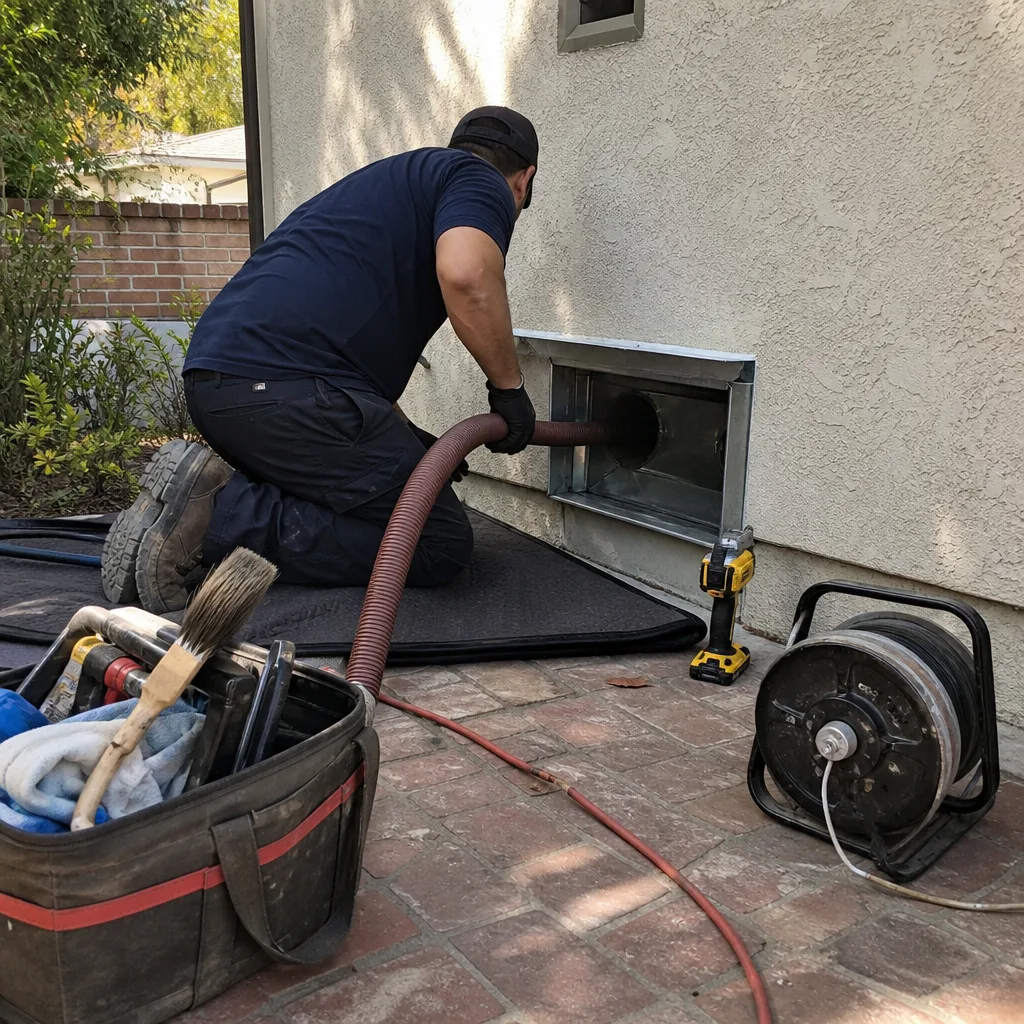
Whole-system duct and dryer vent check with before-and-after photos - you see exactly what came out of your vents
That "$99 whole-house special" is a bait ad - the real number appears once they are in your hallway, or the "clean" is a shop-vac at the register. We photograph the inside of your ducts before and after instead.
Air Duct Cleaning Permits, Codes & Inspections in CA: What You Need to Know
Here is a counterintuitive fact most Huntington Beach homeowners never see coming: the cleaning itself is almost always permit-free, but a ten-minute repair your technician performs after discovering a disconnected duct during that cleaning can trigger California’s Title 24 duct-leakage testing mandate. In other words, the legal exposure does not come from the brush and vacuum. It comes from the tape, mastic, and replacement flex-duct that often follow. This guide walks you through exactly where that line sits, what Huntington Beach code enforcement actually looks for, and how to keep a routine Air Duct Cleaning services visit from becoming a title-transfer problem at resale. We will cover state mechanical code, local amendments, Title 24 energy requirements, inspection sequences, and the insurance gaps no one mentions until a home sale falls apart.
Styles & brands we work with
- Whole-home duct cleaning
- Dryer vent cleaning
- Camera inspection
- Sanitizing & deodorizing
Quick Answer
Air duct cleaning in California requires no permit from any city, county, or state agency, including Huntington Beach. A permit becomes necessary only when the work crosses into repair, replacement, or sealing of ductwork, at which point California Mechanical Code sections and Title 24 energy standards may require a licensed contractor, a permit, and a duct-leakage test. If your project is cleaning-only, you are clear. If it involves fixing damaged ducts, see our Air Duct Cleaning Troubleshooting: Common Problems and How to Fix Them and ask questions before the work begins.
Table of Contents
- Air Duct Cleaning vs. Air Duct Repair: Where the Permit Line Sits
- When a Permit Is Actually Required in California
- Title 24 and Duct-Leakage Testing: The Requirement Nobody Mentions
- Huntington Beach Building & Safety: How HVAC-Adjacent Permits Work Locally
- The Insurance and Liability Gap When Duct Repair Goes Unpermitted
- 7 Questions to Ask Any Contractor Before Repair Work Beyond Cleaning
- Real Costs of Duct-Leakage Testing, Permits, and Inspections in Orange County
- Common Mistakes to Avoid
- When to Call a Professional
- Frequently Asked Questions
- The Bottom Line
Air Duct Cleaning vs. Air Duct Repair: Where the Permit Line Sits
California treats these two activities as legally distinct, and the difference matters more than most people think. Air duct cleaning is defined as the mechanical agitation and negative-pressure extraction of accumulated particulate from the interior surfaces of existing ductwork. No structural change occurs. No component is added, removed, or altered. Because nothing is modified, no California jurisdiction requires a permit. Not the state. Not Orange County. Not Huntington Beach.
Air duct repair is different. When a technician disconnects, reconnects, replaces, patches, or reseals any portion of your duct system, the work now falls under the California Mechanical Code (CMC), specifically the sections governing duct construction, support, and sealing. The CMC is adopted by reference into Huntington Beach Municipal Code, which means local inspectors enforce it. A collapsed flex-duct replacement in a Huntington Beach attic is not “cleaning plus a quick fix.” It is repair work, and the CMC has opinions about how it gets done.
Here is the practical distinction in plain language:
- Cleaning-only work: Rotary brush agitation, HEPA vacuum extraction, access hole creation and resealing for tool entry. No permit.
- Minor accessory work: Reattaching a loose register, tightening a hanging strap, replacing a filter. No permit in most interpretations.
- Repair work requiring a permit: Replacing any duct section, installing new duct board or flex duct, re-sealing joints with mastic, re-insulating duct runs, or altering the system’s airflow design.
In our experience serving Huntington Beach homes from Downtown to Seacliff, most cleaning jobs do uncover something: a separated boot, a torn flex run, a crushed return. The question is not whether these things exist. The question is what happens after they are found, and whether anyone asks about permits before the fix.
When a Permit Is Actually Required in California
The California Mechanical Code is specific but not always intuitive. Section 106 of the CMC, along with the adopted administrative code, requires a mechanical permit for the installation, alteration, or repair of duct systems when the work involves more than a like-for-like component swap of negligible scope. In practice, Orange County building officials interpret this as follows:
Work that generally requires a mechanical permit:
- Replacing more than a short section of damaged flex duct (the threshold varies, but any change to system layout or material triggers it)
- Installing new supply or return duct runs, even short ones
- Moving a register or diffuser to a new location
- Sealing large sections of ductwork with mastic as a repair method
- Any work that reroutes airflow or changes static pressure in a material way
- Replacing a furnace or air handler that connects to the duct system
Work that typically does not require a permit:
- Cleaning the interior of existing ducts with brushes, compressed air, or negative-pressure vacuums
- Replacing a filter, grille, or register cover with a like-for-like part
- Tightening existing hangers or supports
- Patching a small access hole created for cleaning, provided the patch is properly sealed
- Dryer vent cleaning, which is governed by separate mechanical code provisions regarding the vent’s length and termination, not the cleaning itself
Let’s be direct about what this means in a real Huntington Beach attic. You hire a company to clean your ducts. The technician finds a six-foot run of flex duct chewed through by rodents, or crushed by someone storing holiday boxes on top of it. The technician says, “I can replace that today.” That replacement is where the permit question lives. If the company does it without a permit, the work may be perfectly competent. It may also be completely unpermitted, and that distinction will matter later at resale.
Title 24 and Duct-Leakage Testing: The Requirement Nobody Mentions
California’s Title 24, Part 6, is the state’s energy efficiency code. It applies to residential buildings and includes specific requirements for duct systems. Here is the part most homeowners and even some contractors miss: when duct replacement or substantial repair work is done, Title 24 typically requires a duct-leakage test to verify that the system meets leakage standards.
- When the trigger fires: Title 24 duct-leakage requirements apply to new duct installations and to alterations that replace a significant portion of an existing duct system. A single six-foot flex-duct replacement may or may not be considered substantial, but Orange County enforcement practice tends to include any duct replacement or new duct installation in the testing requirement.
- What the test measures: A contractor seals all registers and uses a calibrated fan to pressurize the duct system to 25 pascals of pressure. The test measures how much air leaks out, expressed in cubic feet per minute (CFM). The standard residential threshold is typically 6% of system airflow or less, depending on whether the air handler and ducts are inside or outside the conditioned envelope.
- What it costs in Orange County: A certified duct-leakage test in Huntington Beach typically runs $250 to $500 as a standalone service, though many contractors bundle it with the permit and inspection process. The test requires a HERS rater or a certified Title 24 energy consultant to conduct and document it.
- What happens if the test fails: The contractor must find and seal leaks, then retest. This is not optional. A failed test with no retest leaves the permit open, which creates the exact title-transfer problem described in the next section.
In Huntington Beach specifically, the coastal humidity and salt air accelerate the breakdown of duct mastic and tape compared to inland cities. We routinely see older homes in the 92646 and 92647 ZIP codes, and in tracts off Edwards Street and Magnolia Street, where duct joints sealed 20 years ago have cracked enough to fail a leakage test by a wide margin. A clean-and-repair scenario on one of those homes is precisely when Title 24 stops being theoretical and becomes a line item on the invoice, as detailed in our Air Duct Cleaning Warning Signs: A Huntington Beach Homeowner’s Reference Guide.
Huntington Beach Building & Safety: How HVAC-Adjacent Permits Work Locally
Huntington Beach is its own building department. It does not use Orange County’s permit counter. That matters because local practice, turnaround times, and enforcement focus differ from neighboring cities like Fountain Valley or Westminster. The Huntington Beach Building & Safety Division, located at City Hall on Main Street, processes mechanical permits through a counter or online submission process.
What we know from working in this city:
- Permit valuation: Huntington Beach calculates permit fees based on the valuation of the work, not a flat fee. A small duct-repair permit might run $90 to $180 in permit fees, but the valuation method means prices vary by project.
- Turnaround: Simple mechanical permits for duct repair are often issued same-day or within 48 hours when plans are not required. More complex work involving new duct systems or air handler replacement may require plan review, which adds a week or two.
- Inspections: Huntington Beach requires a rough inspection before ducts are covered or concealed, and a final inspection after the system is operational. The duct-leakage test must be documented and available at final inspection.
- Climate factors: Huntington Beach is in Climate Zone 8 under California’s building climate zone map, which affects insulation requirements on new duct runs. If you replace a section of attic duct, the new material must meet the R-value required for Zone 8.
One nuance worth knowing: Huntington Beach, like many California coastal cities, has a significant number of homes built before 1980. Many of these systems have never been tested. When a repair triggers Title 24 for the first time, the test sometimes reveals problems far beyond the original repair scope. That is not the inspector being difficult. That is the code working as written.
The Insurance and Liability Gap When Duct Repair Goes Unpermitted
Here is the scenario we see repeatedly in Huntington Beach, particularly in the older neighborhoods near the beach: a homeowner sells a house. The buyer hires a home inspector. The inspector looks at the HVAC system, checks the city’s permit records, and finds that duct work was replaced or repaired in 2019 or 2022 with no permit on file. Now the sale is conditional on resolving that discrepancy, and the resolution is rarely cheap.
What happens in practice:
- The buyer’s inspector flags the work. Unpermitted duct replacement is visible to a trained inspector: new flex duct mixed with old, fresh mastic, different insulation thicknesses, or a system layout that does not match the home’s original plans.
- The seller must either: (a) pull a retroactive permit, which requires exposing the work, scheduling an inspection, and likely conducting a duct-leakage test, or (b) credit the buyer to indemnify them against future enforcement. Option (a) is often costlier than the original repair.
- Insurance enters the picture. If a homeowner files a claim related to the duct system – say, a water leak from a disconnected condensate pan, or a fire originating near the air handler – the insurer may investigate whether the duct work was permitted. Work done without a permit and without a licensed contractor can give the insurer a coverage defense in some cases. That is not a universal outcome, but it happens enough that Orange County real estate attorneys advise sellers to disclose unpermitted work rather than hide it.
This is precisely why our air duct repair process in Huntington Beach treats permit determination as part of the job, not an afterthought. If a repair we identify requires a permit, we say so before any work proceeds. The homeowner deserves to make an informed decision, not inherit a liability they did not know they were creating.
7 Questions to Ask Any Contractor Before Repair Work Beyond Cleaning
If your duct cleaning uncovers damage that needs repair, you are now in permit territory. Here are the seven questions that separate a contractor who operates within California code from one who does not:
- “Does this specific repair require a mechanical permit under the California Mechanical Code?” A contractor who answers with a flat “no” without explaining why should be a red flag. Some repairs genuinely do not require a permit, but the contractor should be able to articulate the reason.
- “Will a Title 24 duct-leakage test be required for this work?” If the answer is yes, ask who will perform the test and whether the cost is included in the quote. If the answer is “Title 24 doesn’t apply to repairs,” get that in writing, because Orange County enforcement practice often disagrees.
- “Are you licensed for duct repair, or only for cleaning?” A C-20 warm-air heating, ventilating, and air-conditioning contractor license is what matters for repair work. A cleaning-only company may not hold this license, which means any repair they perform is unlicensed as well as unpermitted.
- “Will you pull the permit, or do I need to?” A licensed contractor pulling the permit means the work is documented, inspected, and the inspector’s names are on the record. An owner-builder permit puts the liability on you, and is not appropriate for HVAC work of this kind.
- “What is the R-value of the replacement duct material you are using?” Huntington Beach is in Climate Zone 8, which sets minimum insulation requirements. A contractor who cannot answer this question is not familiar with local energy code.
- “How will you document the post-repair duct-leakage test?” You want a copy of the results for your records and for any future resale disclosure. If the answer is vague, ask for the proposed timeline and the certifier’s HERS rater number.
- “What happens during the permit inspection, and will you be present?” The contractor should be on-site for the inspection, with the work accessible. If they plan to have you meet the inspector alone, reconsider.
Real Costs of Duct-Leakage Testing, Permits, and Inspections in Orange County
Let’s put numbers on the table, because vague advice does not help anyone budget. These are current Orange County ranges as of early 2026, and they reflect what Huntington Beach homeowners should expect when a repair beyond cleaning triggers compliance work:
| Item | Typical Range | Notes |
|---|---|---|
| Duct-leakage test (HERS rater) | $250 – $500 | Standalone cost; often bundled with permit work |
| Mechanical permit fee (small repair) | $90 – $180 | Based on work valuation at Huntington Beach Building & Safety |
| Plan review (if required) | $100 – $300 | Only for larger duct replacement projects |
| Inspection (rough or final) | Included in permit fee | Huntington Beach bundles inspection into the permit |
| Duct sealing labor (if test fails) | $400 – $1,500 | Depends on leakage severity and duct accessibility |
| Flex-duct replacement (per section) | $150 – $400 | Includes material, labor, and Code Zone 8 insulation |
These numbers are ranges, not quotes. Specific pricing depends on your home’s layout, the age of the existing system, and how much of the ductwork is accessible from the attic versus the crawlspace. The point is not to scare anyone away from necessary repairs. The point is that doing repair work with permits costs more up front but costs less than an unpermitted-work title problem later. In our experience with Huntington Beach homes, the retroactive permitting process after a failed sale inspection is routinely two to three times the cost of doing it right the first time.
Common Mistakes to Avoid
We see the same mistakes repeated in Huntington Beach and across Orange County. Here are the ones that cost homeowners real money and delay real closings:
- Assuming a cleaning company is licensed to repair. Air duct cleaning requires no contractor license in California. Duct repair does. A company that cleans and then offers to “fix that loose connection” may be operating beyond its legal scope. Verify the C-20 license before any repair work is authorized.
- Accepting a verbal assurance that “no permit is needed.” Get it in writing. If the contractor is wrong, the written statement becomes evidence in any future dispute or resale negotiation. If they refuse to put it in writing, that is an answer in itself.
- Doing significant duct repair as a DIY project. California allows homeowners to pull owner-builder permits, but doing so for duct work connected to a gas-fired furnace creates safety questions an inspector will scrutinize. Duct work in contact with combustion appliances is not a beginner project.
- Ignoring Title 24 until the home inspection. By the time a buyer’s inspector is testing duct leakage and checking permit records, your timeline and leverage are gone. A proactive test now, during a cleaning visit, costs a few hundred dollars. The same test done under sale-pressure costs more and can cost the deal.
- Assuming older Huntington Beach homes are “grandfathered.” They are not. Any new duct work triggers current code, regardless of the home’s 1968 construction date. Grandfathering applies to existing systems, not to new modifications.
- Replacing flex duct with the cheapest available material. Climate Zone 8 insulation requirements exist because coastal humidity and temperature swings stress duct connections. The wrong R-value will fail inspection and may compromise system performance.
- Not requesting a post-repair leakage report. Even when a test passes, you want the documentation. Without it, a future buyer’s inspector has no evidence the work was compliant, and you are back in the liability gap described above.
When to Call a Professional
If your ducts have never been cleaned and you suspect damage, a professional assessment is the right first step. If a cleaning reveals a collapsed section, rodent damage, disconnected boots, or failing mastic seals, you need a contractor who can do both the cleaning and the repair under the correct permits. That is where single-source accountability matters. A cleaning-only company will tell you to call someone else. A repair-only company will not know what the system looked like before the damage. The same crew should see both.
In our experience, the homes in Huntington Beach that benefit most from a combined assessment are those built before 1985 in the tracts near Goldenwest Street, Adams Avenue, and the older beach-adjacent neighborhoods where salt air has been working on duct connections for four decades. If your system has never been evaluated for leakage and you are planning to sell within five years, a pre-sale compliance check is cheaper than a post-inspection scramble.
Platinum Air Duct Cleaning offers free estimates in Huntington Beach. If you need your ducts cleaned, assessed for damage, or have questions about whether a repair requires a permit, call us at (877) 824-2949. We are happy to explain what we find, what the code requires, and what it does not.
Frequently Asked Questions
No. Air duct cleaning is not a regulated or permit-required activity anywhere in California, including Huntington Beach. The permit question only arises when cleaning uncovers damage that requires repair, replacement, or sealing, at which point the California Mechanical Code and Title 24 may apply.
In most cases, yes. Replacing a section of flex duct is repair work, not cleaning, and falls under the California Mechanical Code. Huntington Beach Building & Safety typically requires a mechanical permit for duct replacement, and a Title 24 duct-leakage test may be required depending on the scope of the work. Call (877) 824-2949 for help determining whether your specific repair triggers the requirement.
A Title 24 duct-leakage test measures how much air leaks from a duct system when pressurized to a specified level. It is required under California’s energy code when new or substantially replaced duct systems are involved, and the results must be documented for the building inspection. The test typically costs $250 to $500 in Orange County.
Unpermitted duct repair can delay or derail a home sale in Huntington Beach. The buyer’s inspector may flag the work, and the seller must either pull a retroactive permit, expose the work for inspection, conduct a leakage test, or negotiate a credit. The retroactive process is often several times more expensive than permitting the work correctly in the first place.
Ask for their California contractor license number and verify it with the Contractors State License Board. Duct repair requires a C-20 warm-air heating, ventilating, and air-conditioning license. Request the number in writing before any repair is authorized.
Yes. When we identify duct damage during a cleaning in Huntington Beach, we determine whether the repair requires a permit and Title 24 testing. If it does, we manage the permit, the test, and the inspection as part of the repair process. Call (877) 824-2949 for a free estimate and an assessment of your system’s condition.
The Bottom Line
Air duct cleaning in California is permit-free, and that is the simple fact most homeowners start with. What matters is what happens next: the moment a cleaning reveals a cracked boot, a collapsed flex run, or a failed mastic seal, California code stops being background noise and becomes a line item on your permit history. Title 24 leakage testing exists for a reason, and Huntington Beach enforces it. The companies that handle this correctly are the ones that tell you the truth before the work starts, not after the inspector shows up. Do the cleaning, but when the repair question arises, ask the seven questions, get the answers in writing, and hire someone who does both cleaning and repair under one accountable roof. For more guides & resources, visit our blog. Your resale documents will thank you.
Written by the team at Platinum Air Duct Cleaning home, serving Huntington Beach since 2017.
See the difference
 Before
 After
 Before
 After
 Before
 After