
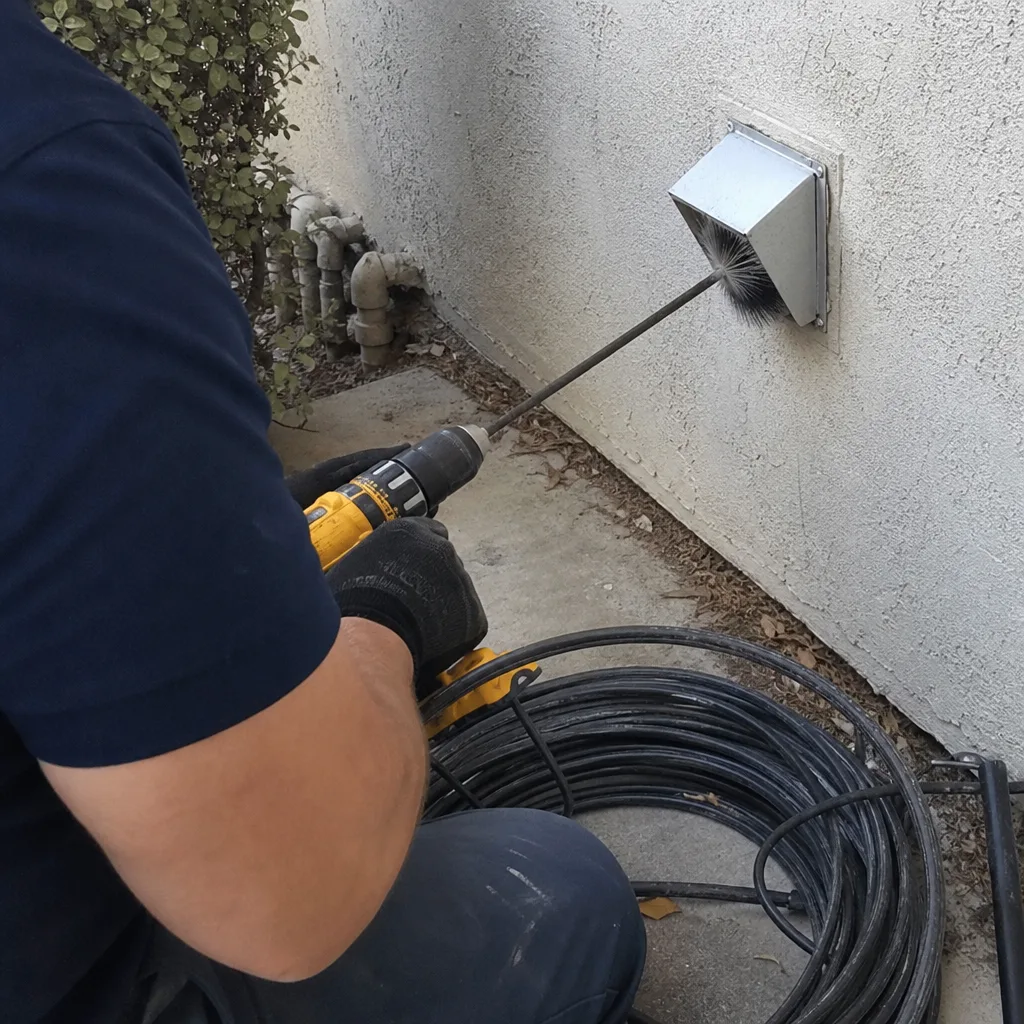
Last updated November 2, 2026
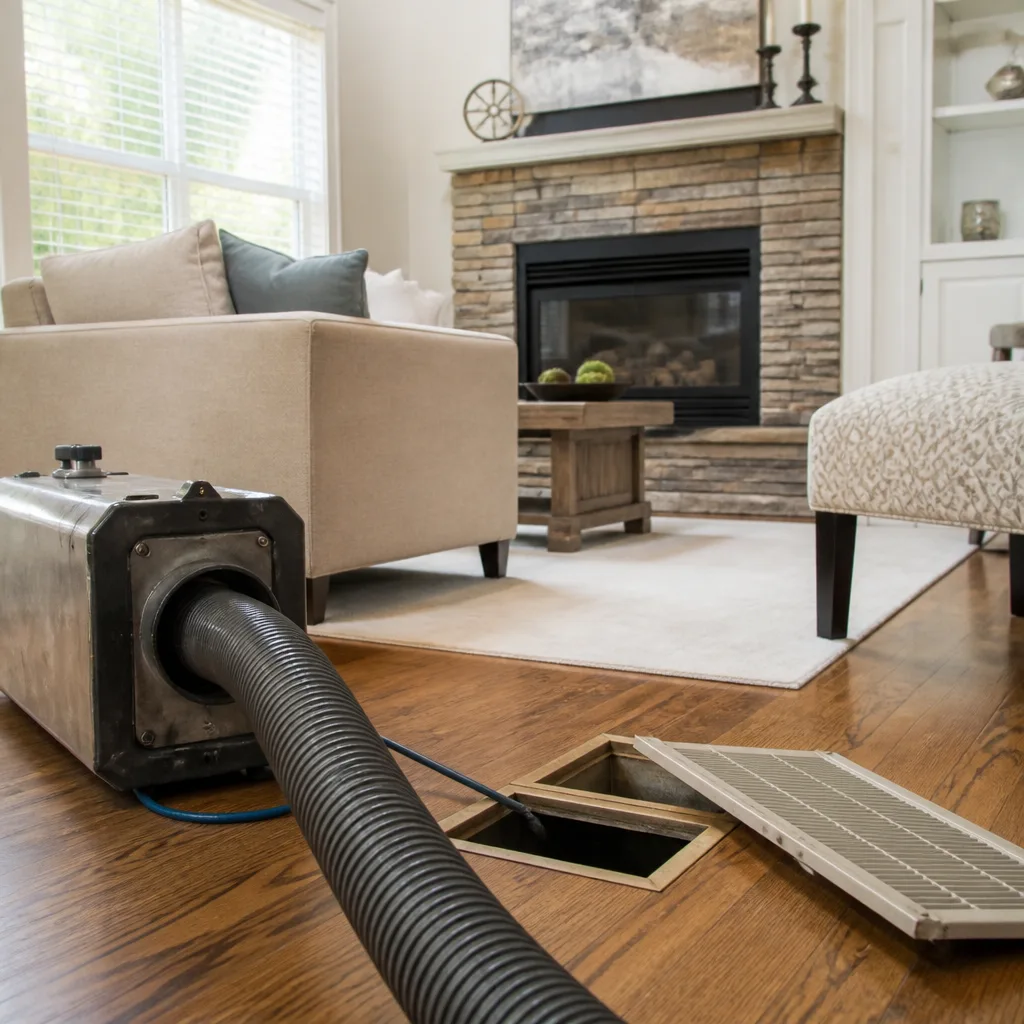 Whole-home duct cleaning
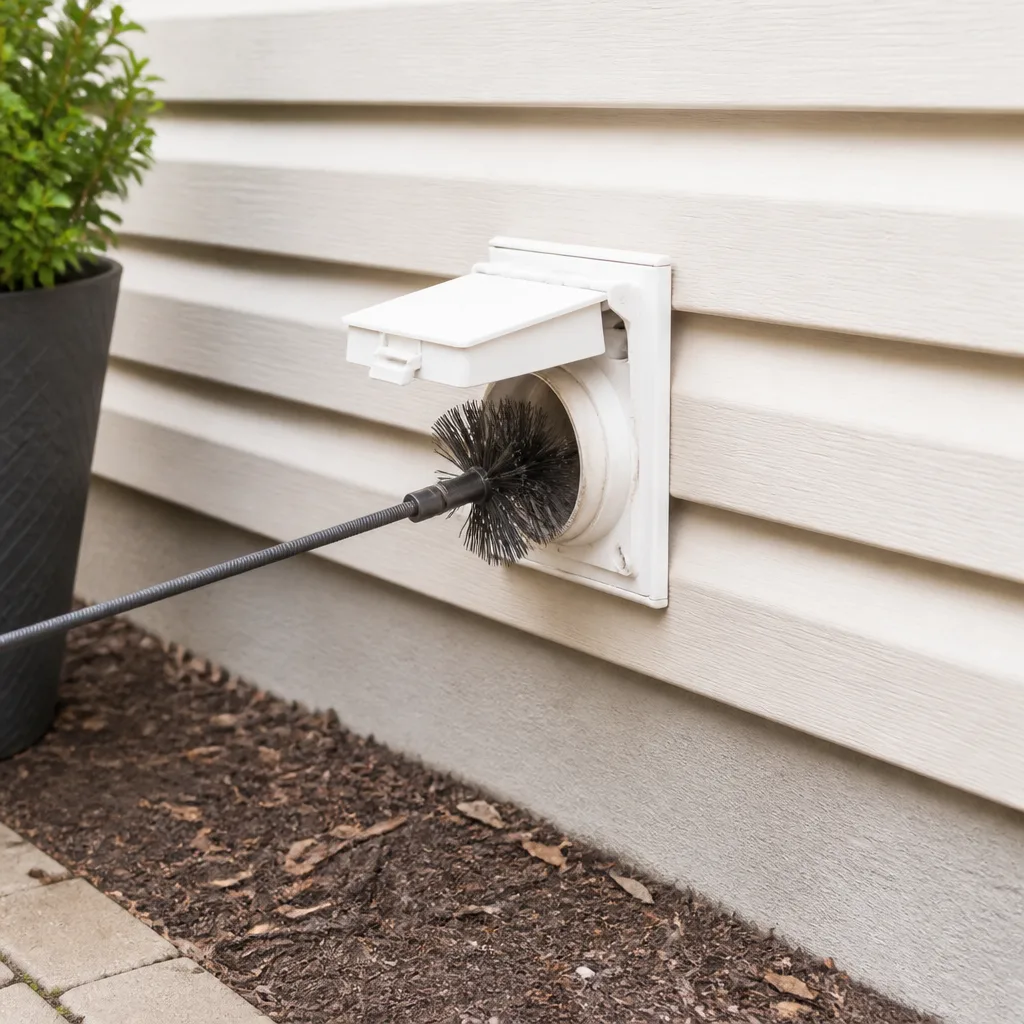 Dryer vent cleaning
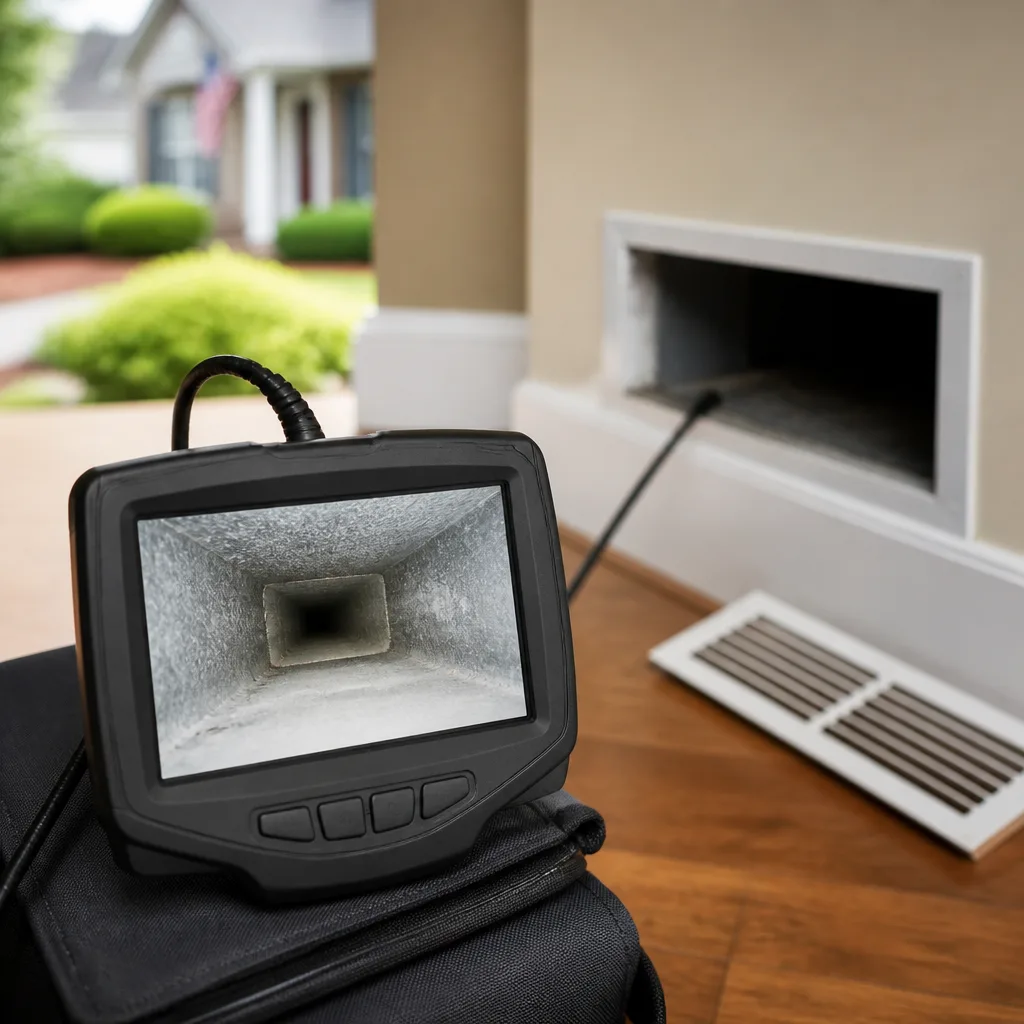 Camera inspection
 Sanitizing & deodorizing
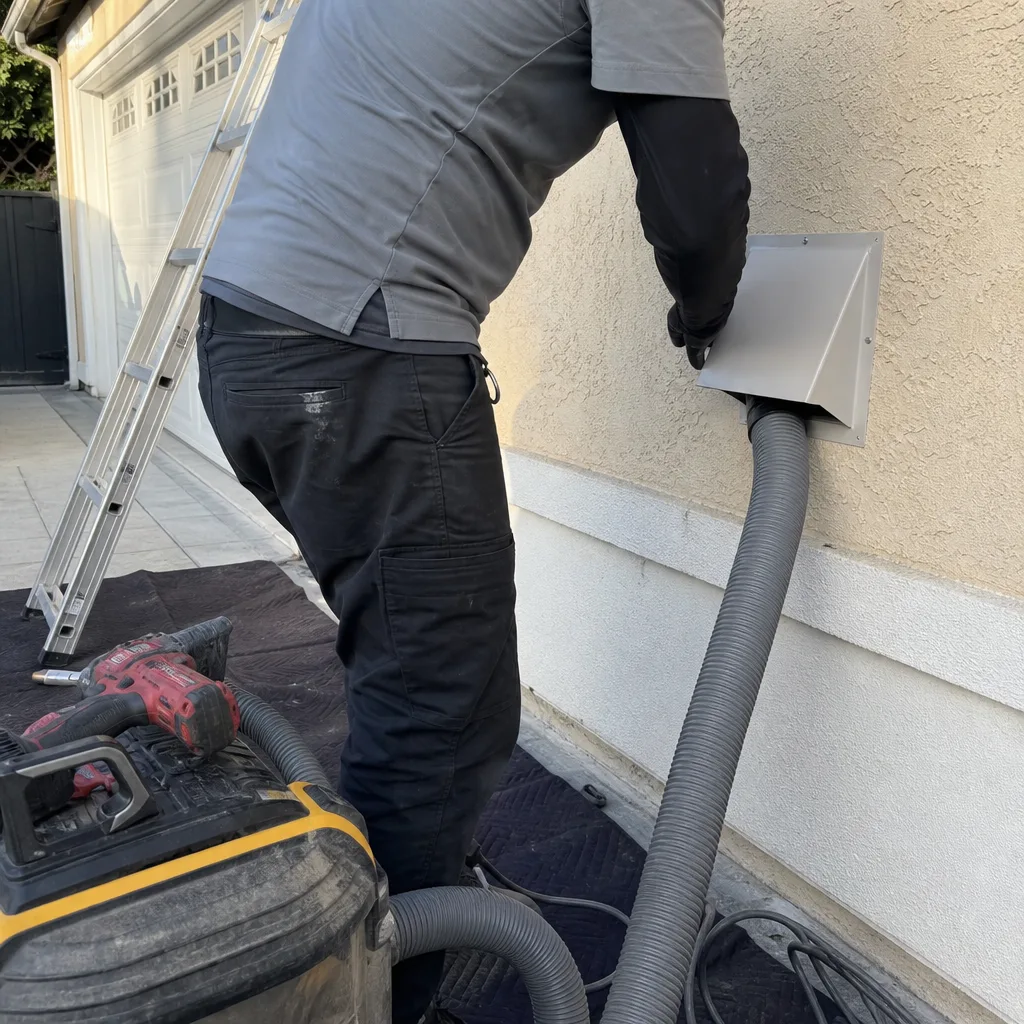
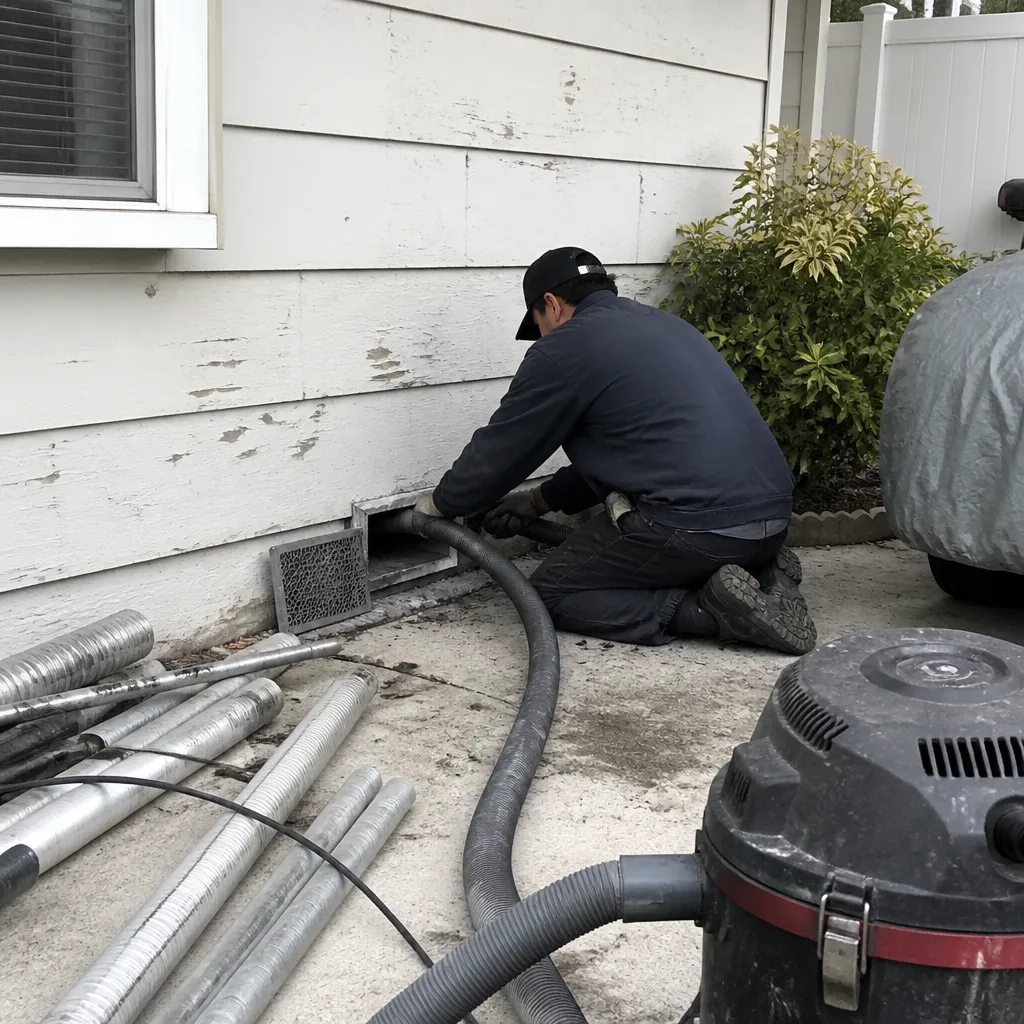
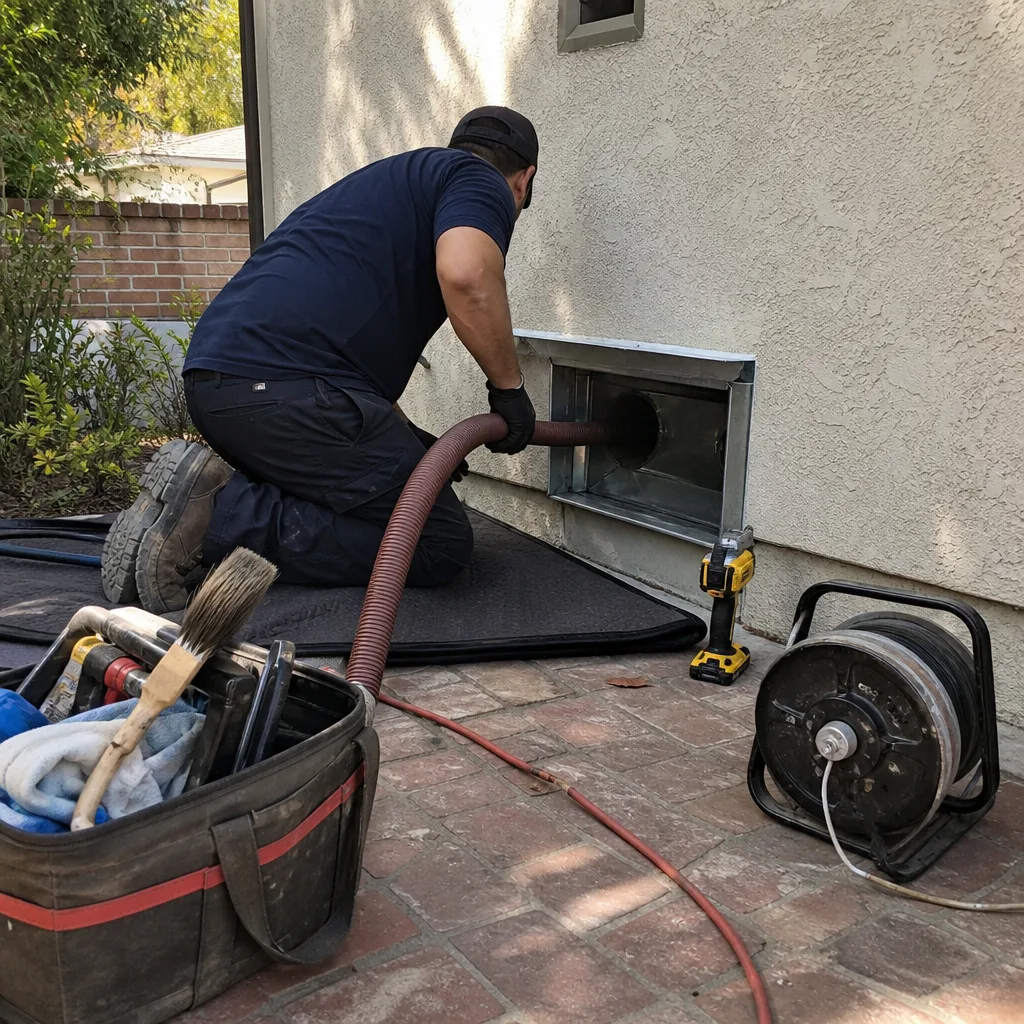
Whole-system duct and dryer vent check with before-and-after photos - you see exactly what came out of your vents
That "$99 whole-house special" is a bait ad - the real number appears once they are in your hallway, or the "clean" is a shop-vac at the register. We photograph the inside of your ducts before and after instead.
Air Duct Cleaning Warning Signs: A Huntington Beach Homeowner’s Reference Guide
A dusty register grille is the last warning sign, not the first. By the time you can see contamination at the vent face, the duct interior has usually been accumulating debris for two to three years. In Huntington Beach, where salt air, coastal humidity, and a remodel-heavy housing stock combine in ways inland homes never experience, the earliest indicators are things you smell, feel, and hear – not things you see. This guide walks you through the sensory and behavioral warning signs that signal your duct system needs professional attention, what each sign means, and when it’s time to pick up the phone.
Quick Answer
The most reliable warning signs that your Huntington Beach home needs air duct cleaning are: a dusty or musty odor that returns within days of cleaning surfaces, room-to-room temperature differences of more than 3-4 degrees, HVAC filters that saturate in under 30 days, visible dust at register faces within a week of wiping them, and any sign of rodent or pest activity near vents. A professional air duct cleaning in Huntington Beach typically resolves these issues the same day.
Styles & brands we work with
- Whole-home duct cleaning
- Dryer vent cleaning
- Camera inspection
- Sanitizing & deodorizing
Table of Contents
- Smell-Based Indicators: Reading What Your Nose Already Knows
- Room-Temperature Inconsistency: Mapping Blockages Through Airflow
- Unexplained HVAC Filter Saturation: What’s Loading Your Filter in Under 30 Days
- Coastal-Specific Indicators: Efflorescence, Staining, and Condensation Cycling
- Post-Renovation Debris: The Huntington Beach Remodel Problem
- Noise and Airflow Changes You Can Hear and Feel
- Common Mistakes to Avoid
- When to Call a Professional
- Frequently Asked Questions
- The Bottom Line
Smell-Based Indicators: Reading What Your Nose Already Knows
Your nose is the most underrated diagnostic tool in the house. Before dust becomes visible at a register, it’s already circulating in the air you breathe – and it carries an odor signature. In Huntington Beach homes, we’ve found that smell-based indicators break down into three distinct categories, and each one points to a different problem requiring a different response.
The dry, dusty smell. This is the most common odor in homes that haven’t had duct cleaning in five or more years. It’s not a dramatic smell – think of the puff of air when you first turn on an old box fan. That’s accumulated dust, skin cells, and textile fibers that have built up on the interior walls of your ductwork. When the HVAC cycles on, it disturbs that layer and pushes the air past it. If you notice this smell most strongly in the first 30 seconds after the system kicks on, that’s a textbook debris-accumulation signature. The fix is a thorough cleaning of the duct interiors – not just the registers.
The musty, damp smell. This is a different animal entirely. Musty odors indicate moisture is present somewhere in the duct system – and moisture means biological growth is possible. In Huntington Beach, the humidity that rolls off the Pacific gives this smell a longer season than inland cities like Riverside or Temecula ever experience. A musty smell that’s strongest when the AC runs suggests condensation inside the ductwork, often from a poorly insulated section of duct in an unconditioned attic space. If the smell is constant – not just when the HVAC runs – it may be coming from standing water in a drain pan or a section of flex duct that’s sagging and collecting condensation. This is a situation where cleaning alone may not be enough; the underlying moisture source needs to be identified and corrected, which often means air duct repair in Huntington Beach to replace damaged or disconnected sections.
The acrid or ammonia smell. If you’re catching a sharp, acrid, or ammonia-like odor near your vents, you’re likely dealing with pest activity. Rodents – roof rats are common in Huntington Beach’s older neighborhoods near downtown and in the tree-dense areas around Central Park – will nest in ductwork during cooler months. Their urine and droppings create a distinct acrid smell that gets pushed through the whole house when the blower runs. This is a health concern, not just an odor problem. The duct system needs professional cleaning with HEPA filtration to capture the contaminants, and the entry points need to be sealed. We run our Abatement Technologies air scrubbers during jobs like this to filter particles down to 0.3 microns, so dislodged contaminants don’t end up recirculating through the living space.
Here’s a quick reference for what you’re smelling:
- Dry, dusty, “old fan” smell: Debris accumulation. Response: duct cleaning.
- Musty, damp, basement-like smell: Moisture and possible biological growth. Response: duct inspection, cleaning, and likely repair.
- Acrid, ammonia, or urine smell: Pest activity. Response: duct cleaning with HEPA containment and pest entry-point sealing.
- Burning or electrical smell: Not a duct issue. Turn off the HVAC and call an electrician or HVAC technician.
Room-Temperature Inconsistency: Mapping Blockages Through Airflow
In a properly functioning duct system, every room should be within two to three degrees of the thermostat setting. When some rooms consistently run hotter in summer or colder in winter than the rest of the house, the ductwork is often the culprit – and the pattern of inconsistency can tell you where the problem lives.
Here’s how to map it. On a day when your HVAC is running regularly, walk the house and note the temperature feel in each room. Don’t rely on the thermostat; use a simple infrared thermometer or even your hand on the register. Pay attention to which registers are delivering strong airflow and which are barely whispering. Now look at the pattern:
One specific room is always off. If a single bedroom at the end of a long hallway is always five degrees warmer than the rest of the house, the branch duct feeding that room is likely compromised – crushed, disconnected, or blocked. In Huntington Beach homes built in the 1960s and 1970s, we frequently find flex ducts that have been pinched during attic work or disconnected entirely by someone moving around up there. That branch needs repair, not more cleaning.
All rooms on one side of the house are off. If every room on the west side of the house runs hot in the afternoon, you may have a return-air problem. The west-facing rooms in Huntington Beach get brutal afternoon sun from about 2 p.m. onward, and if the return path is undersized or partially blocked, those rooms can’t dump their hot air back to the system fast enough. This pattern often shows up in two-story homes where the upstairs return is a single small grille in a hallway. The fix may be as simple as cleaning a return duct that’s become restricted, or it may require adding return capacity – a repair-level intervention.
Registers deliver strong airflow but rooms stay uncomfortable. This points to leaks in the duct system, often in the attic. Conditioned air is blowing out through gaps and holes in the ductwork before it ever reaches the register. The air that does arrive has already lost much of its temperature differential – and you’ve been paying to cool your attic. In coastal Huntington Beach, where many homes have uninsulated duct runs through hot attic spaces, this is a year-round efficiency issue.
The behavioral pattern to watch: if you find yourself adjusting the thermostat to compensate for one uncomfortable room, you’re overconditioning the rest of the house. That’s not a thermostat problem. That’s a distribution problem.
Unexplained HVAC Filter Saturation: What’s Loading Your Filter in Under 30 Days
Your HVAC filter is a canary in the coal mine. It’s designed to capture airborne particles before they reach your equipment, but it also acts as a running record of what’s circulating in the air. When you see a filter that’s visibly loaded – gray, matted, or clogged – in under 30 days, something upstream is generating an abnormal amount of particulate.
In Huntington Beach homes, the three most common upstream sources we find are:
- Duct interiors that haven’t been cleaned in years. The blower is pulling air through a layer of accumulated dust and fibers on the duct walls, lifting that material into the airstream with every cycle. Your filter is doing its job – capturing what shouldn’t be there at all.
- Construction or renovation dust. If the home was remodeled in the last year – and in Huntington Beach, with its high turnover of 50s-to-70s-era homes, that’s a huge percentage of the housing stock – drywall dust, sawdust, and insulation fibers may still be inside the ducts, slowly releasing into the airstream.
- A disconnected return duct. If a return-side duct has separated in the attic, the system is pulling unfiltered attic air – which includes insulation fibers, dust, and whatever else is up there. This loads filters fast and bypasses the entire filtration path.
What’s the normal baseline? A standard 1-inch filter in a Huntington Beach home with no pets, no smokers, and no recent construction should last 60 to 90 days before looking meaningfully dirty. If you’re swapping filters monthly and they’re coming out black or heavily matted, the ducts are the prime suspect. We’ve seen filters load in two weeks in homes where a return duct had completely separated – the system was essentially vacuuming the attic.
This is also where equipment choice matters. A basic visual inspection can confirm some of these problems, but confirming where the particulate is coming from requires looking inside the duct system itself. Our Rotobrush system doesn’t just clean what’s visible – it agitates and extracts debris from the full interior surface of the duct walls, the places where a shop-vac approach leaves material behind.
Coastal-Specific Indicators: Efflorescence, Staining, and Condensation Cycling
Huntington Beach’s marine layer and humidity create duct problems that a homeowner in Las Vegas or Phoenix will never see. The most distinctive is condensation-related staining and efflorescence around floor registers and ceiling vents.
Here’s what happens. When humid coastal air meets a register that’s been chilled by the AC, moisture condenses on the metal surface. Over months and years, that condensation cycles – wet, dry, wet, dry – and the moisture extends slightly into the duct interior. If the duct is poorly insulated or the home’s crawlspace or attic has humidity problems, the condensation doesn’t stop at the register face. It forms inside the duct walls themselves.
The visible signs are subtle but distinctive:
- White, chalky mineral deposits (efflorescence) on the register grille or the surrounding floor or ceiling material. This is mineral residue left behind when condensed water evaporates – proof that liquid moisture has been present at that spot repeatedly.
- Rust-colored staining or corrosion on register grilles or visible duct surfaces. Metal registers don’t rust in a dry duct system.
- Water marks or paint bubbling on the ceiling or wall directly adjacent to a register. This indicates condensation has been significant enough to migrate into the drywall or plaster.
- A persistent dampness odor specific to one room or one register location, even when the AC hasn’t run in days.
These indicators matter because they signal conditions that make duct cleaning urgent – and that may require repair to fully resolve. A duct system that’s been cycling condensation is one that’s at risk for biological growth, even if you can’t see it. In our experience with Huntington Beach homes in neighborhoods like the Edwards Hill area or the tract homes north of Adams Avenue, the root cause is often a section of flex duct that’s been compressed, sagging, or has lost its insulation – conditions that allow cold air to meet warm, humid air in a confined space.
The cleaning process addresses what’s accumulated, but if the duct configuration or insulation situation isn’t corrected, the problem returns. That’s why we approach these findings as a combined issue: our air duct repair crew evaluates the same system our cleaning crew works on, under one roof, so the fix and the prevention happen in the same visit.
Post-Renovation Debris: The Huntington Beach Remodel Problem
Huntington Beach has one of the most active residential remodel markets in Orange County. Drive through neighborhoods like southeast Huntington Beach near the wetlands or the older sections around Main Street and you’ll see dumpsters, contractor trucks, and tarp-covered roofs on almost every block. That’s relevant to duct health because construction debris is one of the most common – and most preventable – contamination events in a duct system.
Here’s what a post-renovation duct inspection should find. If the ducts were properly sealed during construction, the answer is essentially nothing. But proper sealing requires contractors to actively protect register openings and return grilles during any work that generates dust – drywall sanding, floor refinishing, tile cutting, insulation removal. In practice, that protection is inconsistently applied.
What we typically find in post-renovation duct inspections:
- Drywall dust – the fine, white-gray powder that gets airborne during sanding and settles everywhere, including inside open registers. It’s light enough to be drawn through a return grille and deposited along the entire length of the duct system.
- Sawdust and wood shavings – from flooring or framing work, these are heavier and tend to accumulate in the first few feet of the branch ducts closest to the work area.
- Insulation fibers – fiberglass or blown cellulose, often drawn into the return side if a return grille was left uncovered in an attic or wall cavity.
- Paint overspray and solvents – these leave chemical odors that can persist in ductwork for weeks, especially in a house that’s been closed up during curing.
- General construction trash – screws, wire clippings, drywall screws, even food wrappers. If an uncovered duct opening was within reach, debris finds its way in.
If you’ve had any kind of remodeling done – a kitchen gut, a bathroom reno, flooring replacement, popcorn ceiling removal – and the registers weren’t sealed during the work, plan on a professional duct cleaning as part of the punch list. It’s not a luxury add-on. It’s the difference between breathing the remnants of your remodel for the next two years and starting clean.
And here’s the detail most people miss: a standard HVAC filter will not remove fine drywall dust from the air stream. The particles are small enough to pass through a standard 1-inch filter. Once they’re in the ducts, they settle on the walls and floors of the ductwork and release slowly over months. The only way to remove them is mechanical cleaning – agitation and extraction from the duct surfaces themselves.
Noise and Airflow Changes You Can Hear and Feel
Your duct system talks. The sounds it makes – and the changes in those sounds over time – are diagnostic information. Here are the noise and airflow patterns that indicate something is wrong, and what each one suggests.
A whistling or high-pitched squeal at a specific register. This is almost always a signal that airflow is being forced through a restricted opening. The restriction could be a damper that’s partially closed, a register that’s been painted shut, or a duct section that’s been crushed. In Huntington Beach homes with original 1970s registers, we often find that decades of repainting have narrowed the openings significantly. But if the whistle started recently and you haven’t touched the register, it’s more likely a compressed flex duct in the attic.
A thumping or banging sound when the system cycles on or off. This is related to duct pressure. When the system starts, it pressurizes the ductwork quickly. If a section of duct is loose, disconnected, or has a collapsed wall, the pressure change causes it to pop or thump. This is a mechanical issue – the ductwork needs repair or reconnection, not just cleaning. Our duct repair service addresses this directly.
A rattling sound that changes with airflow. Loose debris inside the duct – a drywall screw, a piece of construction debris, a dislodged damper – will rattle when air passes over it. If you can narrow the sound to a specific register or duct run, that’s the area that needs inspection.
Reduced airflow at all registers with a noticeable change in system sound. This suggests a blockage at the main trunk or a failing blower. If the filter saturates quickly too, you’re looking at the return side being starved. If the filter looks fine but airflow is still low, the blockage is on the supply side. Either way, the duct system needs to be inspected.
One behavioral test: stand next to a register in a room you use daily. Does the airflow feel the same as it did six months ago? If you have to think about it, you’ve probably adapted to a gradual decline. A duct system doesn’t usually fail suddenly – it degrades incrementally. The homeowners who catch problems early are the ones who pay attention to the baseline.
Key Takeaways
- Visible dust at register faces is a late-stage indicator. Smell and airflow changes appear months or years earlier.
- Dry-dusty, musty-damp, and acrid smells point to three different problems: debris, moisture, and pests. Know the difference.
- Room-to-room temperature differences of more than 3-4 degrees indicate a distribution problem, not a thermostat problem.
- HVAC filters that saturate in under 30 days signal abnormal particulate loading from ducts, construction debris, or a disconnected return.
- Huntington Beach’s coastal humidity creates condensation-related duct problems – watch for efflorescence, rusting, and staining around registers.
- Post-renovation duct cleaning should be assumed necessary unless registers were confirmed sealed during the work.
Common Mistakes to Avoid
- Assuming a dirty filter means the filter is doing its job, so everything’s fine. A filter that’s loading fast is a symptom of upstream contamination. Swapping the filter and moving on leaves the source in place.
- Cleaning only the registers and calling it done. Register grilles are the visible tip of the system. Wiping them down does nothing for the walls of the duct runs behind them. This is the “blow-and-go” approach in homeowner form.
- Ignoring a musty smell because it’s “normal” for an older beach house. In Huntington Beach, some homeowners accept mustiness as part of coastal living. It isn’t. A properly functioning duct system in a beach-adjacent home should smell neutral, not damp.
- Assuming post-renovation dust will “work itself out” through normal operation. Fine construction dust settles inside ducts and stays there, releasing slowly for years. It doesn’t work itself out; it works itself in.
- Treating room-temperature differences as a personal comfort preference. If your partner likes it warmer in the bedroom, that’s one thing. If the guest room is consistently seven degrees hotter than the hallway with the door open and the register blowing strong, that’s a duct problem.
- Calling in a duct cleaner who only quotes a per-vent price. Per-vent pricing is a red flag in this industry. It incentivizes speed over thoroughness and often leads to a bigger invoice once the technician is in the home. We quote one flat price per system, agreed before work starts.
- Waiting until you can see the problem. By the time dust is visible at the register face, the duct interior has been accumulating for years. The sensory indicators – smell, airflow, noise – show up first. Trust them.
When to Call a Professional
You don’t need to wait for every warning sign to stack up. Here are the scenarios where a professional inspection or cleaning is the right call this month: the system hasn’t been cleaned in five or more years and you’re noticing any of the smell indicators above; you’ve completed a remodel and can’t confirm registers were sealed during the work; one or more rooms are consistently 4-plus degrees off from the rest of the house; your filter is saturating in under 30 days; or you’ve seen signs of rodent or pest activity near any vent. Platinum Air Duct Cleaning offers free estimates in Huntington Beach – call (877) 824-2949 to schedule an inspection.
Frequently Asked Questions
Whole-system air duct cleaning in Huntington Beach typically ranges from $350 to $700 for an average single-family home, depending on the number of vents, the complexity of the duct layout, and the level of contamination. Homes with significant construction debris, pest contamination, or duct repair needs will fall at or above the upper end of that range. We quote one flat price per system before work starts, so the number on the estimate is the number on the invoice. Call (877) 824-2949 for an exact quote – estimates are free.
The most honest self-test is the 30-minute filter test: install a fresh filter, run the system normally for 30 days, and check the filter. If it’s loaded gray or matted in that window, the ducts are generating particulate. You can also unscrew a register in a room you use daily and reach into the duct with a clean cloth – if the duct walls are visibly coated with dust or the cloth comes back thick with debris, the system needs cleaning. Any contractor who recommends cleaning without looking at anything is selling, not diagnosing.
Low-priced duct cleaning quotes typically reflect lighter equipment, shorter service times, and a per-vent pricing model that expands when the technician arrives. A $99 whole-house special often becomes a $600 invoice once the work is scoped. The difference in equipment is real: professional systems like Rotobrush and Nikro agitate and extract debris from duct walls using negative-pressure containment, while lighter equipment may only vacuum the accessible areas. The result is either a system that’s actually clean or one that looks better at the register but is still loaded inside.
For most Huntington Beach homes, professional duct cleaning every three to five years is a reasonable baseline. Homes with pets, smokers, recent construction, or coastal-moisture issues may need more frequent attention – every two to three years. Homes that have never been cleaned and are over a decade old should be cleaned as a starting point, then evaluated annually to establish a pattern.
Yes, but realistically – not miraculously. If allergens like pollen, dust mite debris, and mold spores are present in your duct system, removing them reduces the total airborne load in the home. But Huntington Beach’s coastal air carries its own allergen load from blooming plants year-round, so duct cleaning addresses one source, not all of them. Homeowners with significant allergy concerns should combine duct cleaning with upgraded filtration – we supply and install Aprilaire whole-home air quality systems that integrate with the existing HVAC to improve capture of airborne particles.
Often, yes. That persistent “old house” smell in Huntington Beach’s 1950s-1970s-era homes frequently comes from decades of accumulated organic material inside the ductwork – dust, fibers, and sometimes moisture-affected debris. When the HVAC runs, that material off-gasses into the living space. A professional cleaning removes the source, not just masks it. If the smell persists after cleaning, the next step is checking for moisture in the duct system, which points toward repair work rather than cleaning alone. Our dryer vent cleaning service addresses another common odor source in older homes: lint accumulated in the dryer exhaust system pulling back into the living space.
The Bottom Line
Your duct system tells you when it needs attention – through smells, temperature patterns, filter loading, and sounds – long before visible dust becomes the obvious signal. In Huntington Beach, the coastal environment accelerates certain problems: condensation-related moisture inside ducts, humidity-driven biological growth risk, and construction debris from a constantly remodeling housing stock. The practical takeaway is simple: pay attention to the sensory indicators, act before visible contamination appears, and when you do act, use equipment-backed professional cleaning rather than a low-cost visual tidy-up. Clean ducts are quiet, neutral-smelling, and evenly comfortable – and if yours aren’t, the system is telling you something.
Written by the team at Platinum Air Duct Cleaning, serving Huntington Beach since 2017.
See the difference
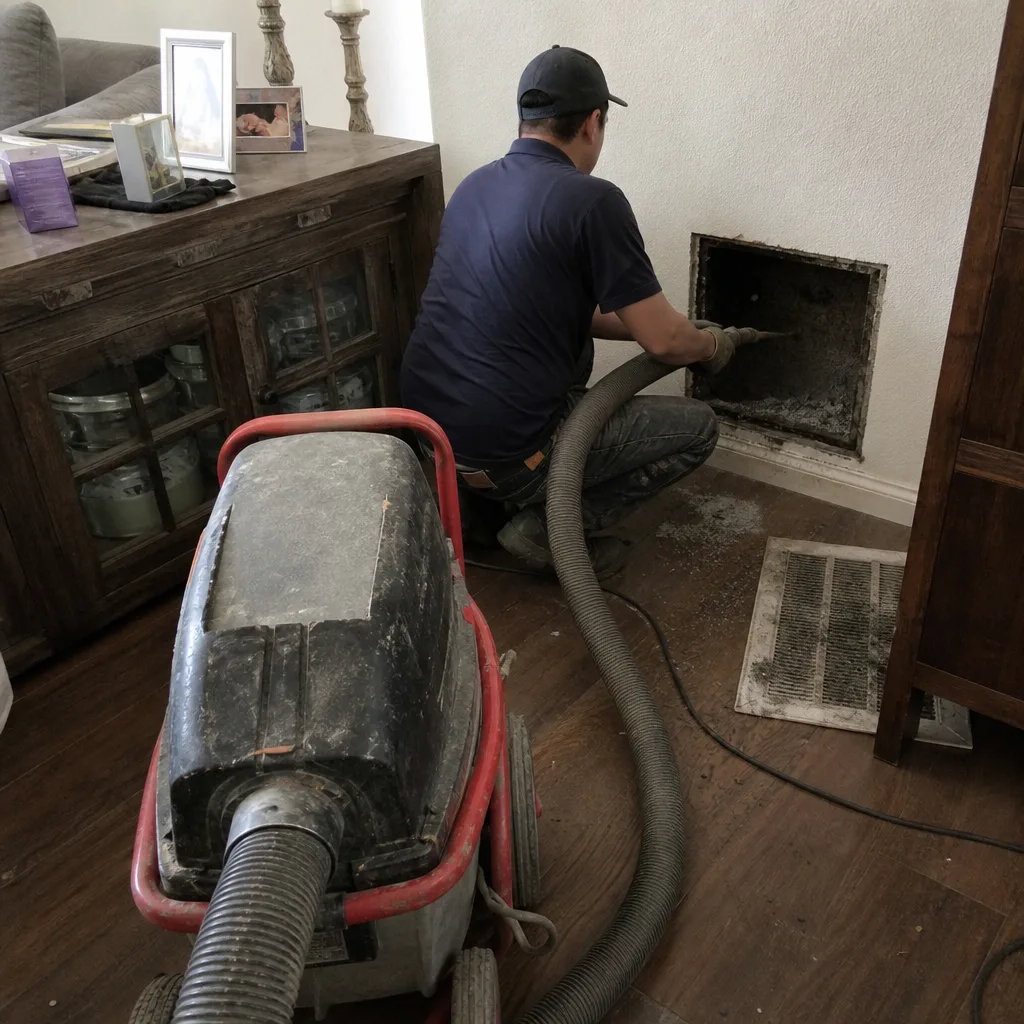 Before
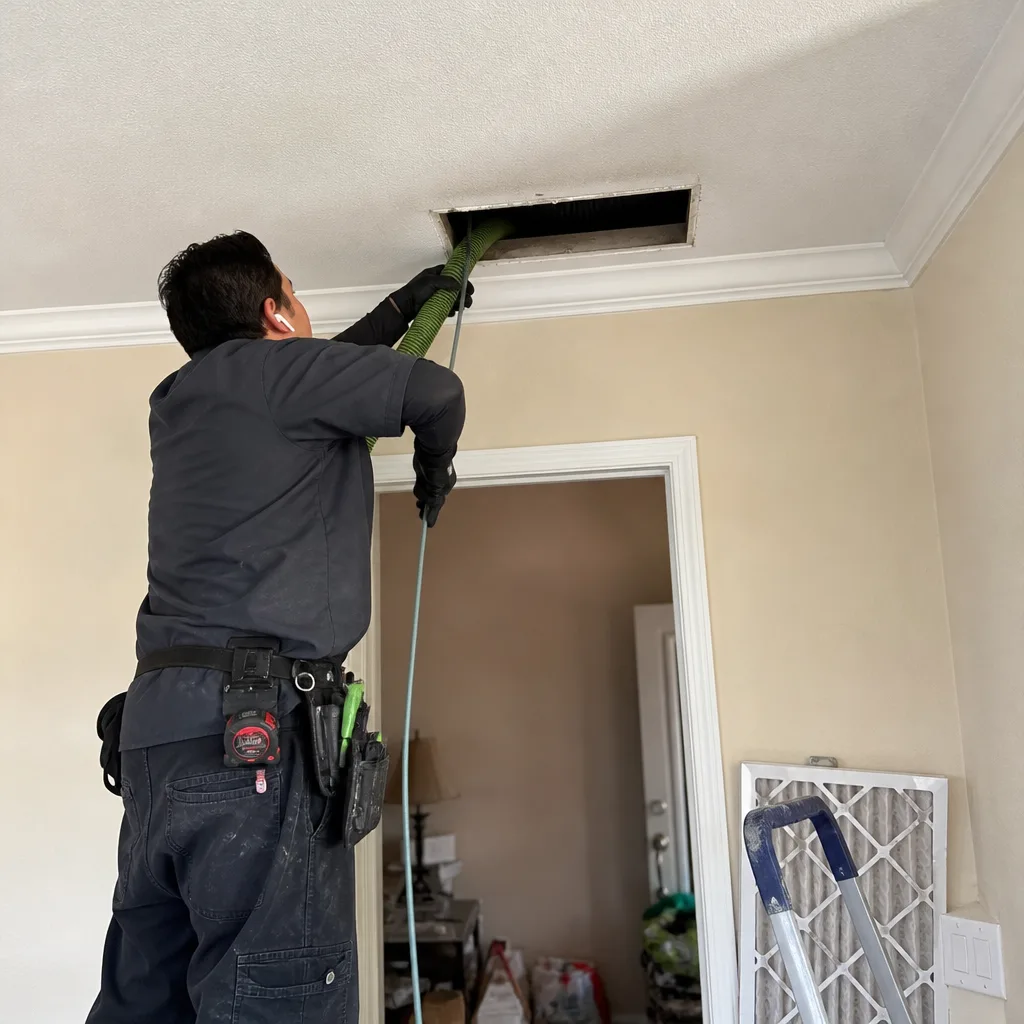 After
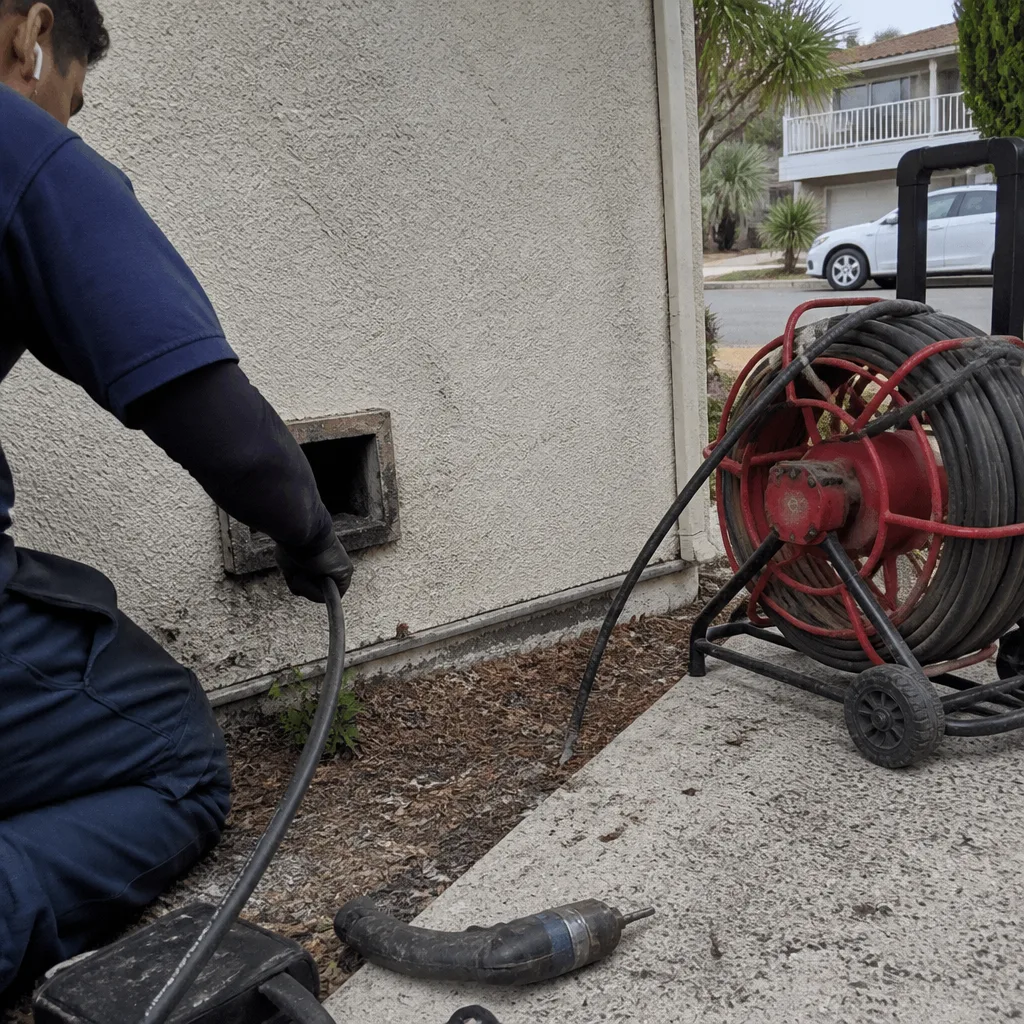 Before
 After
 Before
 After