
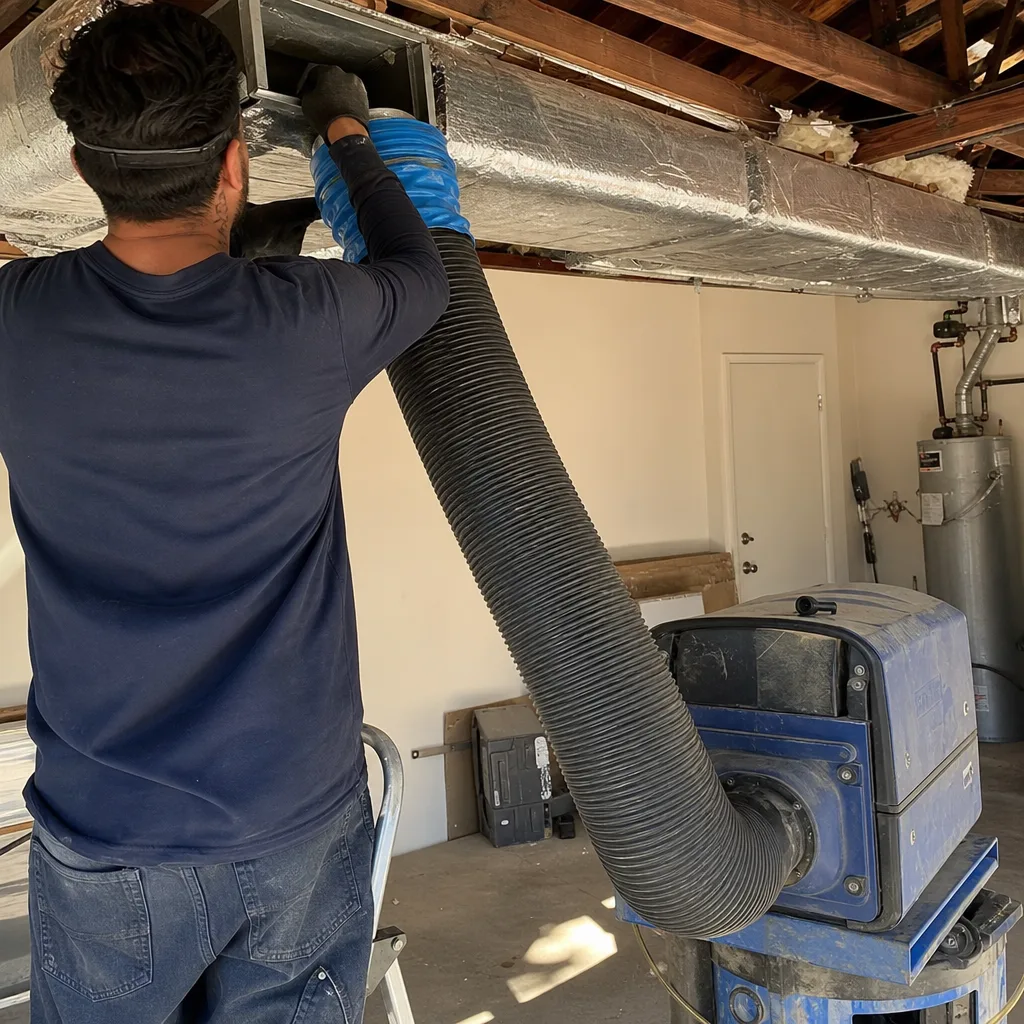
Last updated November 2, 2026
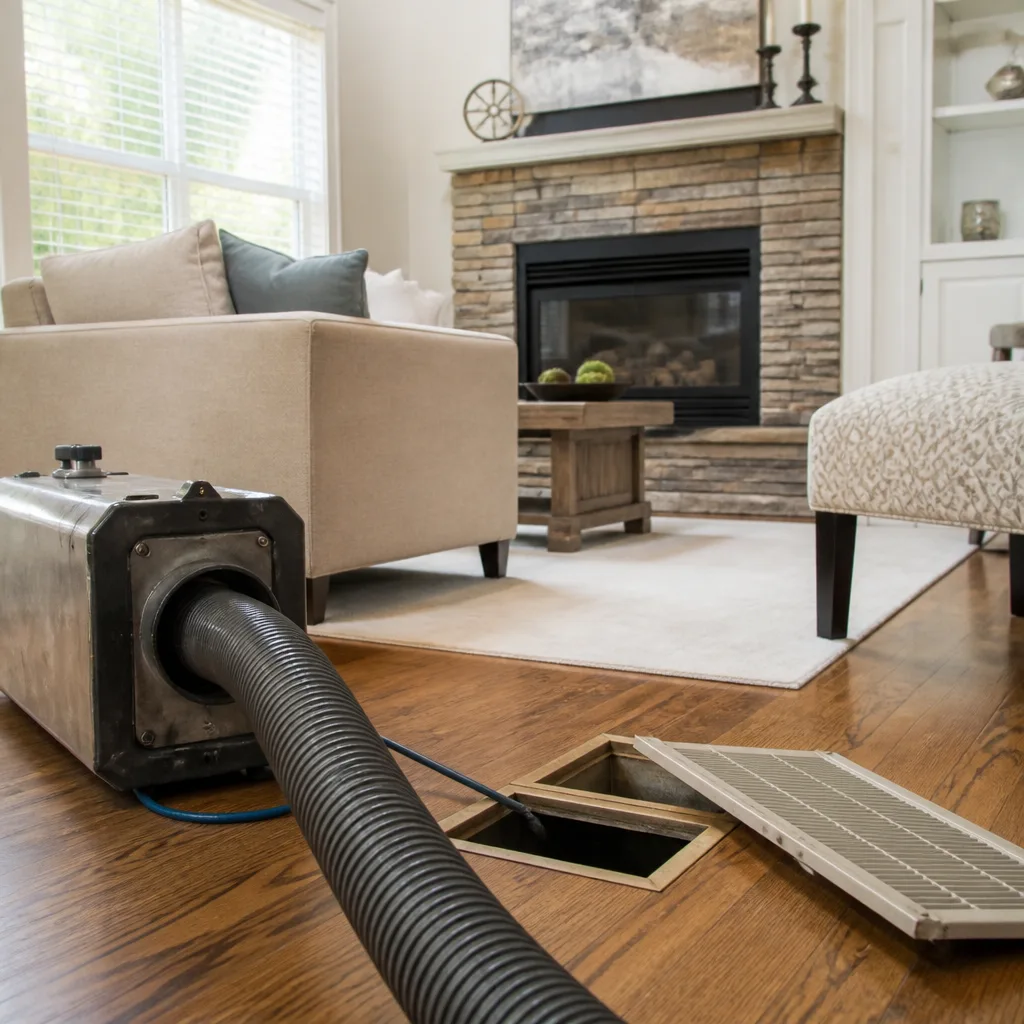 Whole-home duct cleaning
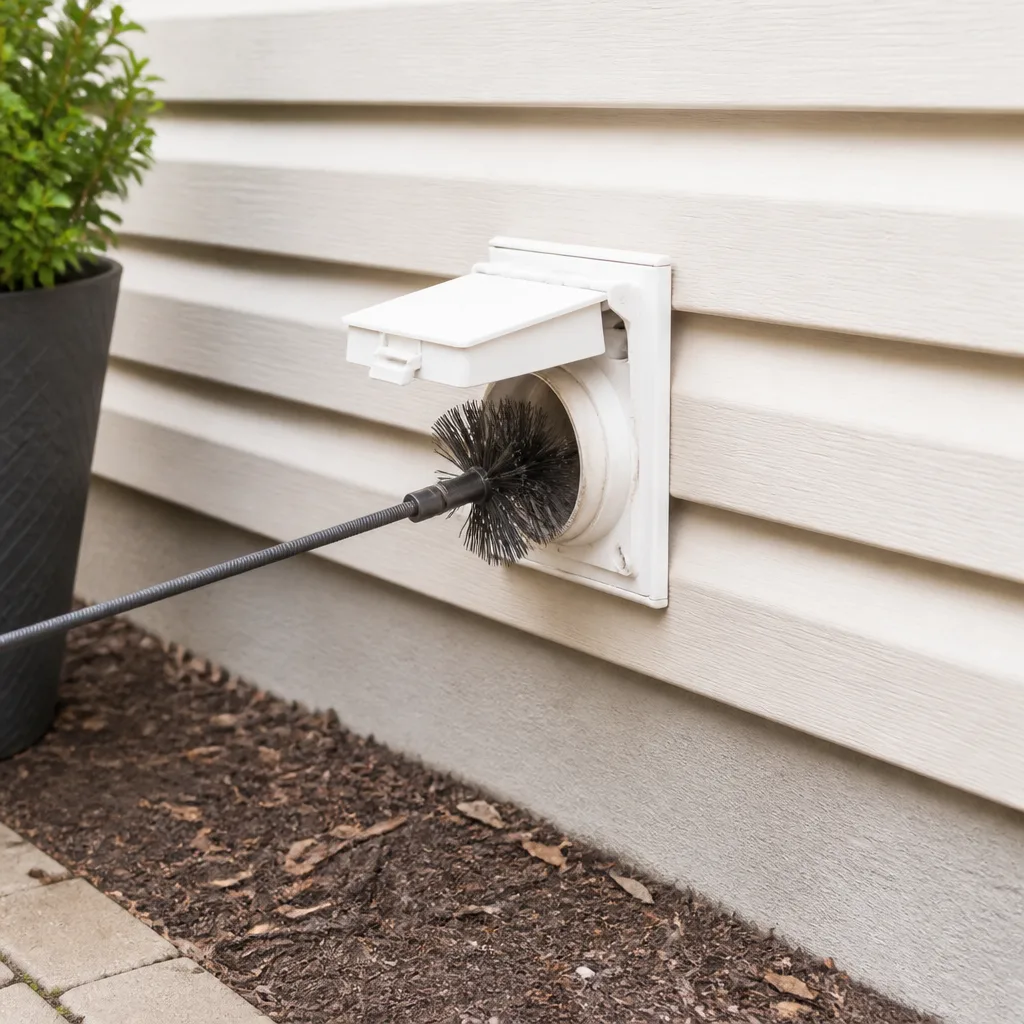 Dryer vent cleaning
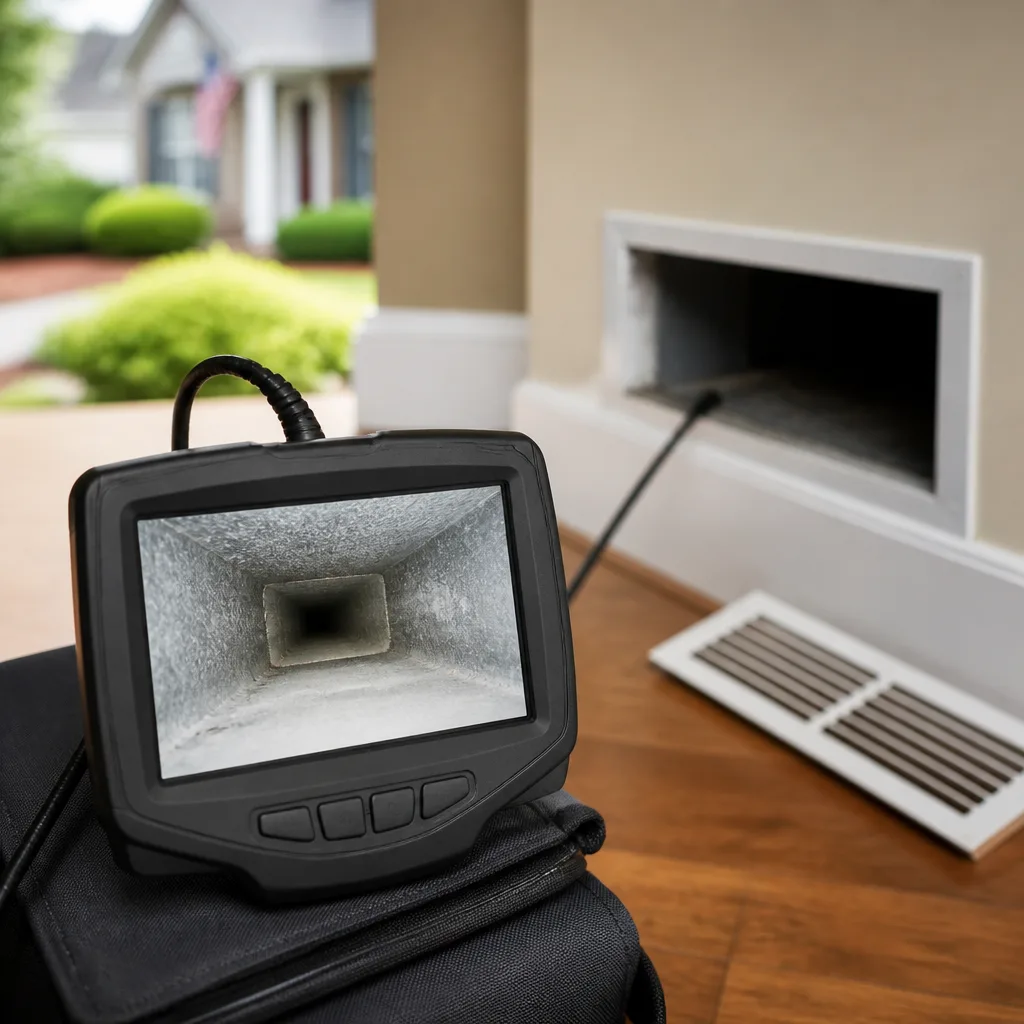 Camera inspection
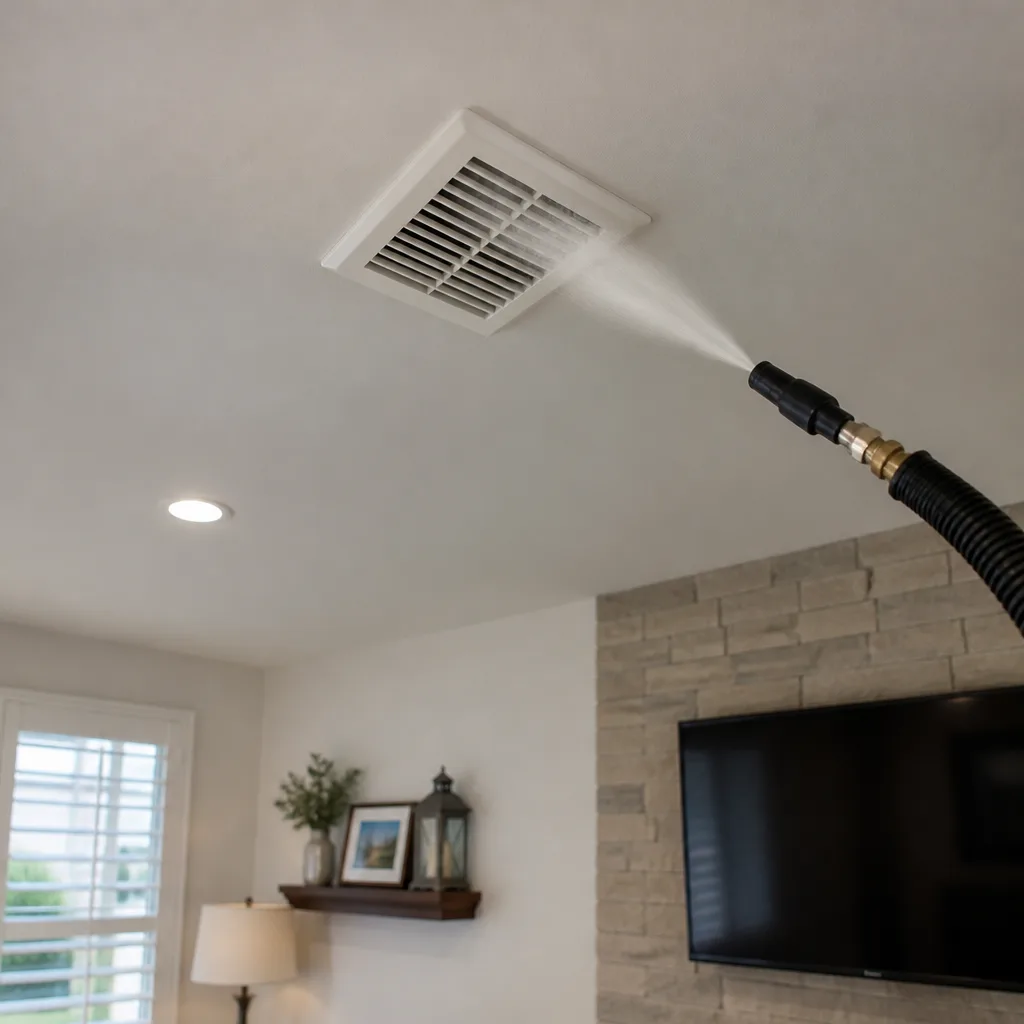 Sanitizing & deodorizing
Whole-system duct and dryer vent check with before-and-after photos - you see exactly what came out of your vents
That "$99 whole-house special" is a bait ad - the real number appears once they are in your hallway, or the "clean" is a shop-vac at the register. We photograph the inside of your ducts before and after instead.
The Complete Air Duct Cleaning Guide for Huntington Beach Homeowners
The salt air that makes Huntington Beach desirable is the same reason your supply registers corrode faster and mold finds a foothold in ductwork that would stay dry ten miles inland. Most duct cleaning advice is written for a generic American house in a generic climate. Yours is not that house. In this guide, we’ll walk through what actually accumulates inside Huntington Beach ductwork, how professional equipment removes it without damaging older flex duct, what a thorough cleaning should include, and how to verify the work was done. You’ll finish with a clear understanding of what your system needs and what reasonable pricing looks like in Surf City.
Styles & brands we work with
- Whole-home duct cleaning
- Dryer vent cleaning
- Camera inspection
- Sanitizing & deodorizing
Quick Answer
Air duct cleaning in Huntington Beach typically costs $395 – $695 for a whole-home system and takes three to five hours. The right process combines rotary brush agitation, negative-pressure HEPA extraction, and inspection of both supply and return runs. Coastal humidity means Huntington Beach homes need inspection-first cleaning that accounts for moisture-related contamination, not just dust.
Table of Contents
- Why Huntington Beach Homes Are Different
- What Actually Builds Up Inside Your Ducts
- The Full Air Pathway Scope: Supply, Return, Air Handler, Dryer Vent
- Equipment Sequence: How Professional-Grade Cleaning Works
- Why Inspection Comes First in Huntington Beach
- How to Verify the Work Was Done: Reading Airflow, Not Just Photos
- What Huntington Beach Air Duct Cleaning Costs
- Common Mistakes to Avoid
- When to Call a Professional
- Frequently Asked Questions
- The Bottom Line
Why Huntington Beach Homes Are Different
A duct system in Phoenix collects dry dust. A duct system in Huntington Beach collects something else entirely. The marine layer that rolls in most mornings keeps relative humidity above 65% for large portions of the year, especially from May through August. That moisture enters your return air stream every time your HVAC pulls outdoor air, and it settles in the darkest, coolest part of your system: the duct runs.
We’ve opened thousands of registers in Huntington Beach homes. In the older tract neighborhoods north of Adams, west of Beach Boulevard, we find the same pattern: a gray-brown film that is not plain dust. It’s particulate matter bound together by salt crystals and moisture. Sodium chloride from ocean spray acts as a natural desiccant that pulls water from the air, creating a slightly damp surface on duct walls where fine particles adhere. Ten miles inland, that same dust would sit loose and blow through. Here, it cakes.
That caked layer becomes a substrate for microbial activity. Mold spores are present in every home. Coastal humidity gives them the moisture they need to become established inside ducts without any visible water intrusion. Homeowners sometimes mistake this for a plumbing leak or a roof issue. In our experience, it’s usually just the coastal micro-environment doing what it does. The practical takeaway: Huntington Beach duct cleaning has to address both particulate buildup and moisture-related contamination in the same visit, because they feed each other.
Older tract homes from the 1960s through 1980s add a second complication. Many original duct installations used flex duct with thinner inner liners than modern code requires. That liner degrades with age. Add salt and moisture exposure, and it becomes brittle enough to tear under aggressive brushing. A cleaning method that works on rigid metal duct in a brand-new home can shred a 40-year-old flex run in a Bolsa Chica neighborhood track house. Inspection before agitation is not a nicety here. It’s a damage-prevention requirement.
What Actually Builds Up Inside Your Ducts
Most people imagine dust bunnies. The reality is a layered deposit that varies by location within your system. Understanding what’s there matters because it determines what cleaning method actually works.
In return ducts, where air flows toward the air handler, you get heavier particulate drop-out. Pet dander is a major component in homes with animals. So is carpet fiber, skin cells, and the fine gray powder that works its way through return grilles. In Huntington Beach, this material picks up a saline component that makes it sticky rather than fluffy.
In supply ducts, where conditioned air flows out to rooms, the deposits tend to be finer and stickier still. This is where condensed moisture from cooling cycles creates the conditions for that microbial film we mentioned. Supply registers in high-humidity homes often show a dark residue around the louvers. That residue is a signal that the duct behind the register has the same film.
The air handler itself adds another layer. The evaporator coil condenses water constantly during cooling season. That wet surface traps whatever the filter missed. Over time, the coil’s drainage pan and surrounding interior accumulate a biofilm. If the coil is dirty, every cubic foot of air passing over it picks up a characteristic musty odor. Duct cleaning that ignores the air handler leaves the source of the smell untouched.
Construction debris is surprisingly common in newer Huntington Beach homes. Drywall dust, paint overspray, and even fast-food wrappers left by installers end up inside duct runs before the first owner moves in. We regularly pull chunks of drywall out of systems in homes built within the last five years. The builder’s final clean rarely includes the inside of ductwork.
The Full Air Pathway Scope: Supply, Return, Air Handler, Dryer Vent
Cheap duct cleaning cleans the obvious parts. A thorough cleaning treats the entire air pathway as one connected system, because that’s what it is. Here’s what a complete scope includes and why each component matters.
- Return ducts and return plenum: The collection side of the system. All the air in your home enters here before conditioning. A dirty return means the air handler is pulling contamination across the coil with every cycle.
- Supply ducts and branch runs: The delivery side. Clean supply runs mean clean air leaving the registers. This is also where disconnected joints are most common in older flex duct systems.
- Air handler interior: The blower housing, coil, and surrounding cabinet. If this area is not cleaned, recontamination happens within weeks. A professional crew should open the system at this point and clean it directly.
- Return and supply registers: The visible endpoints. Registers should be removed, cleaned, and re-installed, not just vacuumed from the face.
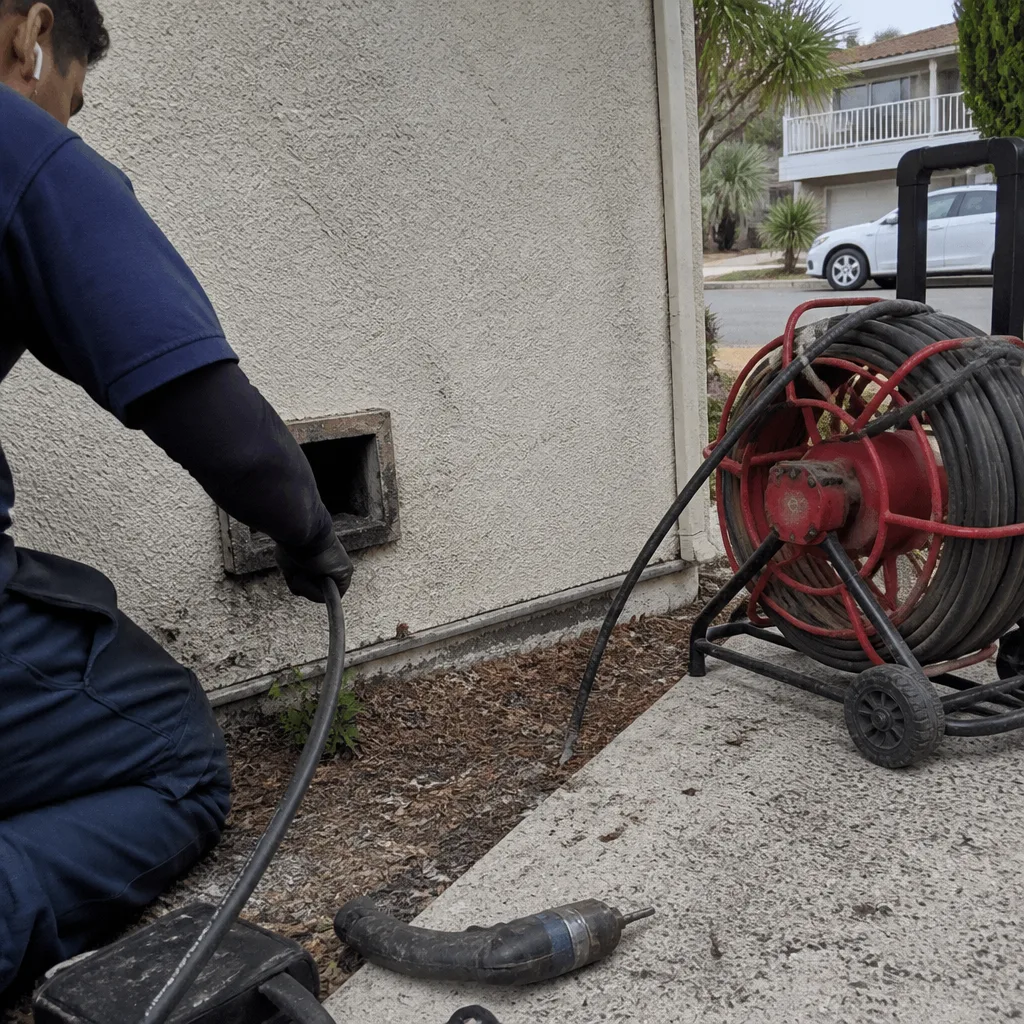
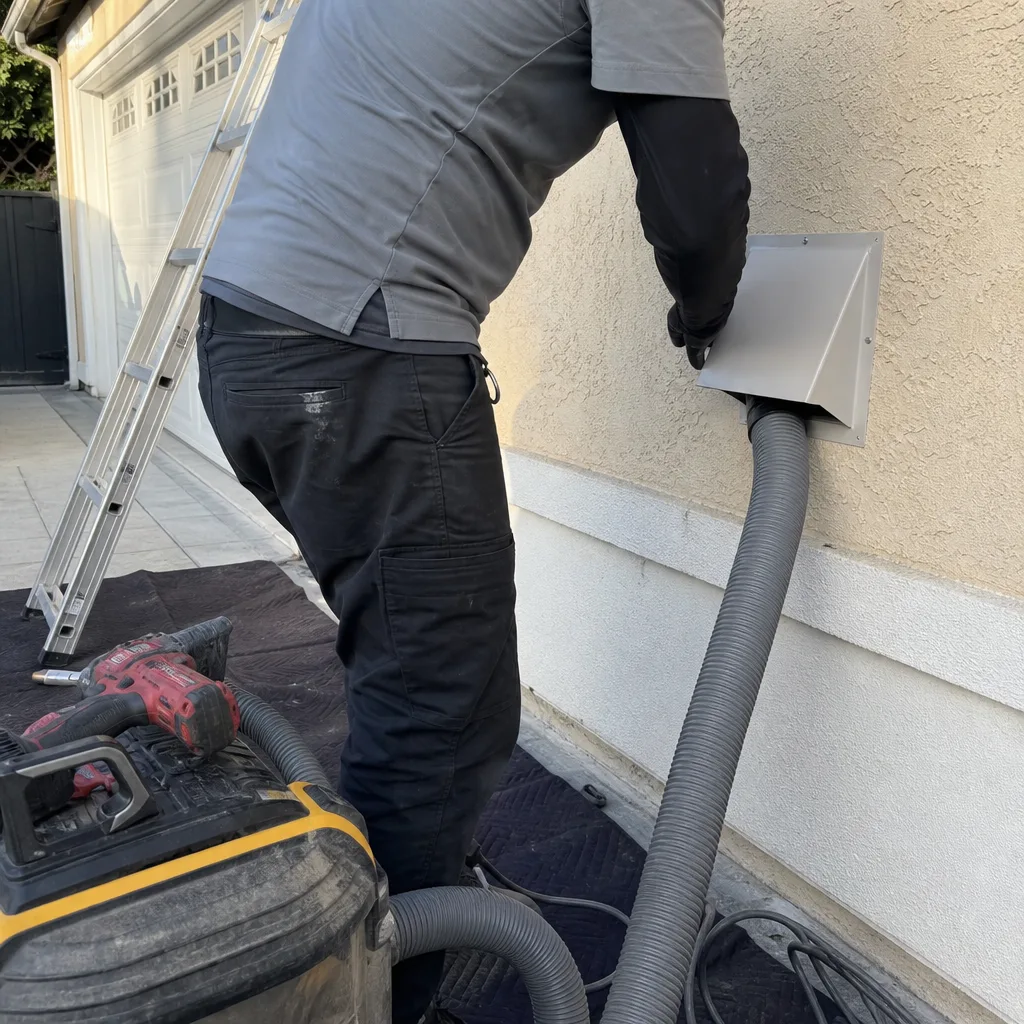
- Dryer vent: A separate pathway that most duct cleaners ignore because it’s not part of the HVAC system. But it moves a large volume of air out of your home, and it accumulates lint that is a documented fire hazard. For a complete picture of this risk, see our dryer vent cleaning in Huntington Beach page.
At Platinum Air Duct Cleaning home, we treat these as one job. The crew that cleans your ducts also runs a camera down your dryer vent and checks your flex duct connections. If a run has separated or developed a leak, the same visit addresses it. That’s the difference between a cleaning company and an air pathway contractor.
Equipment Sequence: How Professional-Grade Cleaning Works
The tool determines the outcome. A shop vacuum and a length of hose will move some dust around. A negative-pressure HEPA system will extract it from the house entirely. Here’s the sequence a professional-grade cleaning follows, using the equipment we run on every Huntington Beach job.
Step 1: System inspection. Before any agitation begins, we map the duct layout, identify access points, and check the condition of flex runs. This is the step that prevents damage to aging ductwork.
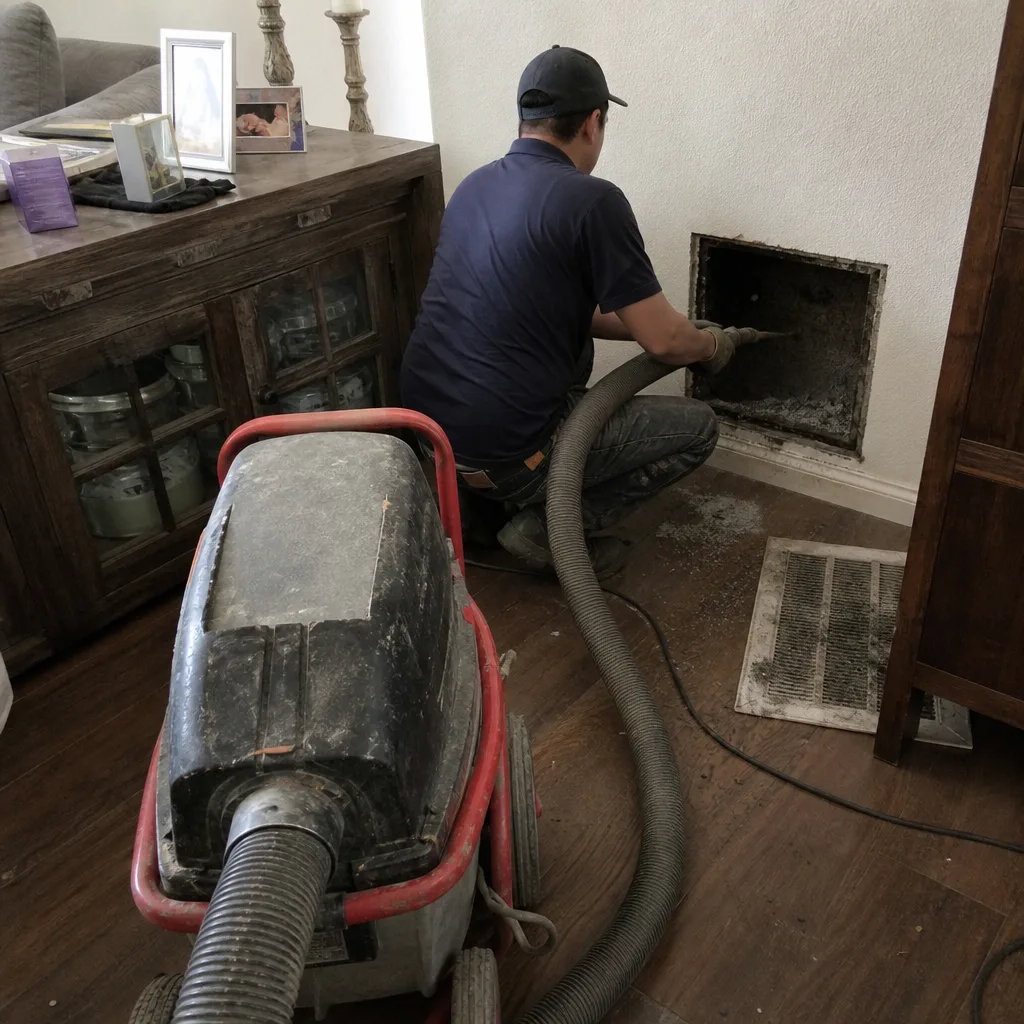
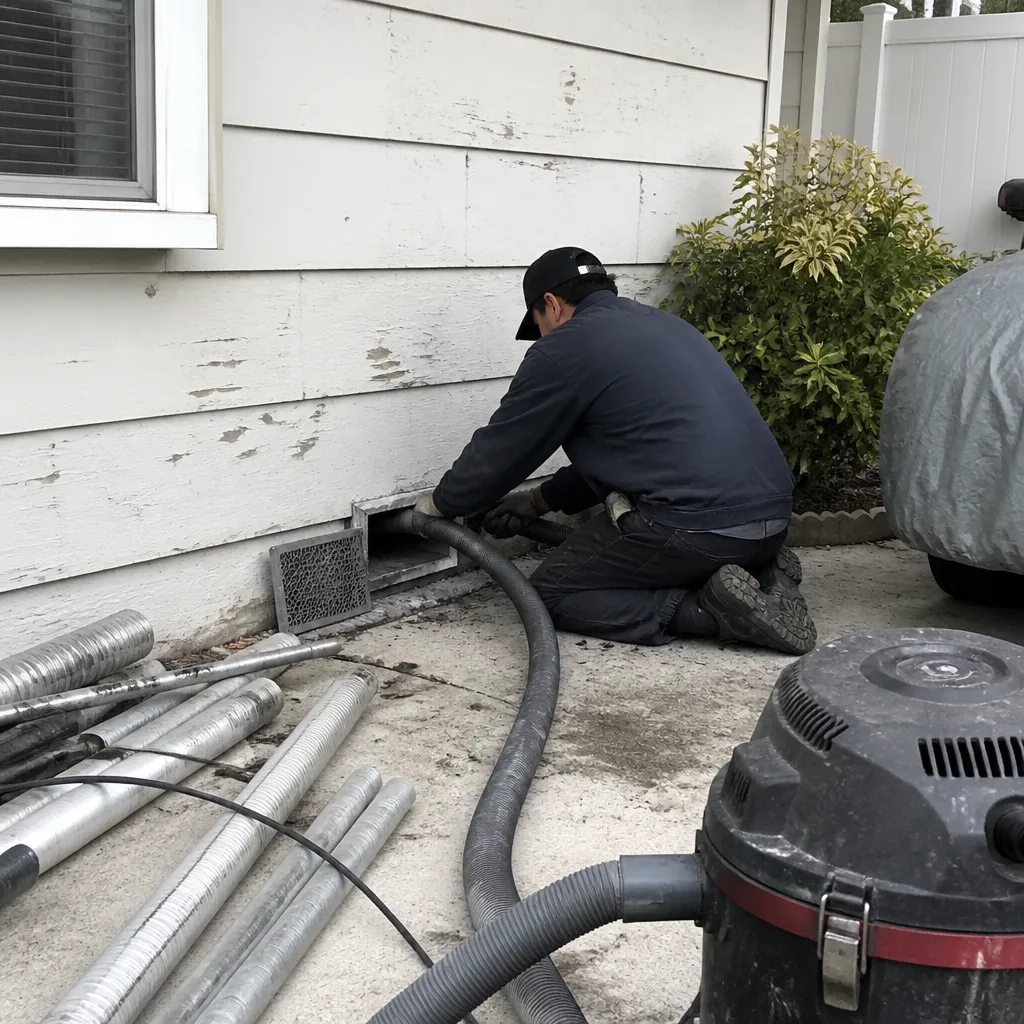
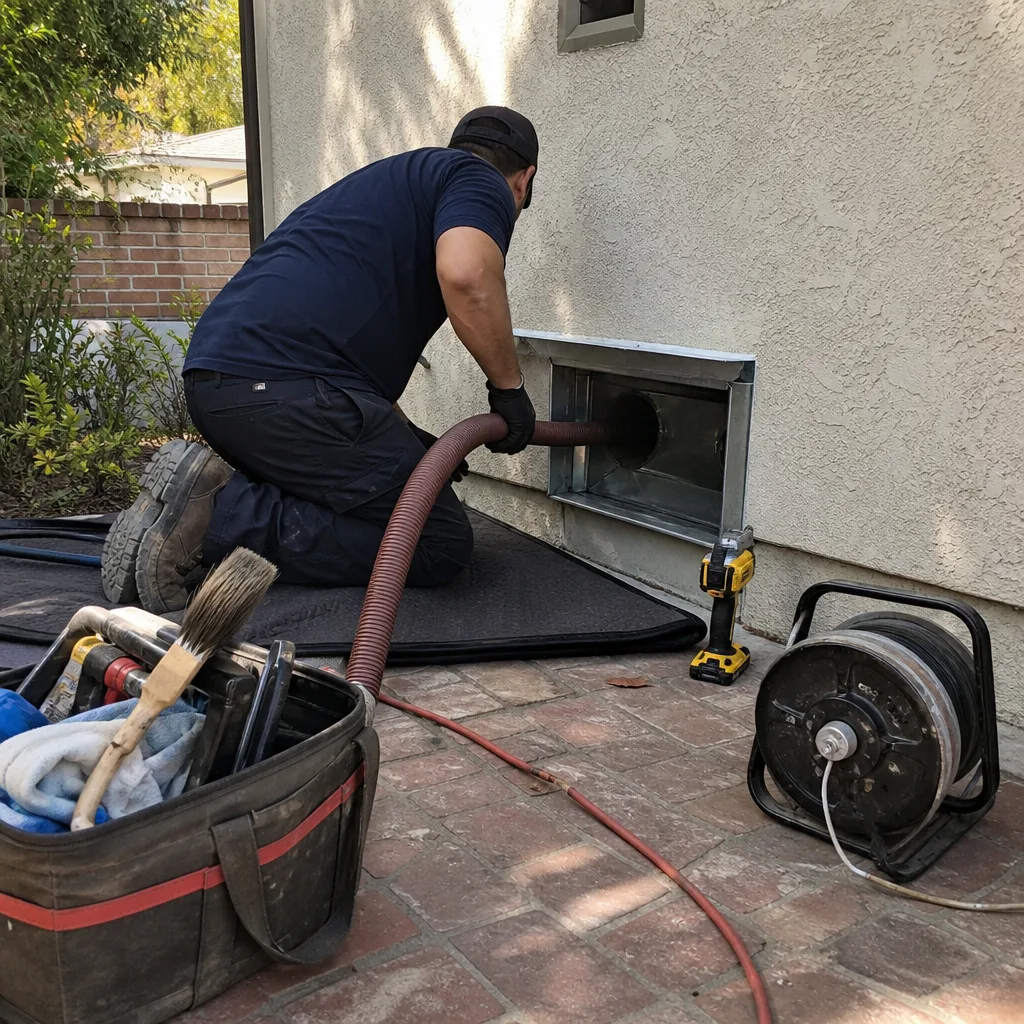
Step 2: Negative-pressure containment. A Nikro HEPA vacuum unit connects to the system, pulling continuous negative pressure. This means air flows from the cleaning access points toward the vacuum, carrying dislodged debris with it. Nothing gets pushed back into the living space. A door of your HVAC system stays sealed during this process except for the cleaning access.
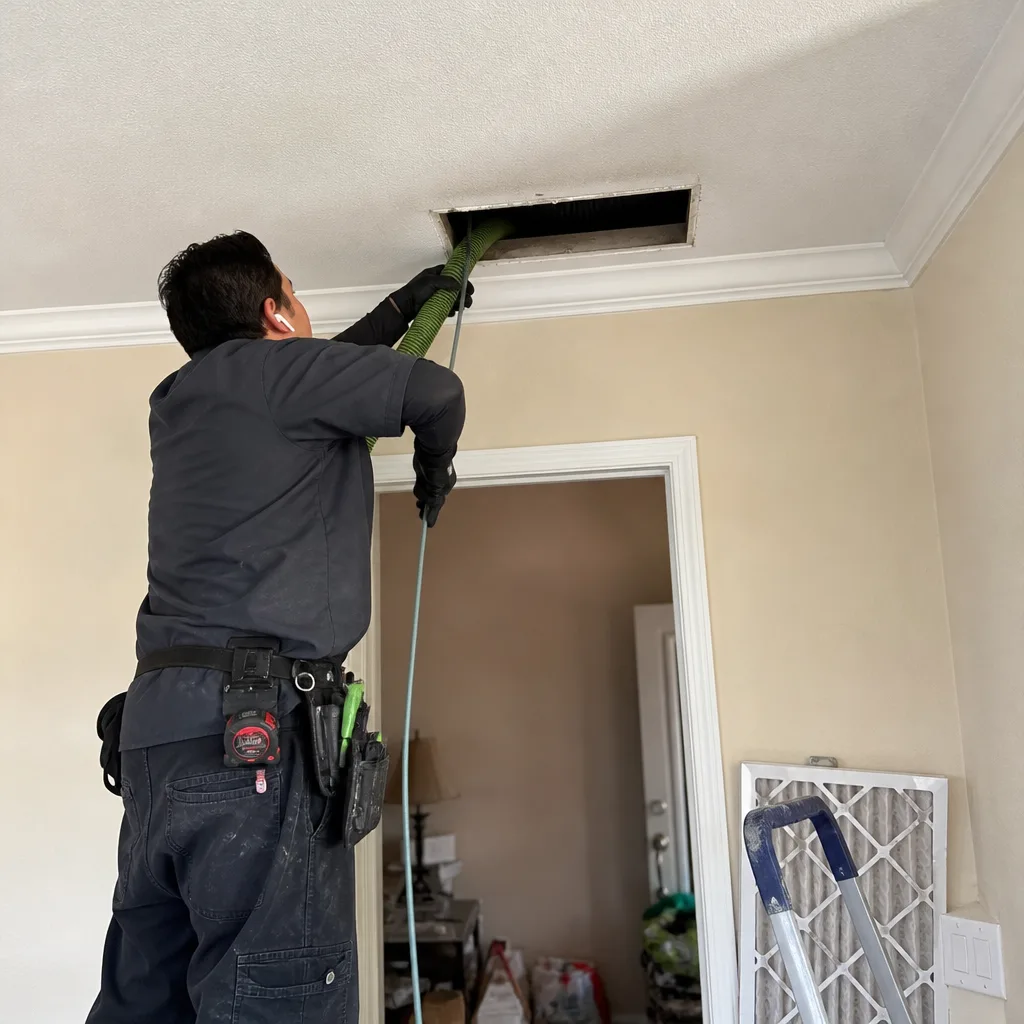
Step 3: Rotary brush agitation. The Rotobrush system feeds a pneumatically driven brush through each run, scrubbing the duct walls while the negative pressure extracts what it loosens. This step is what separates real cleaning from blow-and-go work. The brush physically removes the caked film that coastal humidity creates, not just the loose dust in the center of the airstream.
Step 4: Air handler cleaning. The blower, coil, and cabinet interior are cleaned with HEPA-filtered extraction and manual cleaning methods appropriate to the equipment. Coil cleaning solution removes biofilm without damaging fins.
Step 5: Post-cleaning verification. We run airflow readings at several registers and compare them to baseline measurements taken before cleaning. A measurable airflow improvement is the objective proof of work done. We also take before-and-after photos from inside the duct runs.
Step 6: System restoration. Registers go back on, access points are sealed, and the area around the air handler is cleaned. If air duct repair was needed, those repairs are completed during this phase.
Our team uses Abatement Technologies air scrubbers during the cleaning process to capture particles down to 0.3 microns. While the ducts are open, these units run continuously, protecting the occupied space from anything that does manage to escape the negative-pressure field.
Why Inspection Comes First in Huntington Beach
Flex duct is the standard in Southern California residential construction. It’s flexible, insulated, and efficient to install. It’s also easy to damage if mishandled, and the older it gets, the easier it gets.
Homes built in Huntington Beach during the 1960s, 1970s, and 1980s often have original duct runs that are now 40 to 60 years old. The inner liner of that flex duct has been exposed to decades of temperature cycling, salt air, and in many cases, the constant vibration of an oversized blower fan. We inspect every accessible run before we put a brush in it.
What we look for:
- Liner brittleness or tears: Visible cracks mean aggressive brushing could turn a small tear into a full separation.
- Crushed runs: Ductwork in attics gets stepped on. A crushed flex run restricts airflow and may need to be reshaped or replaced before cleaning.
- Sagging between supports: Improperly supported flex duct collects water in low spots here on the coast.
- Disconnected joints: More common than most homeowners expect. A disconnected return run pulls attic air directly into the system.
- Water staining or microbial growth: Evidence of condensation that needs to be addressed, not just cleaned over.
The inspection tells us whether standard rotary brush agitation is appropriate for every run or whether certain sections need gentler treatment. It also tells you if there are problems in the system that cleaning alone cannot fix. This is where Air Duct Repair in Huntington Beach becomes relevant. We clean it and we repair it. One crew, one visit, one accountable party.
How to Verify the Work Was Done: Reading Airflow, Not Just Photos
Every duct cleaning company hands you before-and-after photos. Photos show you what the duct walls looked like, and they’re a useful record. But they don’t tell you whether the system actually moves air better than it did before. For that, you need numbers.
Here’s how to read the airflow measurements a thorough contractor should provide:
- Baseline reading before cleaning: Airflow at each supply register is measured in cubic feet per minute (CFM) before anything is touched.
- Comparison benchmark: A healthy system delivers air at roughly the same rate across all supply registers in similar-size rooms. A register delivering significantly less CFM than its counterparts suggests a restriction in that run.
- Post-cleaning reading: The same measurements are taken again after cleaning. Improvement in previously restricted runs is the objective evidence that cleaning addressed a real airflow problem.
- What improvement looks like: A run gaining 15 – 25% more CFM after cleaning was meaningfully clogged. A run with no improvement was either not clogged or has a structural issue that cleaning cannot fix.
- What to ask for: Ask your contractor to note baseline and post-cleaning CFM for at least three supply registers on the invoice. This takes five extra minutes and keeps everyone honest.
Airflow verification matters more in Huntington Beach than it does inland because the caked, moisture-bound buildup here is denser. A thin dust layer moves with airflow. The coastal film we described earlier actually sticks to duct walls. Removing it changes system performance in measurable ways. If your contractor cannot provide baseline and post-cleaning numbers, you have no way to know whether the internal surfaces changed in any way that matters.
What Huntington Beach Air Duct Cleaning Costs
Honest whole-system pricing in Huntington Beach runs $395 to $695 for a typical single-family home with one air handler and eight to fourteen supply runs. Larger homes with multiple systems run higher. Homes with lengthy flex duct runs or significant buildup can push toward the upper end.
Here’s what actually drives cost:
- Number of air handlers: Two-story Huntington Beach homes often have one system upstairs and one downstairs. Two systems, two cleaning jobs.
- Number of supply runs: More registers mean more linear duct footage to clean and more labor hours.
- Access conditions: Attic or crawlspace location, height, and accessibility affect how long the job takes.
- Level of buildup: A home cleaned regularly costs less to clean than one that has not been touched in 20 years.
- Add-on scope: Dryer vent cleaning, air handler deep cleaning, and air duct repair are separate line items that should be quoted clearly.
Be cautious of quotes under $200 for a whole-home cleaning in Huntington Beach. At that price, the contractor is either not using negative-pressure HEPA equipment, not cleaning the air handler, not inspecting before agitating, or planning to upsell you aggressively once they’re inside. The labor cost of doing the job correctly simply does not fit under $200. A legitimate contractor will give one flat price for the system scope before work starts, not a per-vent price that multiplies once the crew is on site.
We quote one price per system, based on the inspection and number of runs. What we quote is what you pay, whether the job takes three hours or five. For current pricing on Air Duct Cleaning in Huntington Beach, give us a call.
Common Mistakes to Avoid
- Hiring a “whole house” $99 special. The math does not work for a real cleaning with real equipment. You will either get a surface vacuum job or a high-pressure upsell once the crew is inside. In Huntington Beach’s competitive market, this bait-and-switch pattern is very common.
- Cleaning the ducts but skipping the dryer vent. Your dryer vent is a separate pathway carrying hot, lint-laden air. It is the most common household fire hazard related to airflow. Have both done in the same visit. See our Dryer Vent Cleaning in Huntington Beach page for specifics.
- Paying for cleaning without airflow verification. Photos show surfaces. Airflow numbers show results. Insist on both.
- Cleaning before inspecting aging flex duct. A brush in brittle 40-year-old flex duct can cause thousands of dollars in damage. Your contractor should inspect every accessible run before agitation. If they don’t, stop the job.
- Ignoring the air handler. The coil and blower are the wettest parts of your system and the most likely to harbor the musty odor you’re trying to eliminate. A duct-only cleaning leaves the source untouched.
- Confusing filter changes with duct maintenance. Your HVAC filter protects the equipment from large particles. It does not clean your ducts. Cleaner air starts in the ducts, not the filter.
- Waiting until you see something. By the time black streaking appears around register louvers, the buildup inside the duct runs is substantial. A proactive cleaning every three to five years for Huntington Beach homes keeps the system ahead of the coastal buildup curve.
When to Call a Professional
Call a professional when you notice musty odors that persist after filter changes, visible residue around supply registers, inconsistent airflow between rooms, allergy symptoms that spike when the HVAC runs, or a renovation that left construction debris in the system. Also call if you’ve owned your Huntington Beach home for more than three years and have no record of prior duct cleaning. The coastal buildup pattern here means passive neglect accumulates faster than in drier climates. Platinum Air Duct Cleaning offers free estimates in Huntington Beach. Call (877) 824-2949 and we’ll inspect your system and give you a flat quote for the full air pathway scope. No per-vent pricing, no pressure.
Frequently Asked Questions
Whole-home air duct cleaning in Huntington Beach typically costs $395 to $695 for a single-system home, with larger or multi-system homes running higher. The price depends on the number of air handlers, number of supply runs, access conditions, and level of buildup. Beware of quotes under $200, which almost never include negative-pressure HEPA extraction, air handler cleaning, or proper brushing. Call (877) 824-2949 for an exact quote on your system; estimates are free and the price is one flat figure agreed before work starts.
Cheaper quotes typically come from contractors using shop vacs or small portable units instead of truck- or cart-mounted negative-pressure HEPA systems, skipping the air handler, and not performing inspection before agitation. The low price is often a door opener for aggressive per-vent upselling once the crew arrives. A legitimate professional cleaning with Rotobrush rotary agitation and Nikro HEPA extraction costs more because the labor and equipment required are real. You are not just paying for time; you are paying for containment, thoroughness, and verification.
Ask for before-and-after photos from inside the duct runs and airflow measurements at multiple supply registers taken before and after cleaning. Airflow improvement of 15 to 25 percent in previously restricted runs is objective evidence of meaningful cleaning. A contractor who cannot provide both photo documentation and CFM readings has not given you verifiable proof of work. At Platinum, this verification is standard on every job, not an add-on.
Huntington Beach homes should have their air ducts cleaned every three to five years, which is more frequent than the national average of five to seven years. The coastal humidity and salt-laden marine layer create denser, stickier buildup that accumulates faster here than in inland climates. Homes with pets, allergy sufferers, or recent renovations may need cleaning more often. If you have no record of when your ducts were last cleaned and you’ve owned the home more than three years, now is the time to have them inspected.
Dirty air ducts can concentrate and redistribute allergens like dust mite waste, pet dander, and mold spores that trigger respiratory irritation. The moisture-bound microbial film common in Huntington Beach coastal homes produces the musty odor and airborne compounds that bother sensitive occupants. Cleaning the full air pathway removes the reservoir where these contaminants concentrate. The people who benefit most are allergy sufferers, asthmatics, infants, and the elderly.
Cleaning air ducts can improve airflow, which reduces the work your blower motor does and may improve system efficiency by a small percentage. The bigger benefit is that removing caked coastal buildup from coil surfaces restores heat exchange efficiency. A fouled evaporator coil reduces the system’s ability to remove heat, which means longer run times and higher bills. So yes, measurable improvement is possible, but the primary benefit is air quality, not energy savings.
The Bottom Line
Huntington Beach homes accumulate a different kind of duct contamination than homes in drier climates. Salt, moisture, and marine particulates combine to create a dense, sticky film that is harder to remove and more likely to harbor microbial growth. The right approach is inspection-first cleaning with rotary brush agitation and negative-pressure HEPA extraction, followed by airflow verification that proves results. A complete scope includes supply runs, returns, the air handler, and the dryer vent. And the only honest price is a flat, whole-system quote agreed before the work begins. Platinum Air Duct Cleaning handles all of it in Huntington Beach with the same crew and the same standard: professional-grade equipment, not big promises. Call (877) 824-2949 for a free estimate.
Written by the team at Platinum Air Duct Cleaning, serving Huntington Beach since 2017.
See the difference
 Before
 After
 Before
 After
 Before
 After