
Last updated November 2, 2026
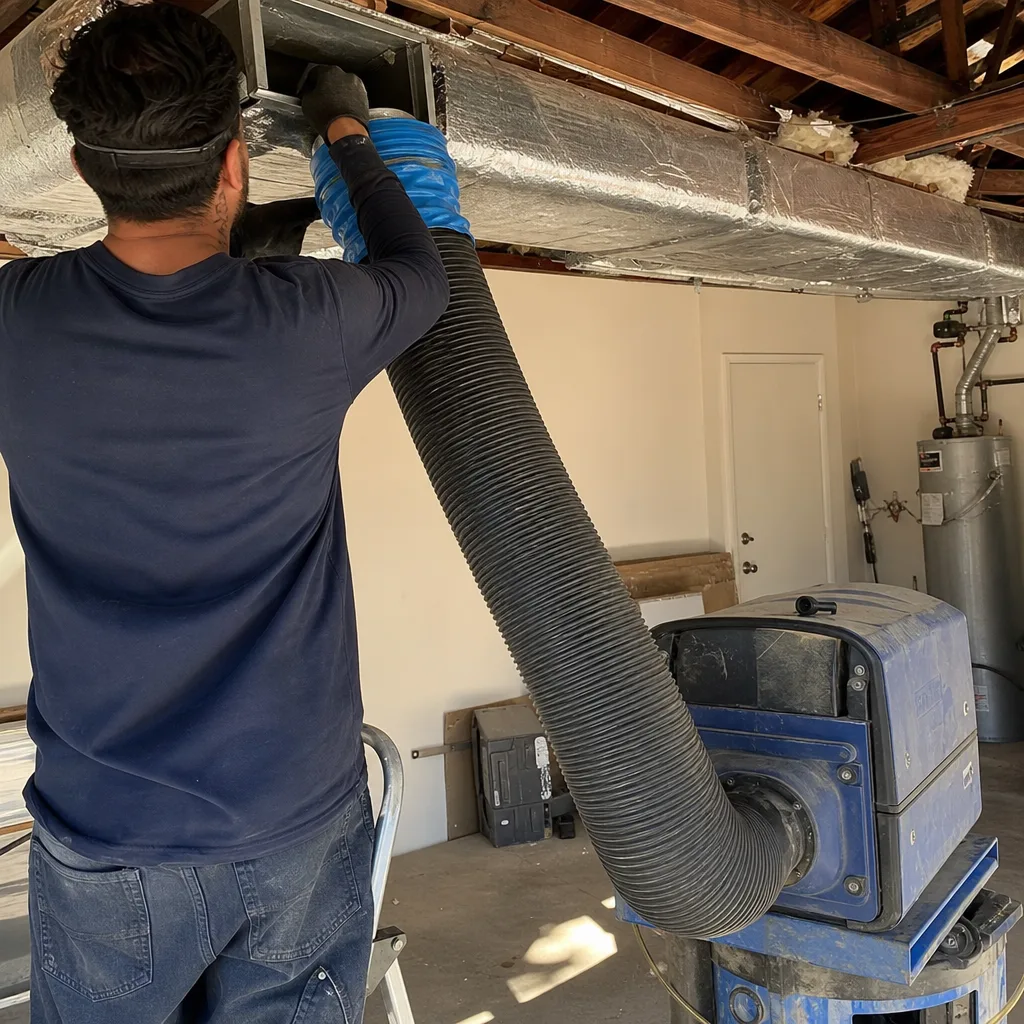
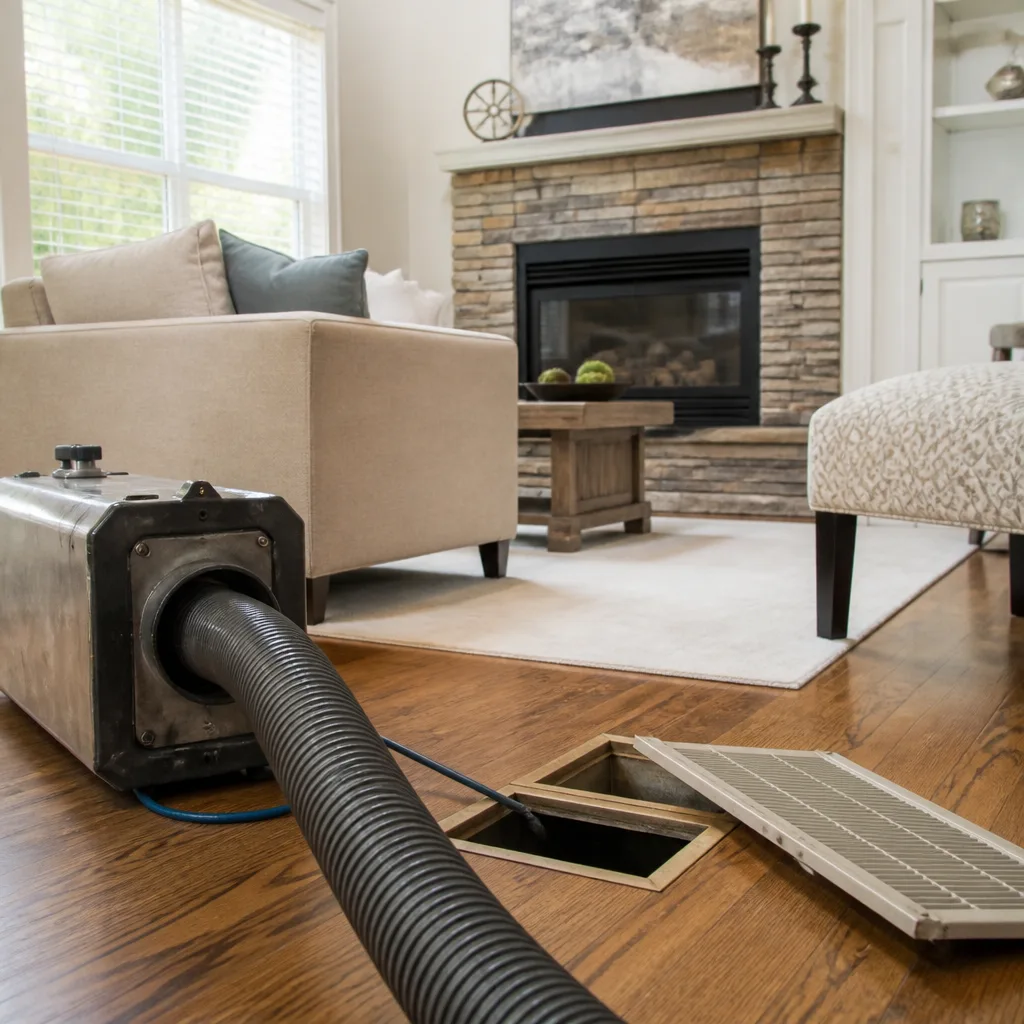 Whole-home duct cleaning
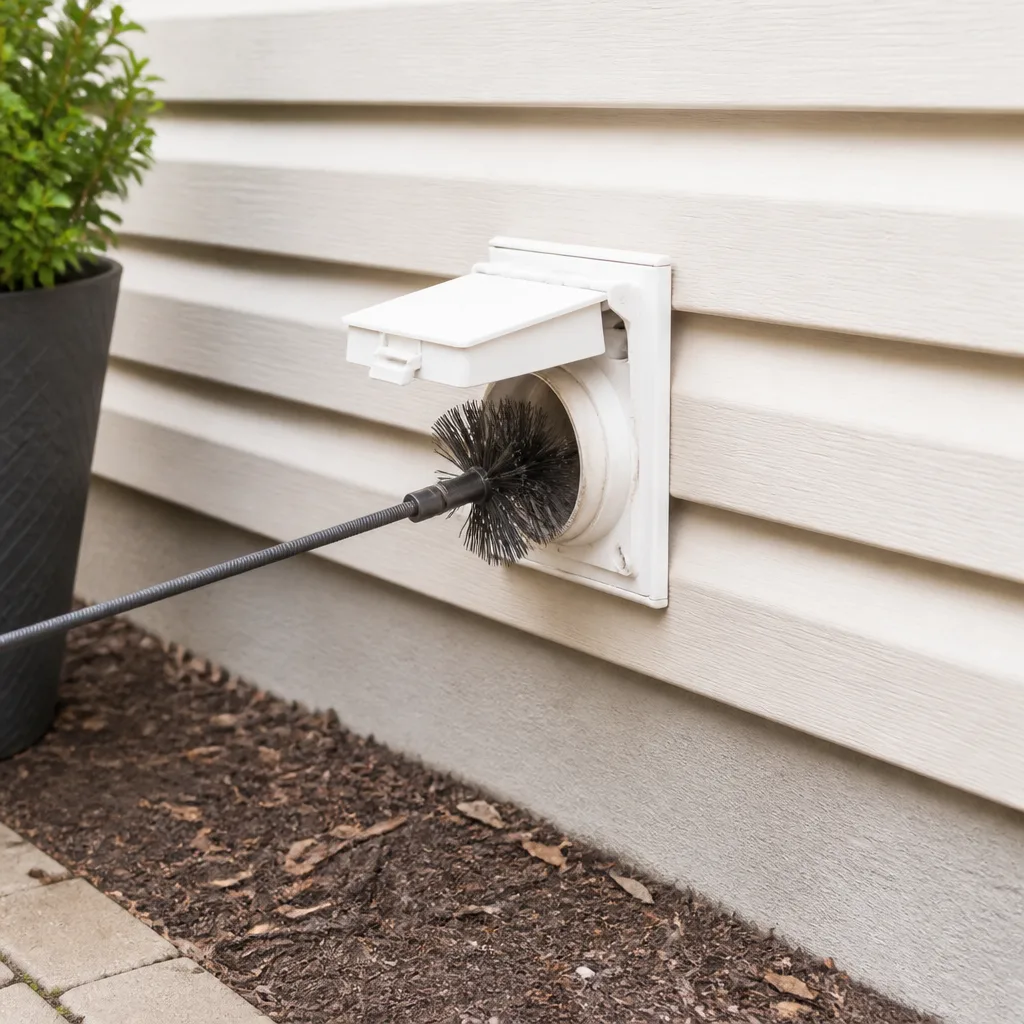 Dryer vent cleaning
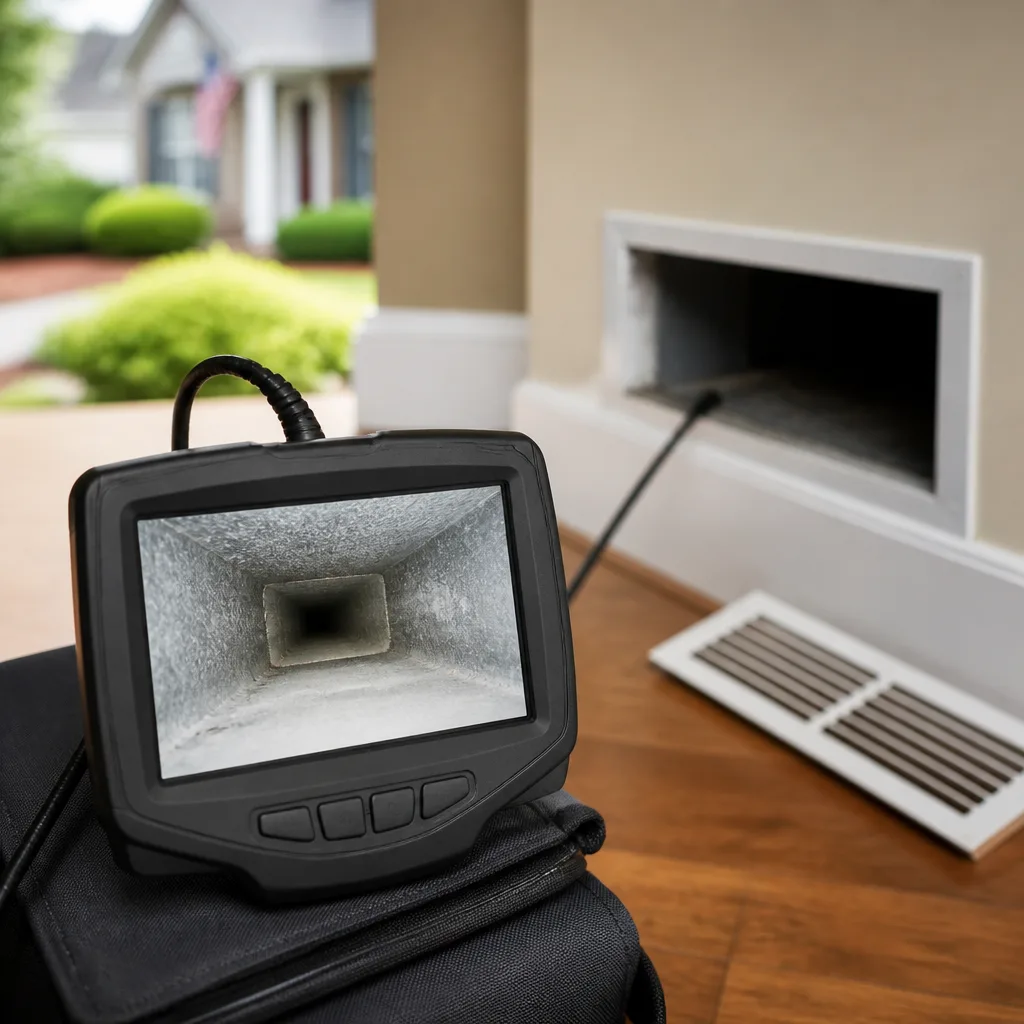 Camera inspection
 Sanitizing & deodorizing
Whole-system duct and dryer vent check with before-and-after photos - you see exactly what came out of your vents
That "$99 whole-house special" is a bait ad - the real number appears once they are in your hallway, or the "clean" is a shop-vac at the register. We photograph the inside of your ducts before and after instead.
How to Hire an Air Duct Cleaning Contractor in Huntington Beach: A Step-by-Step Guide
If a duct cleaning company can fit all their equipment in a passenger van, they are almost certainly not cleaning your ducts. They are stirring debris and charging you for the trip. Huntington Beach has one of the most saturated coupon-markets for duct cleaning in Orange County, precisely because the low barrier to entry attracts operators who bought a portable vacuum and printed flyers. What they lack is a truck-mounted negative-air system, a rotary brush that actually scrubs duct walls, and HEPA filtration that captures what gets dislodged. This guide and our Seasonal Air Duct Cleaning Care for Huntington Beach: Year-Round Homeowner’s Guide give you a scripted vetting process so you can separate the real equipment from the shop-vac routine before anyone walks through your door. You will learn the five questions that expose a blow-and-go operator in under three minutes, how to read a quote line by line, and what Huntington Beach homeowners should demand as proof the work was done.
Quick Answer
To hire a qualified Air Duct Cleaning services contractor in Huntington Beach, you need to verify three things before signing anything: the cleaning system is truck-mounted or HEPA-filtered negative air (not a portable shop vac), the company performs a camera inspection before and after the job, and the quote lists whole-system pricing with no per-vent upcharges. Ask for the brand name of their extraction equipment, confirm NADCA membership or equivalent training, and require photo documentation of the ductwork interior when the job is complete. A legitimate Huntington Beach contractor will answer these questions without hesitation; a coupon operator will change the subject.
Styles & brands we work with
- Whole-home duct cleaning
- Dryer vent cleaning
- Camera inspection
- Sanitizing & deodorizing
Table of Contents
- The Real Difference Between Professional Duct Cleaning and a Shop Vac
- The Five Equipment Questions to Ask Before Scheduling
- What California Licensing Actually Covers (and What It Doesn’t)
- Red Flags Specific to Orange County’s High-Volume Coupon Operators
- How to Read a Duct Cleaning Quote Line by Line
- Post-Job Verification: Proof the Work Was Done, Not Just Attempted
- What Huntington Beach Homeowners Should Know About Their Ductwork
- Common Mistakes to Avoid
The Real Difference Between Professional Duct Cleaning and a Shop Vac
The equipment tells you everything. In Huntington Beach, where ocean air pushes salt-laden moisture through coastal homes, ductwork accumulates a specific cocktail: sand fines from beach traffic, pet dander, dust mite waste, and the occasional fine grit that works its way past window seals during Santa Ana wind events. A portable vacuum with a rotating brush attachment moves some of that material around. It cannot create the negative-pressure environment required to extract debris from the full length of a duct run.
Professional air duct cleaning in Huntington Beach operates on a different principle. A truck-mounted vacuum or a Nikro HEPA-filtered negative-air machine connects to the duct system and pulls air through it continuously while agitation tools work inside the ducts. The vacuum creates suction measured in thousands of CFM (cubic feet per minute). A shop vac moves air at a fraction of that rate. The difference is not subtle: in our experience, a consumer-grade vacuum leaves behind the fine particulate that settles on duct walls, which is often the exact material causing allergy symptoms or musty odors in the first place.
Rotobrush systems add a second element: a motorized brush head that spins against the duct walls while extraction happens simultaneously. The brush loosens adhered debris, and the vacuum captures it. Without both actions happening together, you are either loosening debris to resettle later or vacuuming only the center of the airstream. This is the single most important distinction in the industry, and most homeowners never think to ask about it.
The Five Equipment Questions to Ask Before Scheduling
You can identify a professional operator before they ever arrive in Huntington Beach. These five questions, asked over the phone, reveal the difference between real equipment and a marketing budget. We recommend asking all five. You do not need to understand the technical details; you need to hear the answers without hedging.
- “Do you use truck-mounted extraction or portable equipment?” The answer should be truck-mounted or a portable HEPA negative-air machine with a brand name. If the answer is “commercial-grade portable vacuum” with no brand, that is a red flag. Truck-mounted units pull 10,000 to 15,000 CFM. A shop vac pulls under 200. The power difference is not a technicality; it is the difference between extraction and agitation.
- “What brand is your brush system, and does it make contact with the duct walls?” You want to hear Rotobrush, or an equivalent mechanical brush system that physically scrubs surfaces. “We use a high-powered air whip” can be legitimate on specific duct materials, but if they cannot name their agitation tool, they may not have one.
- “What HEPA rating does your extraction unit carry, and does it filter before or after the vacuum?” The critical concept is negative-pressure containment: dirty air moving toward the vacuum, not recirculating into the living space. Abatement Technologies air scrubbers filter particles down to 0.3 microns. If the contractor stumbles on this question, they are likely creating more airborne dust during the job than they remove.
- “Is a camera inspection included in the quote, or is it an add-on?” A professional operator inspects before and after. They document what the ducts look like with a borescope or duct camera. The pre-job inspection identifies disconnected runs, rodent activity, or excessive buildup that changes the scope of work. Charging extra for it tells you they do not want you to see the baseline condition.
- “How do you create negative air pressure in the system?” Real duct cleaning creates a sealed environment where the only air moving is air being pulled into the vacuum. The contractor should describe sealing registers, cutting an access point, and connecting the extraction unit directly to the supply or return plenum. If their explanation does not include creating a sealed system, they are cleaning one section at a time with no containment, which means loosened debris drifts into other rooms.
What California Licensing Actually Covers (and What It Doesn’t)
California does not have a specific “air duct cleaning license.” A contractor performing duct cleaning in Huntington Beach may hold a C-20 warm-air heating, ventilating, and air conditioning contractor license from the Contractors State License Board if they also perform HVAC work, or they may operate under a general contracting classification if duct cleaning is bundled with related services. The CSLB regulates contractor behavior, protects consumers through its complaint process, and requires bonding. But a license does not verify competence at duct cleaning specifically. A plumber can hold a C-36 license and legally add duct cleaning to their service list without ever touching a Rotobrush.
What matters more for this specific service is NADCA membership. The National Air Duct Cleaners Association sets the standard for source-removal duct cleaning: the procedure required to remove debris from the duct interior, not just push it around. NADCA-certified firms follow a documented process that includes agitation, extraction, and verification. Ask directly: “Are you a NADCA member, and do you follow their source-removal standard?” A Yes is meaningful. A pause followed by “we follow industry best practices” is not.
Beyond licensing and association membership, insurance matters for a reason specific to duct work. A technician working in an attic in Huntington Beach during July risks heat exhaustion; a ladder slip can damage a ceiling. Confirm the contractor carries workers’ compensation insurance. Without it, a technician injury on your property can turn into a liability claim against your homeowners policy. Ask to have the certificate of insurance emailed; professional firms send it without resistance.
Red Flags Specific to Orange County’s High-Volume Coupon Operators
Huntington Beach is one of the most competitive duct-cleaning markets in California, which means the coupon operators have refined their playbook. You will see mailers offering whole-house duct cleaning for $49 or $99. Here is how that model actually operates, based on what we have seen in homes across Surf City, from the older tract housing around Main Street to newer builds in Seacliff.
The $99 price is a loss leader. The technician arrives and immediately finds problems: mold-like staining, a torn flex duct, a dryer vent that “absolutely needs” relining. Each upsell carries a four-figure price tag. If the homeowner declines, the technician performs a 45-minute vacuum pass that removes no significant debris. The profit was never in the cleaning; it was in the pressure tactics built into the visit.
Specific red flags to watch for in Huntington Beach:
- No pre-job camera inspection offered. Legitimate operators want to see the ducts before cleaning. Coupon operators do not want a record of what they left behind.
- A single technician for a full house. Proper source-removal cleaning on a 2,000-square-foot home takes three to five hours with two people. One technician with one portable machine cannot do it properly in an afternoon.
- Pressure to add services on-site. “Your air handler needs sanitizing” is a classic upsell line. A filter replacement, sanitizing, and “deep scrub” add-ons built into the visit are pre-scripted. Legitimate firms quote these services up front as line items or not at all.
- Quoting by the vent. Per-vent pricing invites game-playing: counting supply registers, deciding whether returns count double, “bundling” at a discount. Whole-system pricing is the clean, comparable approach.
- Refusing to name equipment brands. If they cannot tell you what they clean with, they are cleaning with whatever was cheapest at Harbor Freight. In Huntington Beach, where salt air accelerates rust on duct interiors, a cheap brush head disintegrates and leaves its own residue.
How to Read a Duct Cleaning Quote Line by Line
A professional duct cleaning quote for a Huntington Beach home should look like a scope of work, not a single number on a flyer. Here is how to parse it.
What a legitimate quote includes:
- System size and access description. The number of supply registers, returns, the presence of two HVAC systems, and whether the air handler is in an attic, closet, or garage. This establishes the job scope and shows the contractor assessed the home.
- Cleaning method and equipment. Specific language like “source removal via truck-mounted negative air, Rotobrush agitation system, HEPA-filtered extraction.” Vague language like “complete system cleaning” without tool names is a tell.
- Registration of scope. If the quote mentions “all supply ducts, return ducts, air handler, blower motor, plenum, and registers,” you know the entire airflow path is covered. A missing blower motor or plenum means limited cleaning.
- Dryer vent cleaning as a line item if requested. Dryer vent work is a separate service with separate equipment. It should be listed as its own item, not buried in the duct cleaning line.
- Total flat price, with no per-vent math. One price for the whole system. This is the format that makes quotes comparable.
What a suspiciously thin quote looks like:
- A single line: “Duct cleaning: $99.” No system description, no equipment, no scope.
- Per-vent pricing: “$12 per vent, vents counted on arrival.” The count can change once the tech arrives.
- No mention of the air handler or blower. In Huntington Beach, where many systems live in attics exposed to salt air, skipping the air handler is skipping the dustiest part of the path.
- “Additional charges may apply” language with no explanation of what triggers those charges.
When comparing two bids that look equal but are not, look for the HEPA filtration line. One contractor uses Abatement Technologies air scrubbers during service to capture dislodged particles. The other does not. The quotes may match on price; the containment difference is invisible unless you ask. A contractor who actively prevents debris from drifting into your living room is doing a materially different job than one blowing it around and vacuuming the aftermath.
Post-Job Verification: Proof the Work Was Done, Not Just Attempted
The single biggest gap in the duct cleaning industry is verification. Most homeowners never see the inside of their own ducts. A contractor can spend two hours on a job and leave behind half the debris with no practical way for the customer to check. This trust gap is why some Huntington Beach residents have written off duct cleaning altogether after one bad experience.
A legitimate contractor closes that gap with documentation. Here is what to require:
- Before-and-after camera photos. The contractor should provide clear photos of the same duct sections before cleaning and after. In the before photo, you should see dust, debris, or staining. In the after photo, the metal or flex duct interior should be visibly clean. If the “after” photos are blurry or show only the registers, that is selective documentation.
- A completion report listing the services performed. This should note the number of registers cleaned, the air handler and blower service if performed, and any anomalies the tech encountered: a disconnected flex run, a crushed return, signs of vermin. This report is also valuable if you later sell the Huntington Beach home and want to document HVAC maintenance history.
- Direct observation of the access point. If extraction equipment was connected to the plenum or a register, you will see the access hole the tech cut and then sealed. Ask to see it before they close everything up. It is evidence that negative pressure was applied to the system, not just a wand passed through each register.
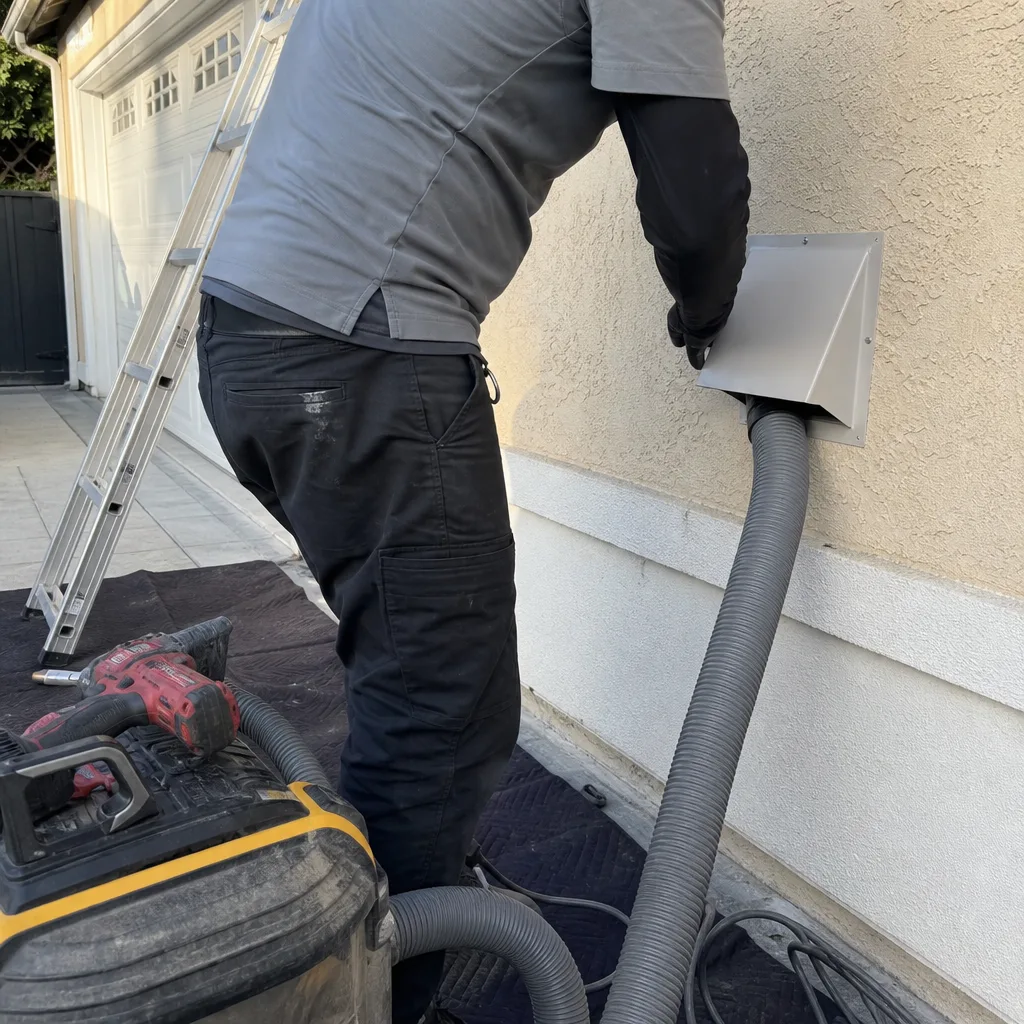
For dryer vent cleaning in Huntington Beach, verification is simpler but no less important: the tech should show you the full volume of lint extracted from the vent. Lint fills a translucent bag quickly. If the vent was genuinely clogged and the bag is nearly empty, the job was not done.
What Huntington Beach Homeowners Should Know About Their Ductwork
The coastal climate in Huntington Beach shapes what lands in your ducts and how it behaves once it is there. Homes within a mile of Pacific Coast Highway run their AC far less than inland Orange County homes, but they use their fans and sometimes heat pumps more heavily in the marine layer months of May and June. That means dust accumulates not from constant cooling but from constant air circulation. Add to that the sand that rides in on clothes, shoes, and open windows during beach days, and you get a fine abrasive grit that works its way into duct seams and blower bearings.
In older Huntington Beach neighborhoods like Edwards Hill and the tract home areas east of Beach Boulevard, many HVAC systems were designed with minimal filtration. A one-inch fiberglass filter stops the largest particles and lets everything else pass into the ductwork. Over decades, the ducts accumulate a layer of fine dust that acts as a reservoir for allergens and occasional musty smells during humid stretches. Cleaning those ducts without addressing the filtration gap means the problem returns quickly. Part of a proper air duct repair in Huntington Beach or cleaning visit should include a conversation about upgrading to a better filter. We supply and install Honeywell and Aprilaire filtration products for exactly this reason. A media filter cabinet installed at the air handler captures particles before they enter the ducts, which extends the life of the cleaning and improves the air every day afterward.
Homes built in the last two decades, especially those in the planned communities around Ellis Avenue and the newer builds near Central Park, often have flexible duct runs that sag or become disconnected. A cleaning technician who finds a disconnected flex run is providing a genuinely useful service; that is conditioned air leaking into the attic. Fixing it is repair work, and it should be quoted separately with a clear explanation. If you hire a contractor whose only service is cleaning, a disconnected duct gets ignored or becomes an upsell from a different subcontractor. With us, it is diagnosed and fixed by the same crew during the same visit.
Common Mistakes to Avoid
- Hiring on price alone. The $99 coupon in Huntington Beach exists to get a technician into your home for an upsell conversation. Whole-system cleaning with real equipment costs more because it actually removes debris.
- Not asking about HEPA filtration during the job. A cleaning that loosens dust without capturing it sends that dust into your bedroom and living room. In a coastal home with asthma or allergy sufferers, that is worse than not cleaning at all.
- Accepting “it looks good from the register” as proof. Register openings represent a tiny fraction of the duct surface. You need camera evidence from inside the duct runs.
- Skipping the dryer vent because “it’s a different thing.” Your dryer vent carries lint, which is combustible. A clogged vent is a fire risk, full stop. The Platinum Air Duct Cleaning home service model addresses both ducts and dryer vents in one visit because they fail for different reasons but benefit from the same inspection.
- Letting a technician pressure you into same-day decisions. Any significant repair found during cleaning (a disconnected run, crushed duct, or evidence of vermin) can wait a day. Get the quote, review it, and compare. A reputable contractor will document the issue with photos and give you time to decide.
- Assuming a licensed contractor means a qualified duct cleaner. The CSLB license protects you from fraud and requires bonding. It is not a credential for source-removal duct cleaning. NADCA membership or equipment-name transparency is the relevant marker here.
- Not getting the quote in writing before work starts. Verbal quotes on a Huntington Beach driveway are not binding. Request the quote by email with the scope and price stated. If they will not put it in writing, find someone who will.
See the difference
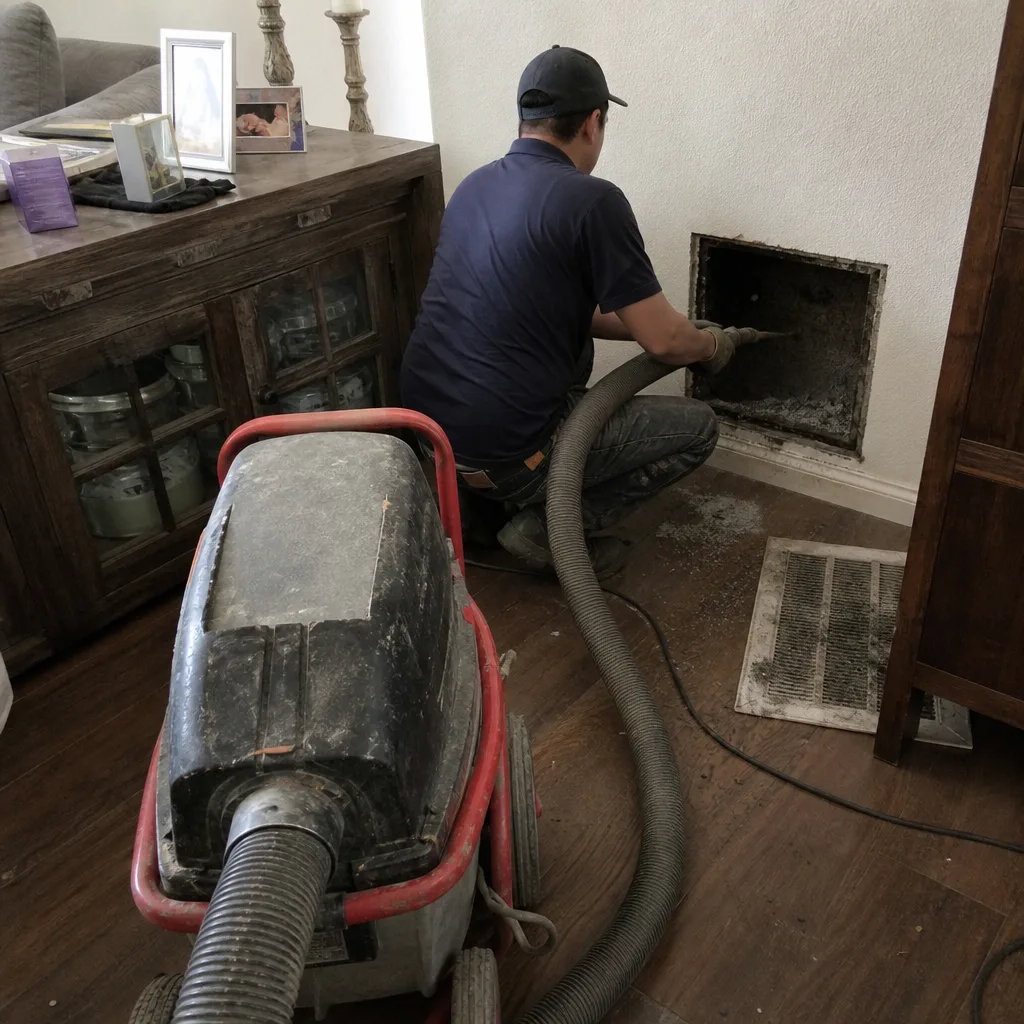 Before
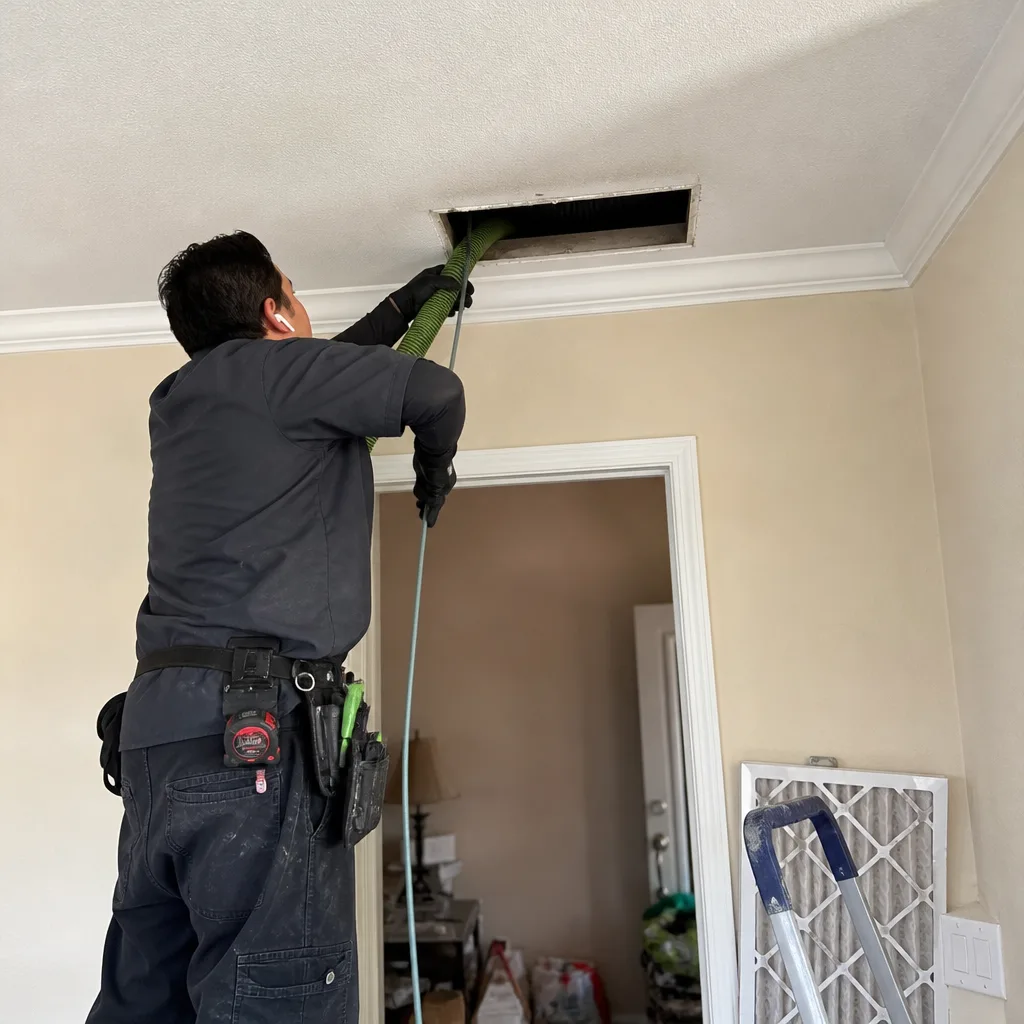 After
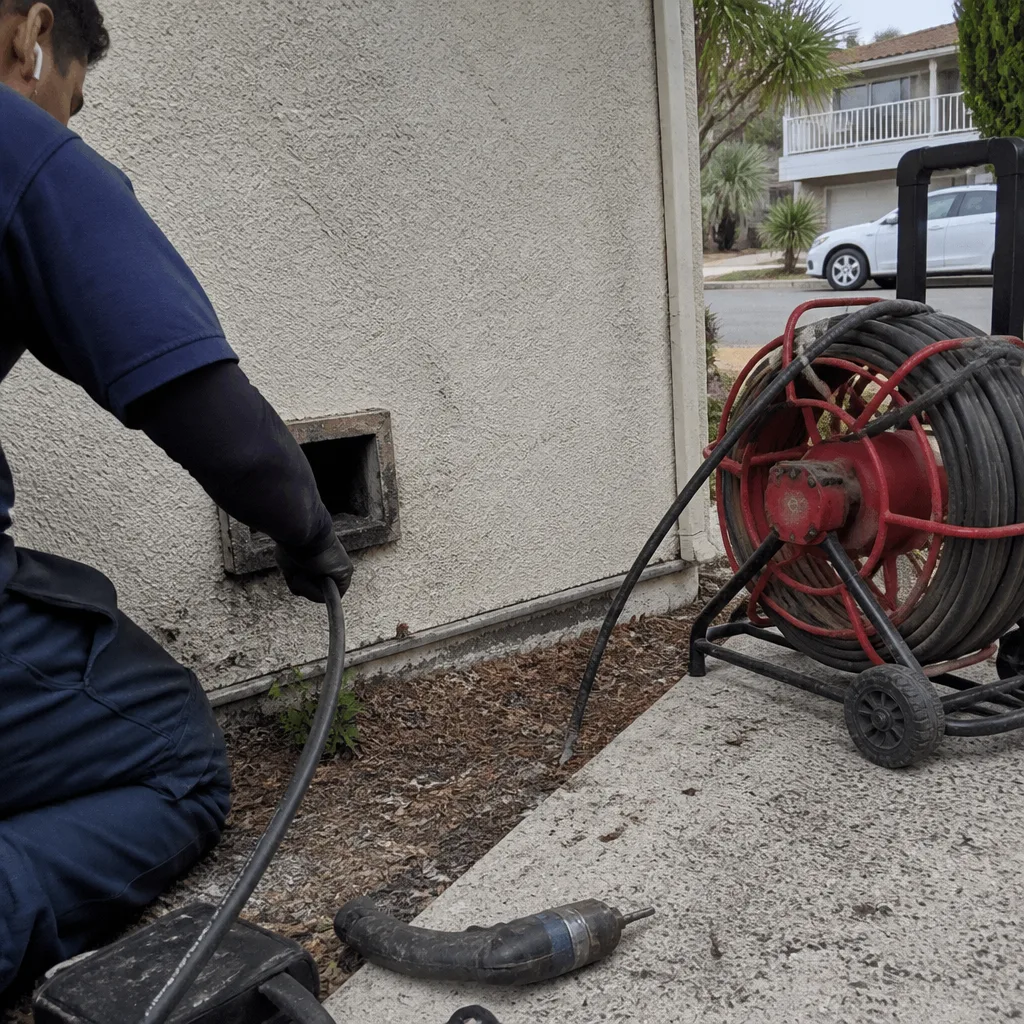 Before
 After
 Before
 After
When to Call a Professional
Some situations warrant an immediate call. If you see dust blowing from your registers when the system starts, that is accumulated debris entering your living space. If you find mold-like growth on register grilles, or if your energy bills have climbed without a change in your habits, a duct inspection is a reasonable next step. After a home renovation in Huntington Beach, construction dust inevitably finds its way into the duct system; have it cleaned before you move furniture back. And if you have not cleaned your dryer vent in over a year and the dryer takes multiple cycles to finish a load, that vent is likely restricted. Platinum Air Duct Cleaning offers free estimates in Huntington Beach. Call (877) 824-2949 and we will tell you exactly what our equipment will do for your home, and what it will not.
Frequently Asked Questions
Whole-system air duct cleaning in Huntington Beach typically ranges from $350 to $800 depending on the home’s square footage, number of systems, and accessibility of the air handler; see our Air Duct Cleaning Cost Breakdown: The Huntington Beach Homeowner’s Reference for 2026 for detailed pricing factors. This price should include all supply and return ducts, the plenum, air handler, blower, and registers. Quotes significantly below $300 in this market come with an upsell strategy. We quote one flat price per system after inspecting the home, not after the technician arrives.
Cheap quotes mean cheaper equipment, shorter time on-site, and often a sales visit disguised as a service call. A $99 coupon operator cannot afford truck-mounted negative-air equipment, HEPA filtration, two technicians, and a camera inspection. That price exists to get someone in your door. A legitimate Huntington Beach contractor charges what the equipment and labor actually cost, and the quote is the final price.
You should receive before-and-after camera photos showing the interior of your ducts, not just the register grilles. A professional contractor will show you the access point where extraction equipment was connected and provide a written completion report. If a company refuses to document the interior of your ducts, treat the cleaning as unverified. Call us for a quote, and we will show you exactly what your ducts look like before we touch them.
For most Huntington Beach homes, every four to six years is a reasonable interval. Homes with pets, recent renovation work, a smoker, or allergy sufferers may benefit from every two to three years. If you upgraded to a media filter cabinet after a thorough cleaning, the interval can stretch longer because less new debris enters the system. A camera inspection will tell you whether buildup is present; do not clean on a schedule alone.
Yes. The fine sand grit that enters through doors, windows, and shoes settles in duct runs and gets pulled through the system whenever the fan operates. The agitation and negative-pressure process removes this particulate, but note that sand is abrasive. The salt air also accelerates rust on exposed metal ducts over time. A professional cleaning provides a useful look at whether your ductwork has rust or corrosion that may need repair. We handle air duct repair in Huntington Beach during the same visit if we find damage.
No. A shop vacuum does not move enough air to extract debris from a full-length duct run, and it lacks the agitation tools required to dislodge material adhered to duct walls. Portable consumer vacuums also do not seal the system, so loosened debris drifts into your living areas. Duct cleaning involves working with HVAC systems and, occasionally, accessing attics; a trained technician with professional equipment is the appropriate choice. Call (877) 824-2949 for an estimate in Huntington Beach.
The Bottom Line
Hiring an air duct cleaning contractor in Huntington Beach comes down to three moves. Ask the five equipment questions before you book. Read the quote for scope, equipment names, and a flat whole-system price. Demand before-and-after camera documentation as evidence of completed work. The difference between a professional cleaning and a blow-and-go visit is not in the pitch; it is in the equipment, the containment method, and the willingness to show you the inside of your own ducts. For more guides & resources, visit our blog. That standard is knowable before anyone arrives at your door.
Written by the team at Platinum Air Duct Cleaning, serving Huntington Beach since 2017.