
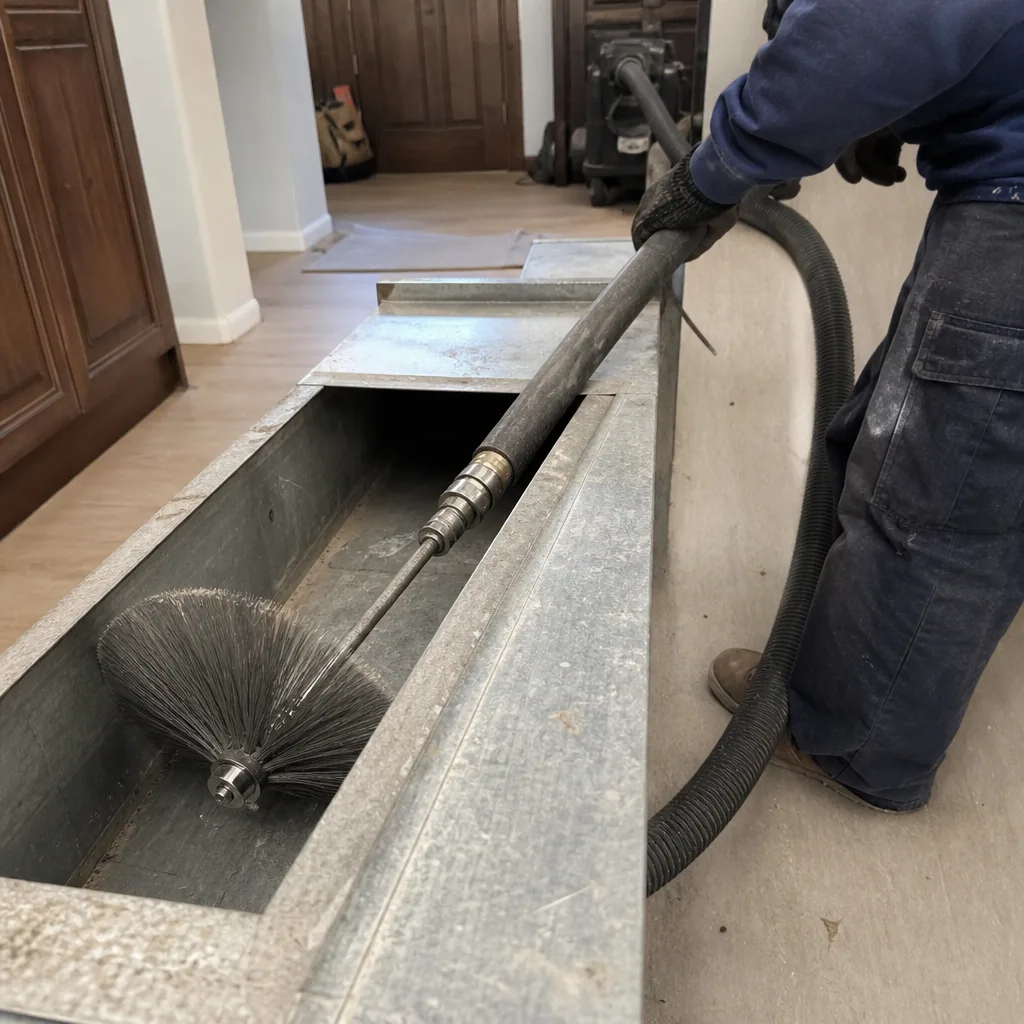
Last updated November 2, 2026
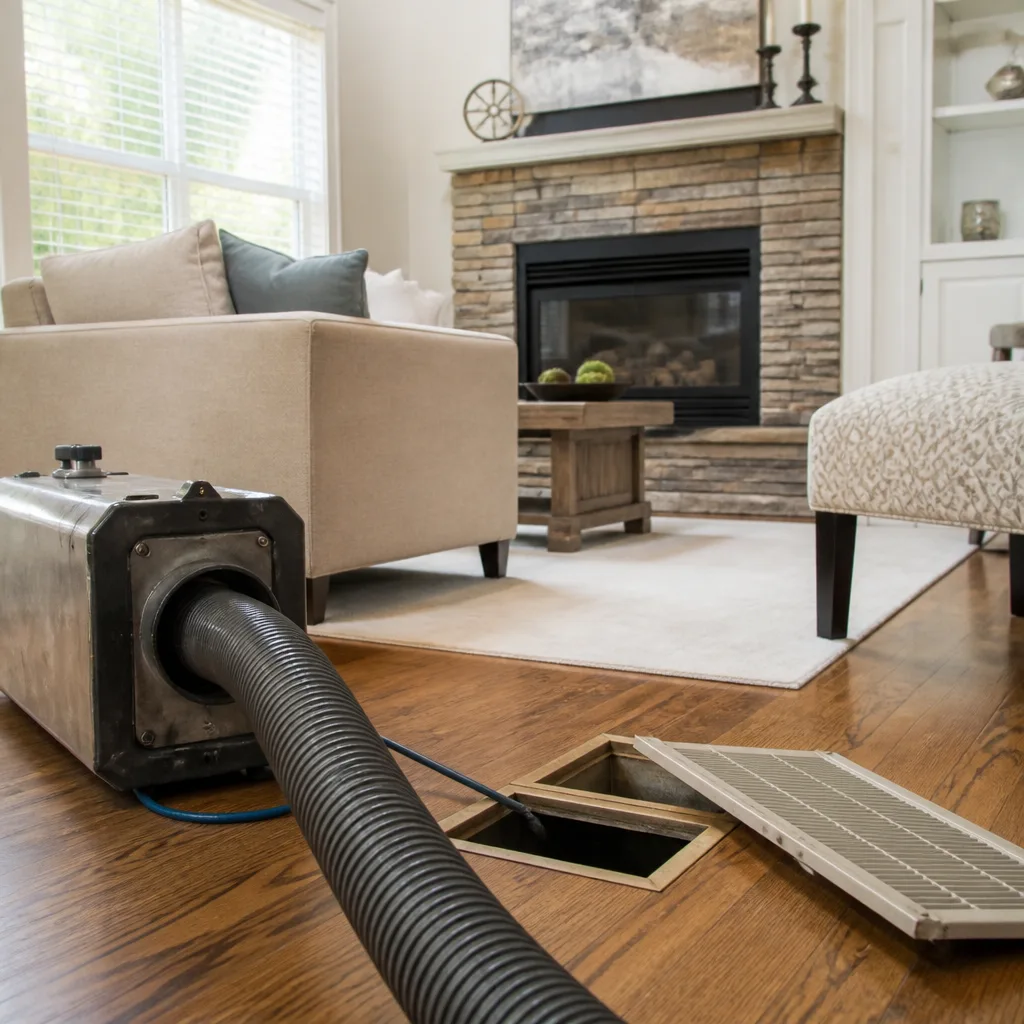 Whole-home duct cleaning
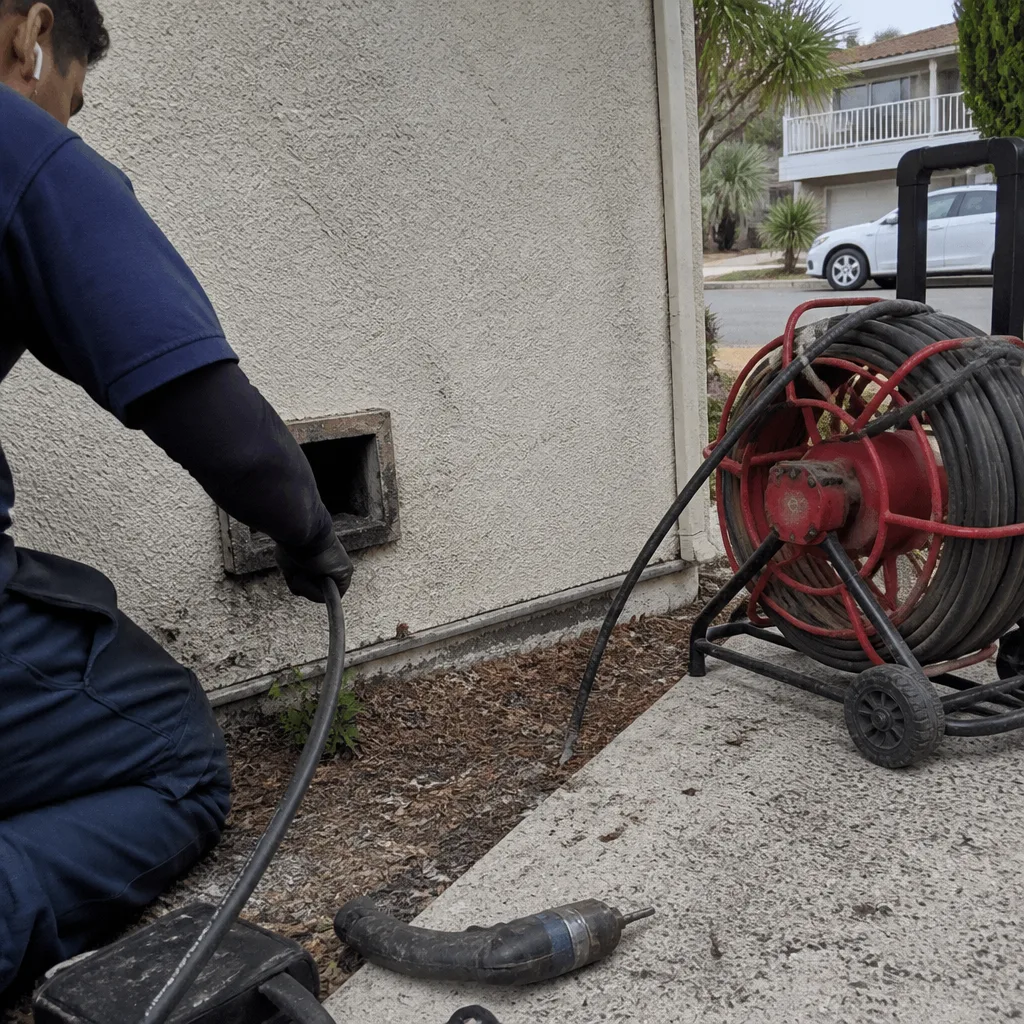
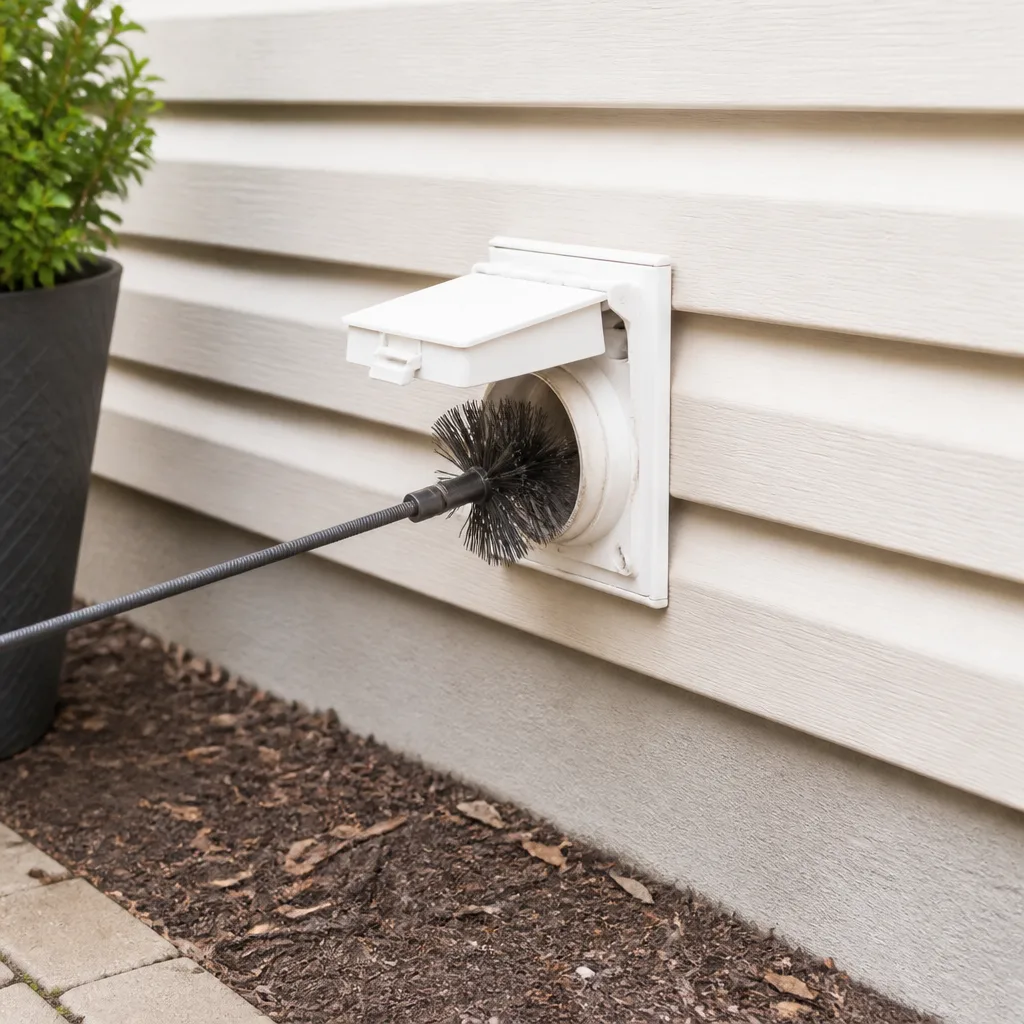 Dryer vent cleaning
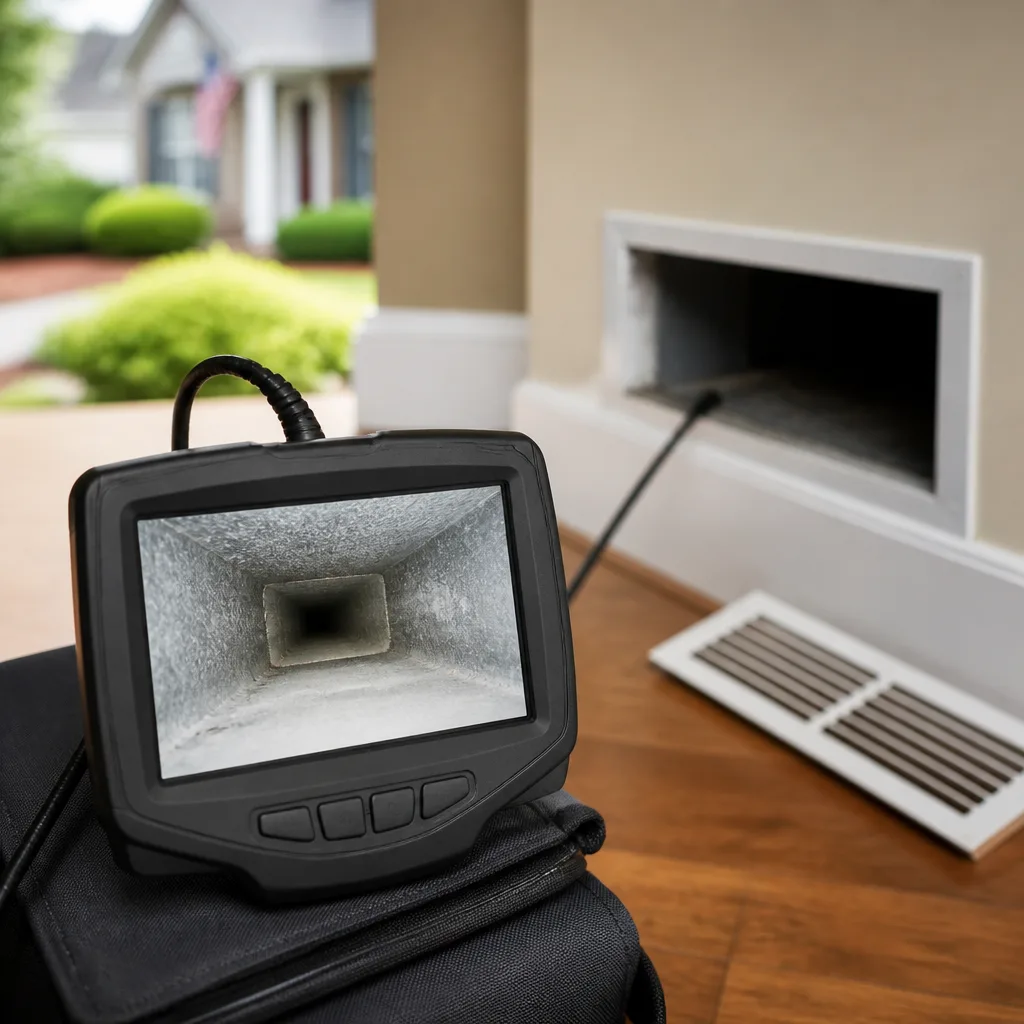 Camera inspection
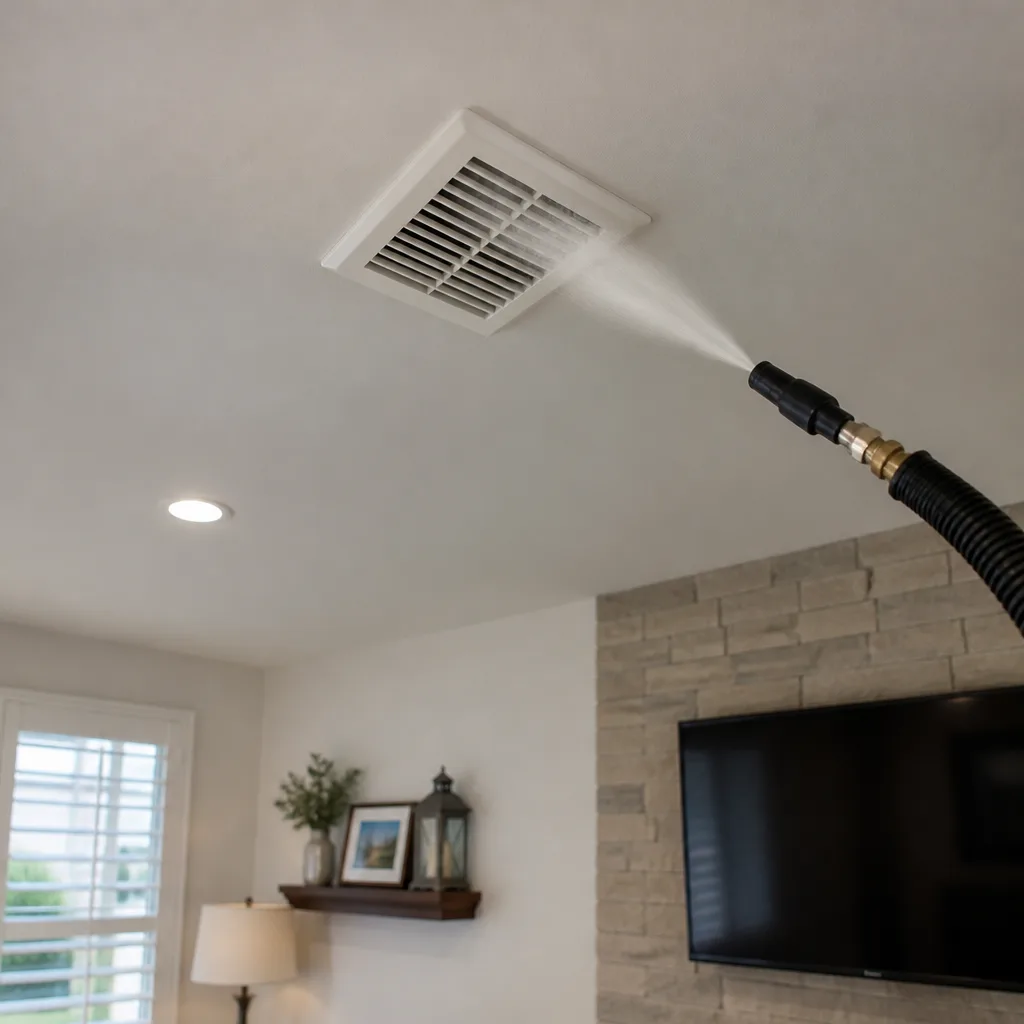 Sanitizing & deodorizing
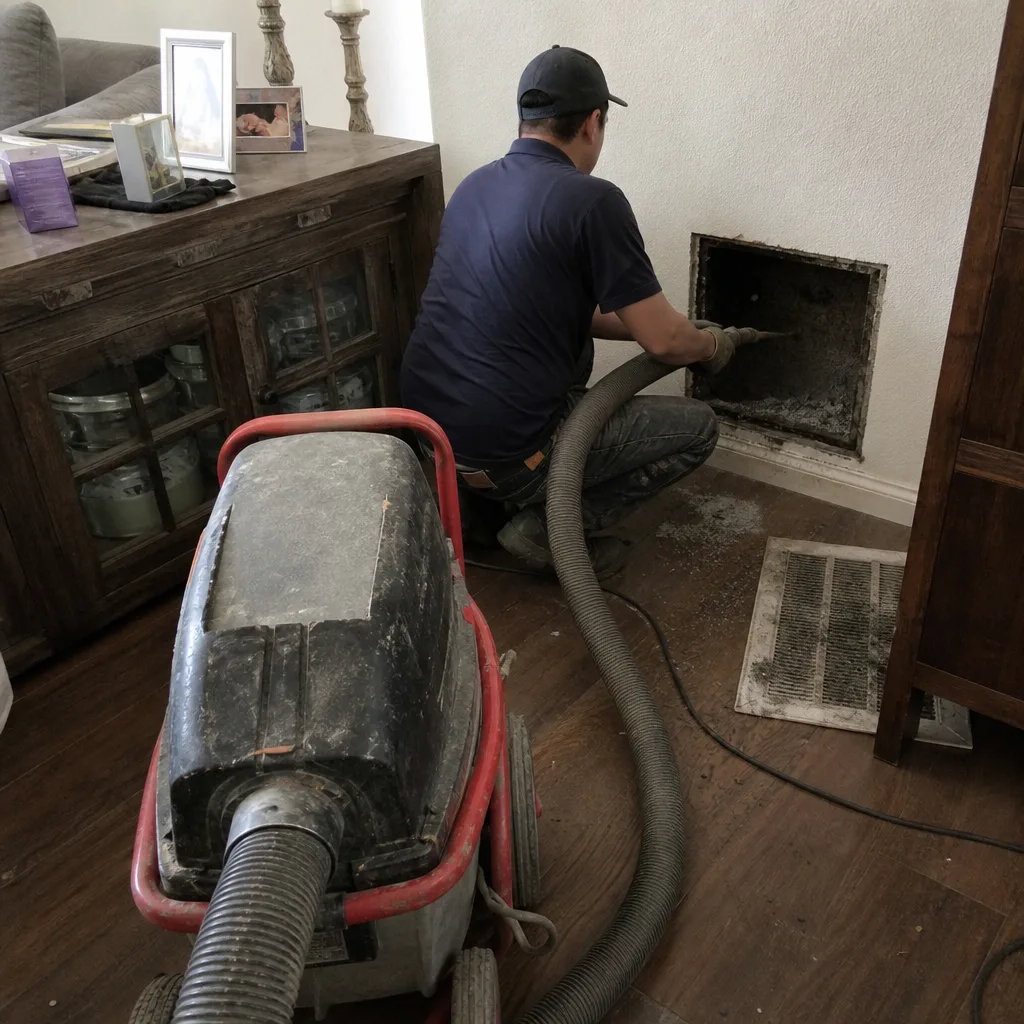
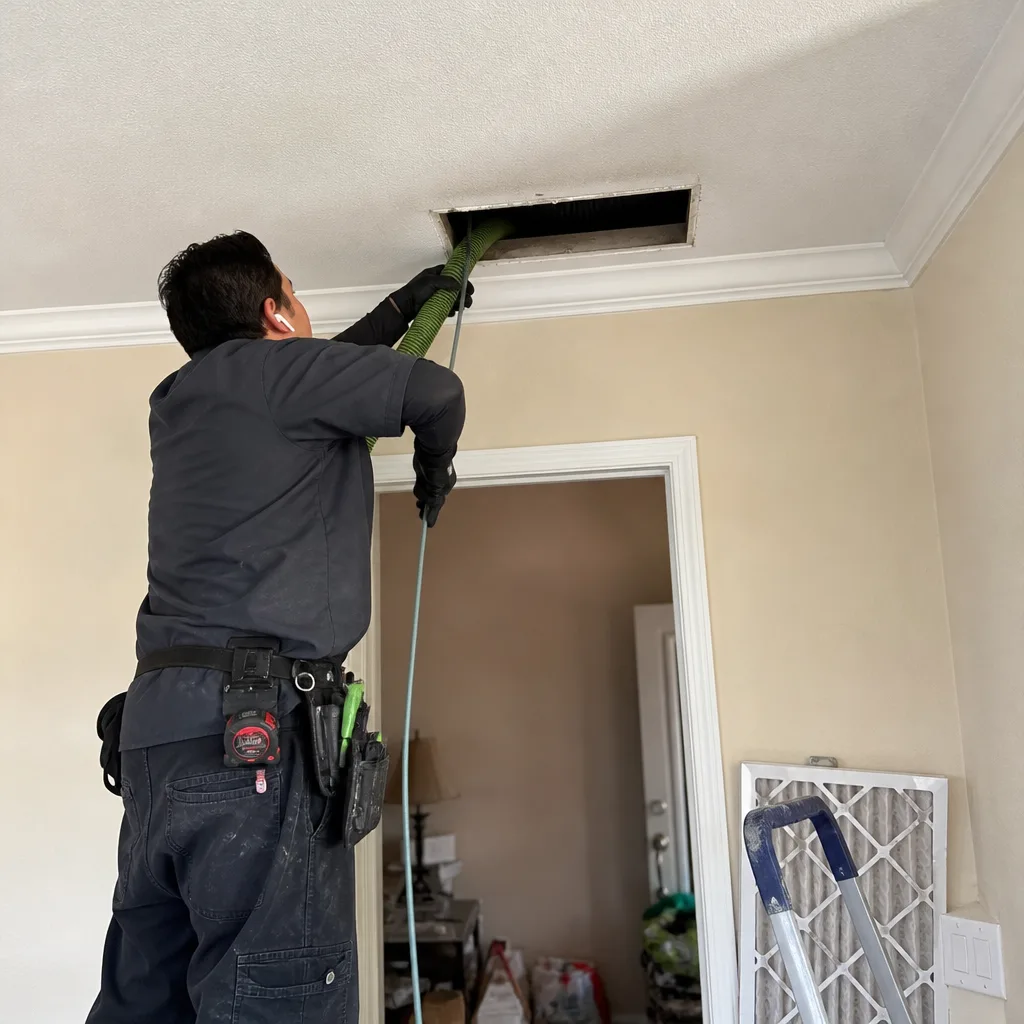
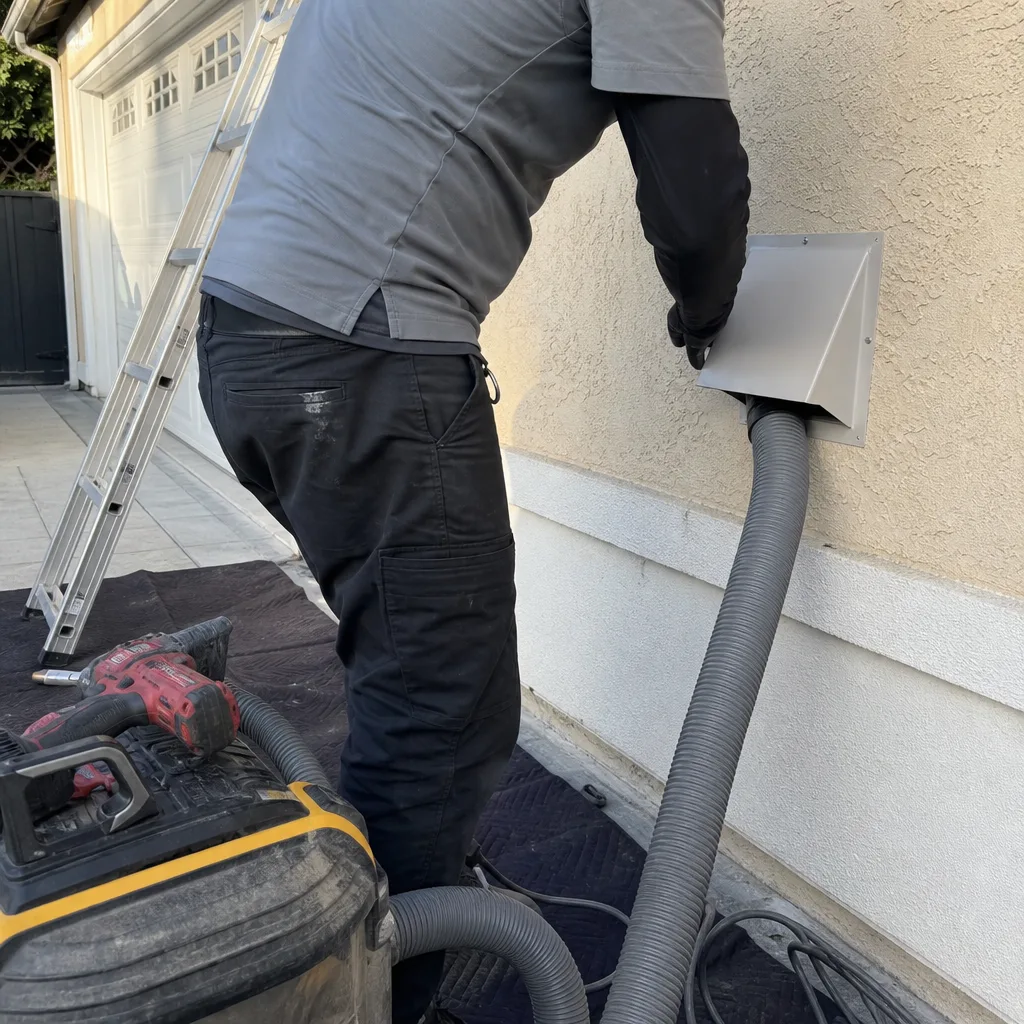
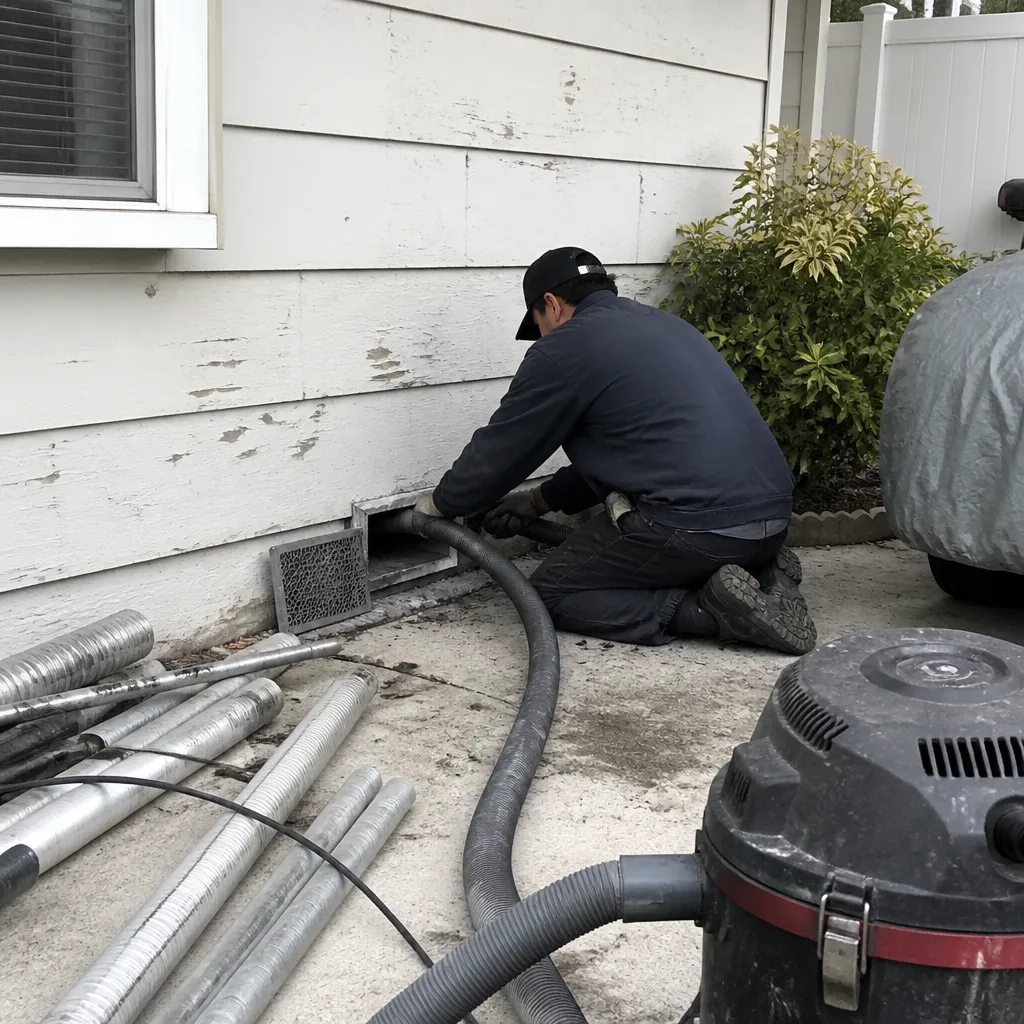
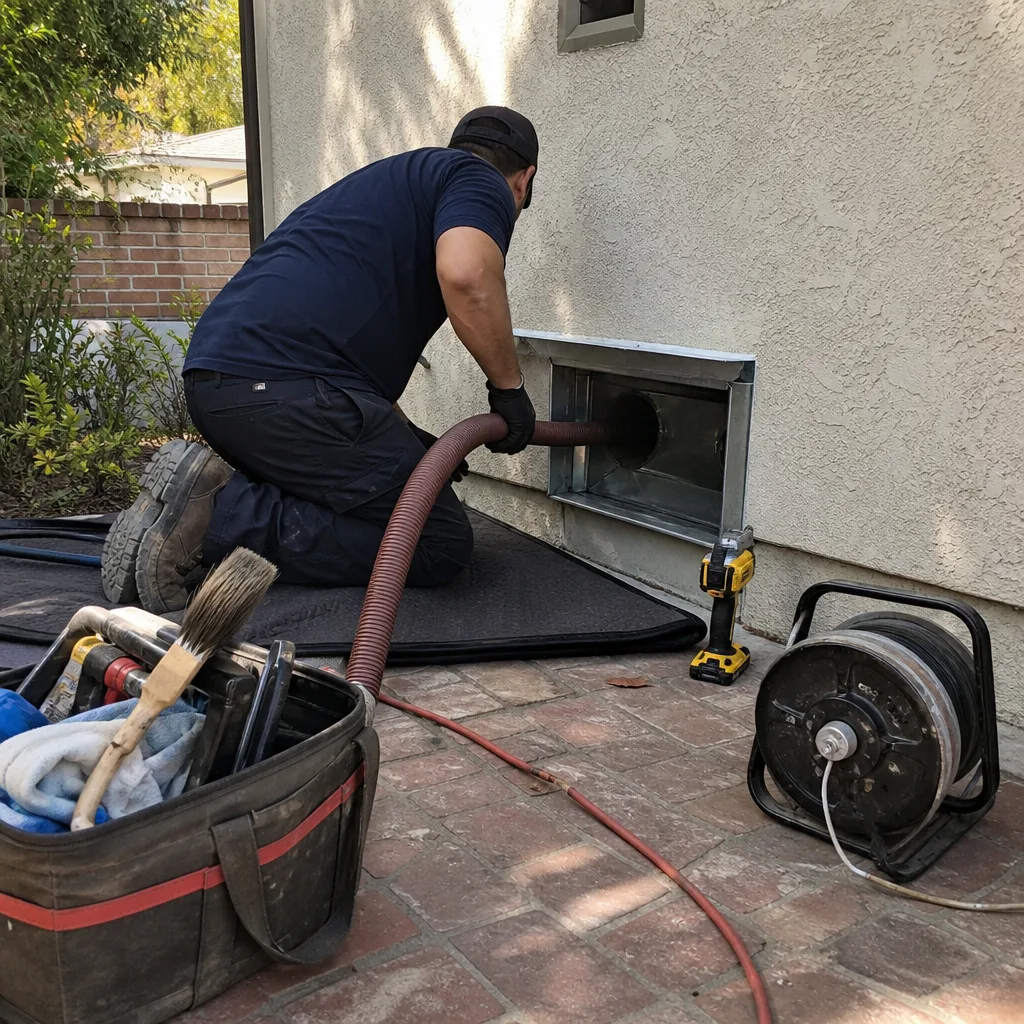
Whole-system duct and dryer vent check with before-and-after photos - you see exactly what came out of your vents
That "$99 whole-house special" is a bait ad - the real number appears once they are in your hallway, or the "clean" is a shop-vac at the register. We photograph the inside of your ducts before and after instead.
Air Duct Cleaning Emergency Preparedness Guide for Huntington Beach Homes
Here’s the counterintuitive reality about air ducts and disasters: the ducts themselves survive most emergencies just fine. What doesn’t survive is the air moving through them. A coastal wildfire can push smoke twenty miles inland and then sit for days over Huntington Beach, and every time your furnace blower cycles, it pulls that air across your couch, into your bedroom, through the return register, and back out again. The ductwork becomes a distribution network for whatever the emergency carried in. This guide covers what to do before, during, and after a Huntington Beach emergency so that your HVAC system doesn’t make a bad situation worse. We’ll cover wildfire smoke, floodwater, and the salt-heavy air that follows coastal evacuations, and we’ll give you a clear sequence for assessing ductwork before you let your family breathe through it again.
Quick Answer
After a wildfire smoke event, flood, or coastal emergency in Huntington Beach, keep your HVAC system OFF until you’ve completed a basic duct inspection, upgraded to at least a MERV 13 filter if smoke was present, and confirmed no standing water or visible debris has entered the return registers or supply vents. A professional duct assessment with negative-pressure equipment is the fastest way to confirm whether your ductwork is safe to use.
Styles & brands we work with
- Whole-home duct cleaning
- Dryer vent cleaning
- Camera inspection
- Sanitizing & deodorizing
Table of Contents
- Why Huntington Beach Sits in a Disaster Corridor
- Wildfire Smoke and Your Ductwork
- Post-Wildfire Smoke Protocol: A Step-by-Step Sequence
- Flooding, Slab Moisture, and Floor Registers
- Tsunami Evacuation Return: Salt Air and Debris
- Vulnerable Occupants: When Duct Assessment Is Non-Negotiable
- Documenting Duct Condition for Insurance Claims
- Common Mistakes to Avoid
- When to Call a Professional
- Frequently Asked Questions
Why Huntington Beach Sits in a Disaster Corridor
Huntington Beach occupies a narrow coastal plain between the Pacific Ocean and the Santa Ana Mountains. That geography creates two distinct emergency patterns. First, the Santa Ana winds that blow from the inland deserts toward the coast push wildfire smoke directly across Orange County’s urban core, and Huntington Beach sits at the receiving end of that wind tunnel. When the Bond Fire burned in Silverado Canyon in December 2020, smoke plumes drifted over Huntington Beach for days even though the fire was twenty miles away. Second, the city’s low elevation and beach adjacency put thousands of homes in tsunami evacuation zones. The Huntington Beach tsunami zone map extends inland past Pacific Coast Highway in several areas around the Santa Ana River outlet, and many of those homes have slab construction with floor registers that sit inches above grade.
We’ve inspected ductwork in Huntington Beach homes after both types of events. What we find is rarely catastrophic duct damage. What we find is contamination: a fine gray film coating the inside of return ducts after smoke events, or rust stains and debris accumulation in floor registers after flooding. The ducts themselves are intact. Moving air through them was the problem.
Wildfire Smoke and Your Ductwork
Wildfire smoke contains particles that behave differently from ordinary household dust. The larger particles, the visible ash you can sweep off a windowsill, are mostly carbon. The smaller particles, the ones under 2.5 microns, carry combustion byproducts including polycyclic aromatic hydrocarbons and trace heavy metals from burned structures. These particles are small enough to travel through a standard fiberglass furnace filter without slowing down. A MERV 8 filter, the kind most Huntington Beach homes have installed, captures maybe 20% of particles in that size range.
Once smoke particles enter your return grille during a smoke event, three things happen. Some particles settle immediately onto the interior surfaces of the ductwork. Some are blown through the system and back into the home, where they settle on furniture and flooring. And some are trapped in the blower fan, the evaporator coil, and the filter housing. When you turn the system back on after the smoke clears, the particles that settled in the ductwork are no longer the only concern. The debris stuck to the fan and coil can also release during the first several hours of operation, recirculating contaminants you thought were gone.
The question we hear most from Huntington Beach homeowners after a smoke event is “does my air duct cleaning need to happen immediately?” The honest answer is that inspection comes first. Cleaning can usually wait a week. What cannot wait is the decision about whether to run the system at all.
Post-Wildfire Smoke Protocol: A Step-by-Step Sequence
This is the sequence we recommend for Huntington Beach homeowners after a regional wildfire smoke event. Do these steps in order, and do not skip ahead.
- Keep the HVAC system off. Do not run the fan, do not run the air conditioner, and do not switch the thermostat to “fan only” to circulate fresh air. Any operation of the blower pulls air through the ducts and into the living space.
- Visually inspect every return grille and supply register. Remove two or three register covers in different rooms. If you see a gray or black film on the inside surface of the duct within arm’s reach, the contamination is throughout the system, not just at the registers.
- Check the filter. If the filter is discolored gray or black, it captured smoke during the event. Do not simply swap it out and restart the system. The filter tells you contamination entered the ductwork.
- Upgrade to a MERV 13 filter before any restart. A standard fiberglass filter will not capture smoke particles. A MERV 13 filter captures at least 50% of particles in the 0.3 to 1.0 micron range, which covers most wildfire smoke particle size distribution. If you have a Platinum Air Duct Cleaning home consultation, we can confirm whether your system can handle the increased pressure drop of a MERV 13 filter.
- Schedule a professional duct inspection. A proper inspection uses negative-pressure equipment to determine what’s actually inside the ductwork. We run a Nikro HEPA vacuum system during inspections to confirm whether debris is moving through the ducts or sitting in place, and the Abatement Technologies air scrubber captures what gets dislodged.
- Only restart the system after inspection confirms no significant contamination. If inspection finds smoke residue, a full duct cleaning is required before normal operation resumes.
The sequencing matters because of how smoke behaves. It is not enough to change the filter and assume the system is clean. The filter only captures particles that pass through it. Everything that settled in the ducts before the filter, and everything that passed through the filter before you upgraded it, is still in the system.
We also recommend upgrading your filtration permanently if you live in a Huntington Beach neighborhood that experiences smoke drift annually. Homes in the northwest part of the city, closer to the Bolsa Chica wetlands and the open space corridors, tend to get more smoke exposure than homes in the southeast quadrant. An Aprilaire media filter cabinet or a Honeywell electronic air cleaner installed at the air handler gives you year-round protection without the pressure drop issues of a high-MERV disposable filter jammed into a standard filter slot.
Flooding, Slab Moisture, and Floor Registers
Flooding in Huntington Beach does not usually look like standing water in the living room. Because much of the city is built on slab foundations with the ductwork embedded in or running through the slab, floodwater enters the ducts from below. When the water table rises after heavy winter storms, or when storm surge pushes seawater through storm drains and into low-lying streets, moisture wicks up through the slab and into the insulated interior of floor-register duct systems.
Here is the sequence we observe in slab-duct homes after a flooding event. Within 24 to 48 hours, the interior of the ductwork stays damp but not visibly wet. The moisture is hidden behind the register boot, where the duct connects to the floor opening. Within three to five days, especially during Huntington Beach’s warm season when daytime temperatures climb into the 70s and 80s, that damp environment becomes hospitable to mold colonization. We have seen visible mold growth inside duct boots within one week of a minor flooding event, even when the homeowner saw no water inside the home at all.
The tell-tale signs are specific. A musty odor that appears only when the system runs points to moisture inside the ductwork rather than in the general room air. Rust staining on the exterior of a floor register indicates water contact from below. And if the register boot feels cool and damp to the touch on a dry day, moisture is present.
If you have any evidence that floodwater or groundwater reached your slab, inspect every floor register in the affected area before restarting your HVAC. Unscrew the register cover and look into the boot with a flashlight. You are looking for three things: standing water, visible mold growth, and debris that was carried in by the water. If any of those are present, the ducts need professional attention before the system runs again.
Tsunami Evacuation Return: Salt Air and Debris
Huntington Beach sits within a tsunami hazard zone that extends from the coast inland in specific low-lying corridors. When a tsunami advisory or warning hits, homes in the evacuation zone are opened up, occupants leave, and the structures face whatever the ocean delivers. The return process has a ductwork component that most evacuation checklists miss entirely.
If your home was opened for ventilation during an evacuation, or if storm surge pushed water and sand into ground-level spaces, your ductwork absorbed salt air and possibly saltwater. Salt air is a different contaminant than wildfire smoke. It does not leave a gray film. It leaves a crystalline residue that corrodes the galvanized steel surfaces of your ducts, register boots, and the interior of your air handler. Over time, that corrosion creates rough surfaces where dust, pollen, and mold spores accumulate more readily. The corrosion also shortens the life of the duct system itself.
After a tsunami evacuation return in Huntington Beach, we recommend a specific assessment sequence before normal occupancy resumes:
- Check for sand and debris in exterior vents. Storm surge can push sand directly into exterior vent openings, especially on beachfront and near-beach properties west of Pacific Coast Highway.
- Open the air handler cabinet and look for salt residue. A white, crystalline film on the blower housing or coil fins indicates saltwater or heavy salt-air exposure.
- Inspect the interior of the return duct with a boroscope or through an access panel. If the duct interior shows corrosion or crystalline residue, a professional cleaning and repair assessment is the next step.
- Do not simply wipe down surfaces and restart the system. Salt residue inside ducts will continue to corrode the metal, and the residue can also attract moisture that supports mold growth.
Salt damage to ductwork often requires more than cleaning. In our Air Duct Repair in Huntington Beach work, we regularly find corroded register boots and rusted duct sections in beachfront homes that have seen decades of salt air even without a disaster event. A flooding or surge event accelerates that timeline dramatically.
Vulnerable Occupants: When Duct Assessment Is Non-Negotiable
This is not a preference list. If any of the following describes someone in your Huntington Beach household, duct assessment after an emergency is mandatory before re-occupancy, not optional.
- Children under two years old. Infant lungs are still developing, and their respiratory rates are higher than adults, meaning they inhale more air per pound of body weight. Contaminants from ducts hit infants disproportionately.
- Adults over 65. Respiratory capacity declines with age, and pre-existing conditions become more common. Older adults are less able to tolerate the particle load from contaminated ducts.
- Anyone with asthma, COPD, or chronic bronchitis. Smoke particles and mold spores in ductwork directly trigger bronchial inflammation. We have worked in Huntington Beach homes where an asthmatic child’s symptoms spiked within hours of the HVAC restarting after a smoke event.
- Anyone with an immune-compromising condition. Cancer treatment, organ transplant medication, autoimmune conditions, or diabetes all reduce the body’s ability to fight off the bacteria and mold spores that thrive in post-emergency ductwork.
- Pregnant women. Fetal development is sensitive to combustion byproducts from wildfire smoke, including PAHs that can pass through the placenta.
- Anyone with cardiovascular disease. Fine particulate matter is a documented trigger for cardiac events, not just respiratory symptoms.
If anyone in your home falls into one of these categories, the sequence changes. We recommend keeping the HVAC off until a professional inspection with negative-pressure equipment confirms that the ductwork is clear of smoke residue, mold, and debris. The cost of an inspection is small compared to a week of avoidable respiratory distress.
For Huntington Beach homes with persistent allergy concerns even outside emergency events, we commonly recommend a Honeywell whole-home filtration system installed at the air handler. It treats the air before it enters the ductwork, which addresses the root of the problem rather than masking it with room air purifiers. The “cleaner air starts in the ducts, not the filter” reframe is important here: the air that reaches your living space is only as clean as the pathway it travels through.
Documenting Duct Condition for Insurance Claims
If a wildfire smoke event, flood, or coastal emergency in Huntington Beach is declared a regional disaster, your homeowner’s insurance may cover duct cleaning or repair as part of the claim. Insurance adjusters respond to documentation, not descriptions. Here is what we tell homeowners to document before, during, and after professional duct service, so the claim has the best chance of being approved.
- Photograph the exterior of every return grille and supply register before anyone touches them. If the event deposited visible debris on register surfaces, those photos establish that contamination entered the system.
- Open and photograph the air filter. A discolored filter is evidence that the system ran during the contamination event. Do not throw the filter away. Keep it in a sealed plastic bag as physical evidence.
- Photograph the interior of at least two return ducts. A flashlight and a phone camera are enough. If visible contamination is present, the photographic evidence is decisive.
- Request a written inspection report from any professional who assesses the ductwork. The report should note the location, extent, and type of contamination found. If the professional uses negative-pressure equipment or camera inspection, the report should state that.
- Keep all receipts and documentation in one digital folder. If you have to supplement a claim later, having everything in one place shortens the process.
Most homeowner’s policies cover damage from declared disasters, but they often exclude “gradual accumulation of dust and debris” from ordinary wear and tear. The documentation sequence above establishes that contamination was event-driven, not routine. That distinction is the entire claim.
We have walked Huntington Beach homeowners through this documentation process after regional smoke events, and the claims that succeed are the ones with photos, retained filters, and professional reports. The claims that fail are the ones where the homeowner cleaned everything up, threw away the filter, and then called the insurance company.
Common Mistakes to Avoid
- Restarting the HVAC before inspection. This is the number one mistake we see in Huntington Beach after every smoke event. Running the system distributes settled contaminants and makes a localized problem whole-house. The cleaning can wait; turning the system on cannot.
- Swapping the filter and assuming the problem is solved. The filter captures particles that pass through it going forward. It does nothing about particles already settled inside the ductwork.
- Using a shop vacuum or household vacuum to clean registers. This dislodges debris and sends it through the house. Professional duct cleaning uses negative-pressure containment to capture what gets agitated. A shop vac has no containment.
- Ignoring the return side of the system. Supply registers are visible and easy to clean. Return ducts are hidden, larger, and carry unfiltered air. If you clean one and ignore the other, the system re-contaminates itself within hours.
- Running the fan on “ON” instead of “AUTO” after a smoke event. Continuous fan operation keeps particles suspended in the air and distributed throughout the home. Auto mode at least allows particles to settle where they can be cleaned.
- Failing to document before cleaning. If you plan to file an insurance claim, the evidence must be preserved before professional cleaning begins. Once the ducts are clean, the evidence is gone.
- Waiting weeks to address moisture in ducts after flooding. Mold colonization in Huntington Beach’s warm temperatures can begin within three to five days. The longer you wait, the more extensive the remediation becomes.
When to Call a Professional
There are situations where a homeowner’s inspection is not enough. If you see visible contamination inside the ductwork beyond arm’s reach, if the system has been running during a smoke event and family members are experiencing respiratory symptoms, or if floodwater or saltwater has reached the floor registers, a professional assessment is the responsible next step. We run our Rotobrush rotary brush system and Nikro HEPA vacuum during assessments to determine what is actually in the ductwork, and the Abatement Technologies air scrubber captures what gets dislodged. Dryer vent cleaning in Huntington Beach is also worth scheduling after a smoke or flood event, since dryer vents exhaust directly outside and can pull in the same contaminants. Platinum Air Duct Cleaning offers free estimates in Huntington Beach; call (877) 824-2949 to schedule an assessment.
Frequently Asked Questions
Inspection should happen within 48 to 72 hours after the smoke clears, before you restart the HVAC system. Cleaning can usually wait a week or more if the system remains off. The priority is confirming whether cleaning is necessary and preventing the system from distributing settled contaminants throughout the home. Call (877) 824-2949 if you need a professional assessment in Huntington Beach.
A MERV 13 filter captures a meaningful percentage of wildfire smoke particles, but it only protects the air that passes through it going forward. It does nothing about particles already settled inside the ductwork, and it may increase the pressure drop across your system if your air handler was not designed for that filter density. We recommend a professional assessment of your system before upgrading to a MERV 13 filter.
Yes, especially in Huntington Beach slab-construction homes where floor registers sit close to grade. Rising groundwater or storm surge can push moisture up through the slab and into register boots without producing visible standing water in the living space. A musty odor when the system runs or dampness at the register boot are the key indicators.
Salt air leaves a crystalline residue on the interior of galvanized steel ducts, which accelerates corrosion and creates rough surfaces where debris accumulates. Over time, corroded ducts can develop leaks that compromise efficiency and pull air from unconditioned spaces. Salt-damaged ductwork often requires repair in addition to cleaning.
In many cases, yes. If a wildfire, flood, or coastal emergency is declared a regional disaster and you can document that the event caused the contamination, your policy may cover professional duct cleaning as part of the claim. The key is documentation: photos of registers and filters, retained filter evidence, and a written professional inspection report. Call (877) 824-2949 if you need help documenting duct condition in Huntington Beach.
Ask for before-and-after photos of your own ducts, not stock photos. A legitimate company using negative-pressure equipment can show you what was inside your ductwork before cleaning and what it looked like after. We provide before-and-after documentation as standard practice, and our Rotobrush system scrubs the duct walls rather than just vacuuming the center of the airstream.
The Bottom Line
Huntington Beach homes sit in a corridor where wildfire smoke, coastal flooding, and tsunami evacuation scenarios are not hypothetical. What happens inside your ductwork after these events matters more than most homeowners realize, because the HVAC system circulates whatever it holds. Keep the system off after an emergency event, complete the inspection sequence we outlined, document everything for insurance purposes, and upgrade your filtration if you live in a smoke-exposure neighborhood. A professional duct assessment is the fastest way to confirm whether your home is safe to reoccupy, and it costs far less than the alternative: running contaminated air through every room for days or weeks before you realize the problem. If you have questions about your Huntington Beach home’s ductwork after an emergency, call (877) 824-2949 for a free estimate.
Written by the team at Platinum Air Duct Cleaning, serving Huntington Beach since 2017.
See the difference
 Before
 After
 Before
 After
 Before
 After