
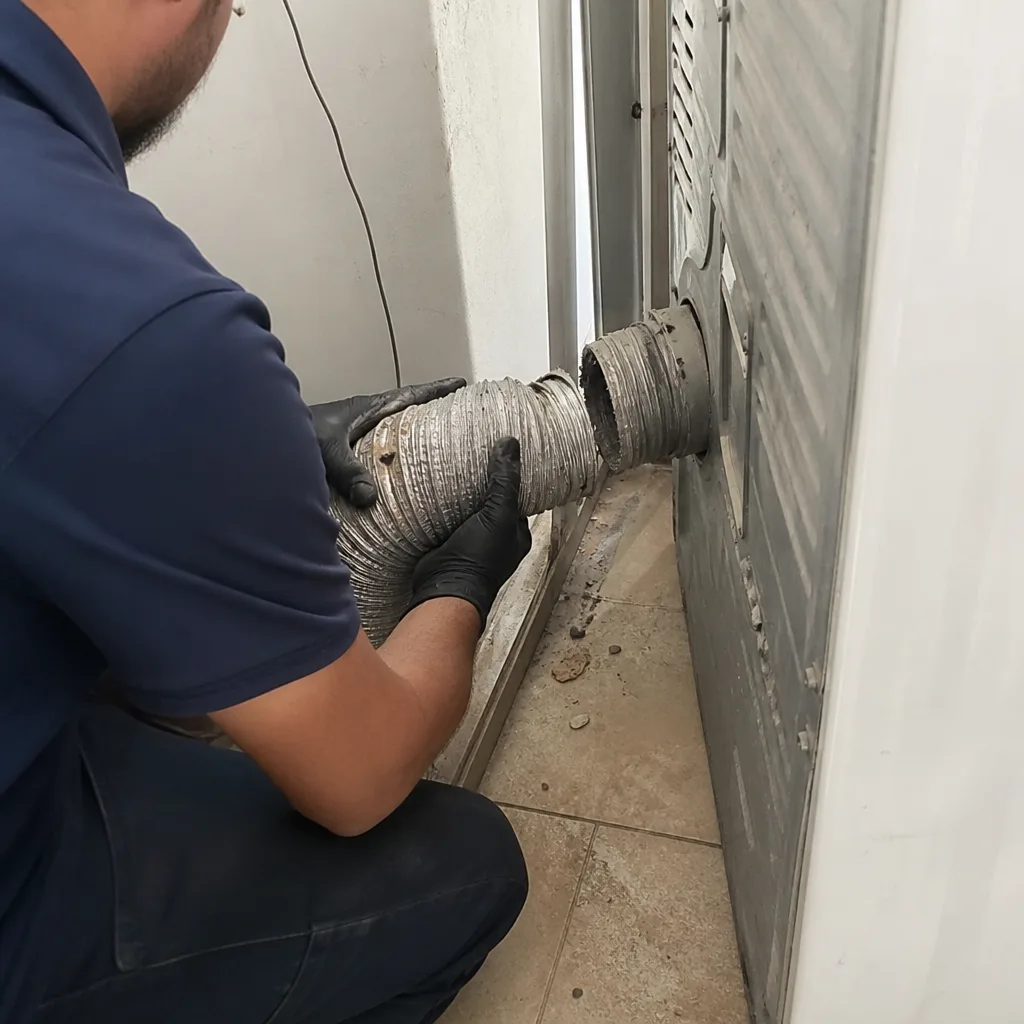
Last updated November 2, 2026
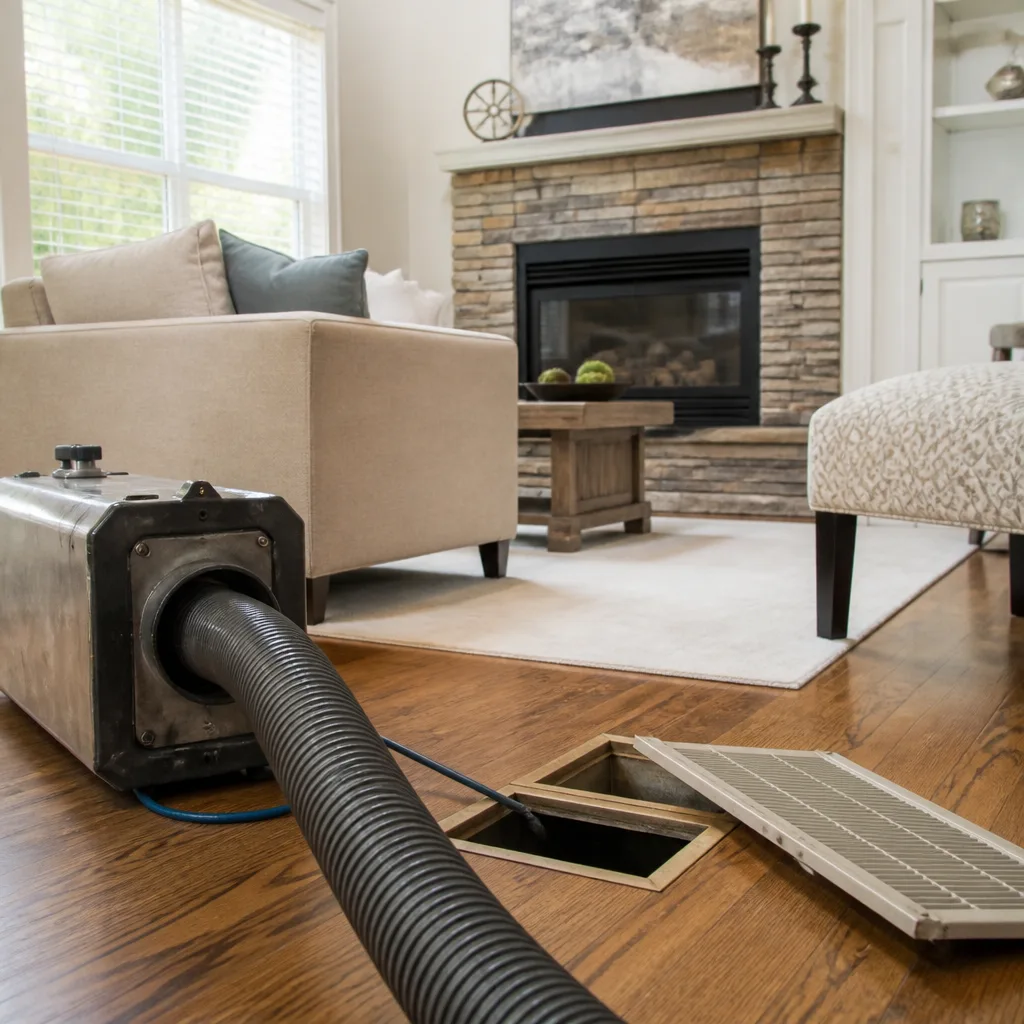 Whole-home duct cleaning
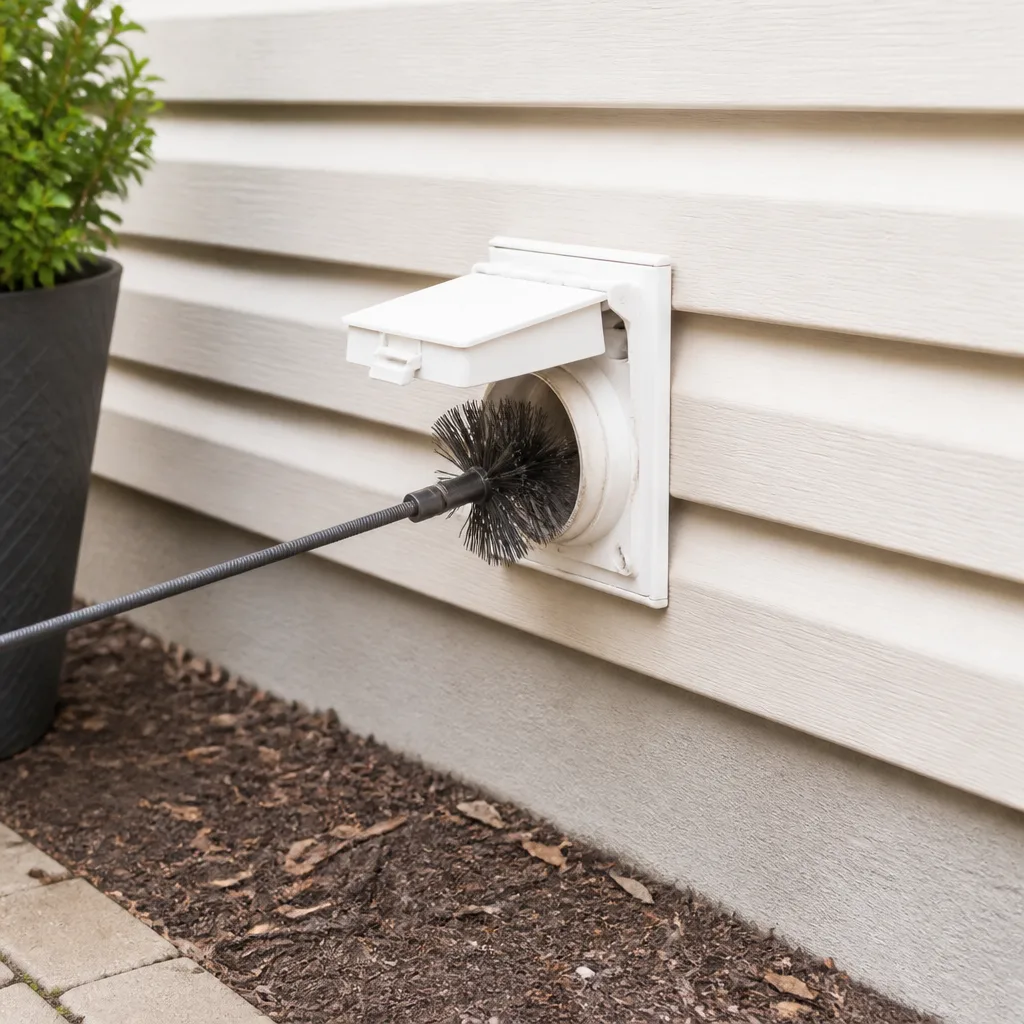 Dryer vent cleaning
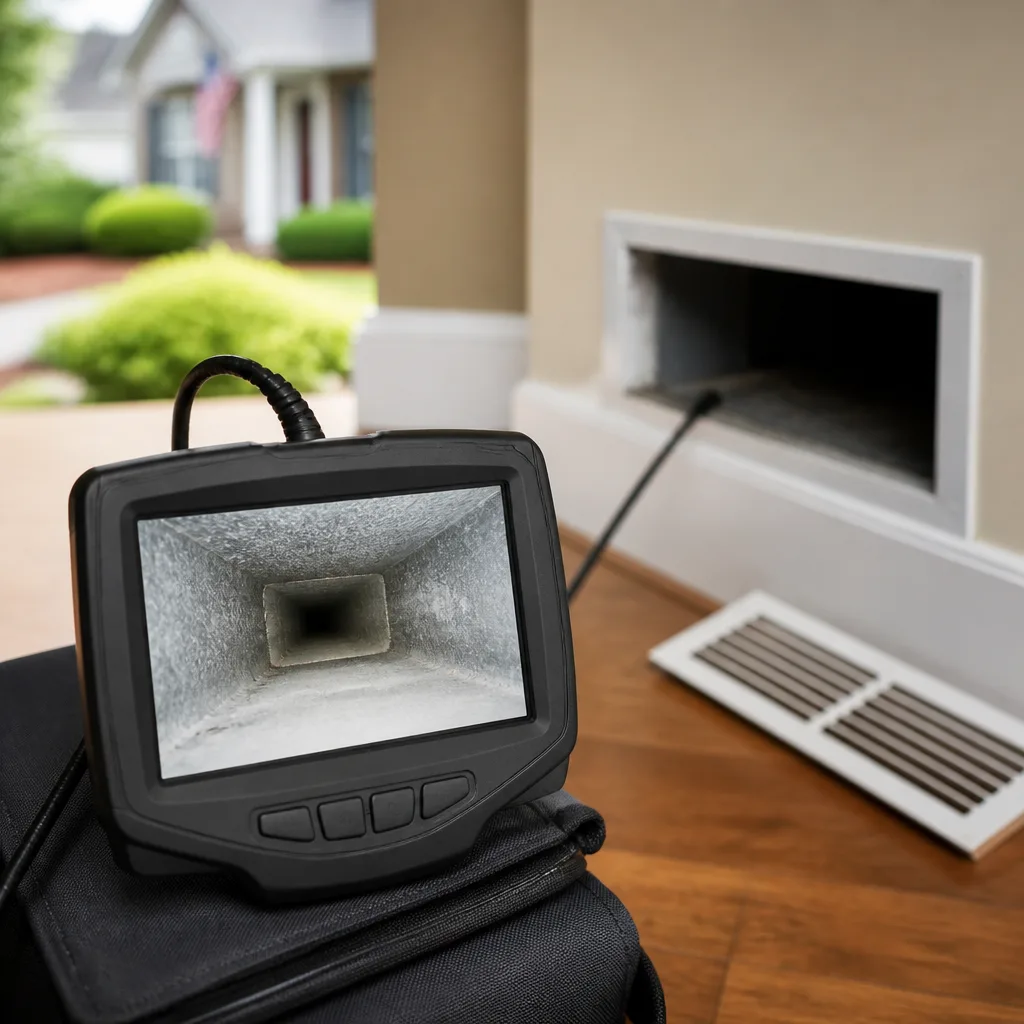 Camera inspection
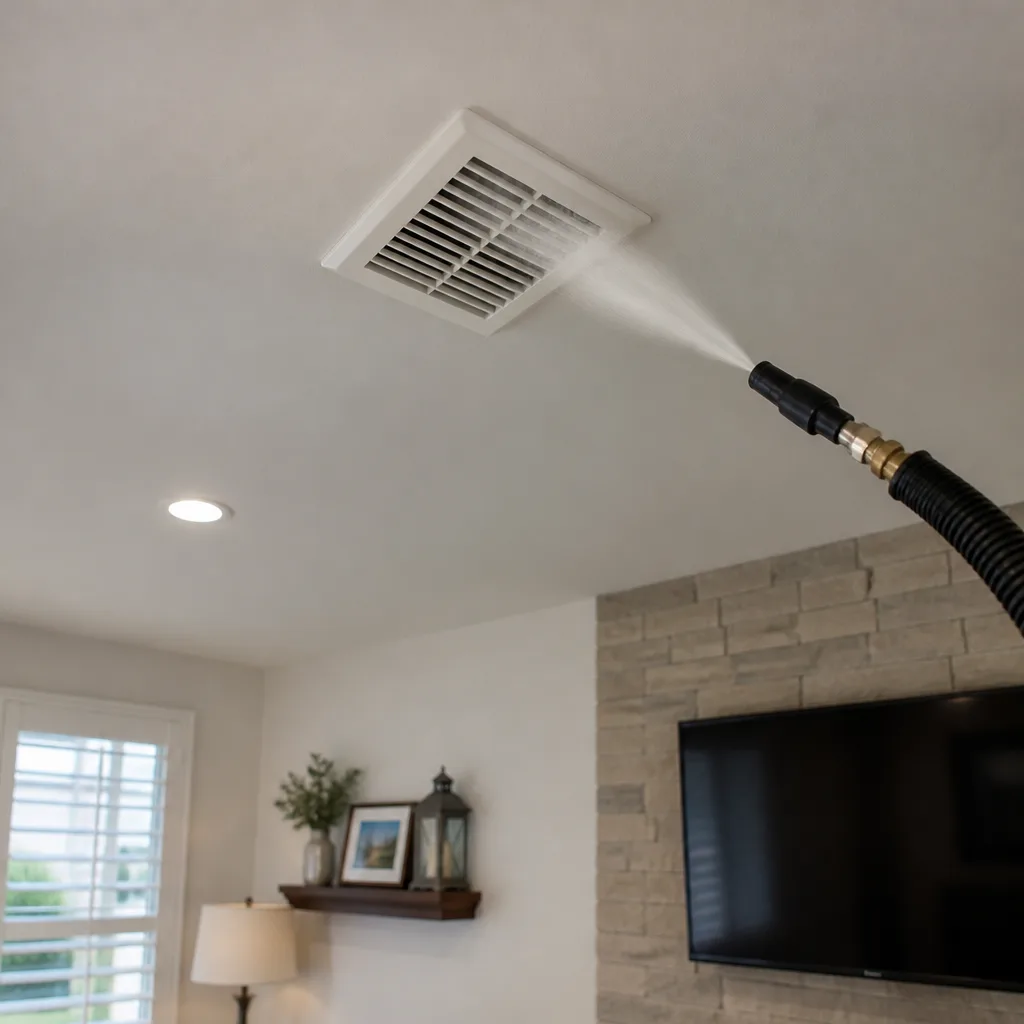 Sanitizing & deodorizing
Whole-system duct and dryer vent check with before-and-after photos - you see exactly what came out of your vents
That "$99 whole-house special" is a bait ad - the real number appears once they are in your hallway, or the "clean" is a shop-vac at the register. We photograph the inside of your ducts before and after instead.
Air Duct Cleaning Cost Breakdown: The Huntington Beach Homeowner’s Reference for 2026
Here’s a number that should make you pause: roughly 40 pounds of dust, skin cells, pet dander, and airborne particulate moves through the average six-room home’s ductwork every single year. In Huntington Beach, where ocean air pushes fine salt mist and sand through open windows and into return registers, that figure runs higher. This Air Duct Cleaning guide breaks down exactly what duct cleaning should cost in our city in 2026, what drives the price, and how to tell the difference between a $99 blowout and a professional service that actually changes your indoor air. You’ll leave with a line-item understanding that lets you evaluate any quote against what’s actually being done, not just the number at the bottom.
Styles & brands we work with
- Whole-home duct cleaning
- Dryer vent cleaning
- Camera inspection
- Sanitizing & deodorizing
Quick Answer
Professional air duct cleaning in Huntington Beach costs between $450 and $700 for a standard single-family home in 2026, based on the full system including supply and return ducts, main trunk line, and the air handler. Whole-system pricing beats per-vent pricing because it eliminates the incentive to race through the job. Add-ons like dryer vent cleaning ($89 – $149), duct repair ($150 – $600 depending on scope), and sanitizer application ($75 – $200) are line items you should see broken out separately, not buried in a package that’s hard to audit.
Table of Contents
- What Professional Duct Cleaning Costs in Huntington Beach
- Line-Item Cost Breakdown: What You’re Actually Paying For
- The $99 Question: What Budget Operators Are Actually Doing
- Why Huntington Beach Homes Cost What They Cost
- How to Verify You Got What You Paid For
- The Add-On Test: Which Extras Are Worth It, Which Aren’t
- How Often Does Duct Cleaning Actually Need to Happen
- Common Mistakes to Avoid
- When to Call a Professional
- Frequently Asked Questions
- The Bottom Line
What Professional Duct Cleaning Costs in Huntington Beach
Let’s start with the number everyone searches for. In the Huntington Beach market, a legitimate full-system air duct cleaning in Huntington Beach for a single-family home runs between $450 and $700 in 2026. That’s whole-system pricing: every supply register, every return, the main trunk line, and the air handler cabinet. Smaller condos and single-story homes with simple layouts can land closer to $400. Larger two-story homes with multiple HVAC zones, or homes that haven’t been cleaned in over a decade, can push toward $800 or beyond.
What distinguishes this range from the brochure prices you’ll see on postcards is scope. A professional crew spends three to five hours on a standard home, not 45 minutes. They’re running negative-pressure containment throughout. They’re brushing duct walls, not just vacuuming the center of the airstream. And they’re verifying results with airflow readings, not just showing you a dirty rag and calling it done.
Here’s the breakdown of typical whole-system pricing in our area:
- Condos and small single-story homes (under 1,200 sq ft, one HVAC zone): $350 – $480
- Standard single-family homes (1,200 – 2,500 sq ft, one to two zones): $450 – $700
- Larger or multi-zone homes (2,500+ sq ft, two or more air handlers): $650 – $900
- Homes with substantial contamination (heavy construction dust, years of pet dander, visible mold growth around registers): $550 – $900+ depending on time required
Every home is different. A 1,400-square-foot Huntington Beach bungalow with accessible pier-and-beam crawl space and short duct runs will cost less to clean properly than a 2,800-square-foot two-story with ducts running through tight attic spaces and long trunk lines. The pricing reflects labor hours, not a flat per-register rate, which is why any quote you receive should be tied to a walkthrough or a detailed description of your system.
Line-Item Cost Breakdown: What You’re Actually Paying For
Here’s a table of what each component of a professional duct cleaning service costs in Huntington Beach, and what each deliverable actually is. This is the information most companies don’t want you to have, because it makes comparison shopping honest.
| Service Component | Typical Cost Range | What It Includes | When It’s Warranted |
|---|---|---|---|
| Full system cleaning (base service) | $450 – $700 | All supply and return ducts, trunk line, registers, air handler | Every professional cleaning |
| Camera inspection | $75 – $150 (often included in base) | Video footage of duct interior before and after | Homes over 15 years old, suspected damage, first-time cleaning |
| Dryer vent cleaning | $89 – $149 | Full vent run from dryer to exterior termination | Every 1 – 2 years, homes with longer than average vent runs |
| Sanitizer/deodorizer application | $75 – $200 | Antimicrobial fogging of duct interior surfaces | After heavy contamination, pet odor, or moisture-related issues |
| Duct repair (loose connections, disconnected runs) | $150 – $600 | Sealing, reconnection, short section replacement | When inspection shows visible gaps, collapsed sections, or disconnected boots |
| Register replacement | $8 – $25 per register | New supply or return grilles | Cosmetic upgrade, damaged registers, or during cleaning |
Here’s the important nuance on each line item, explained the way we explain it to Huntington Beach homeowners during an estimate:
Base cleaning. This should be a flat, whole-system price, not per-vent. Per-vent pricing creates a perverse incentive: the faster a company races through your registers, the higher their effective hourly rate. A whole-system quote means the company has committed to a defined scope, and if it takes an extra hour because your ducts are heavily soiled, that’s their problem, not yours. When you see a proposal that says “$39 per vent, 12 vents = $468,” know that the company is predicting a fast job and pricing accordingly. A professional crew brushes duct walls with rotary agitation and extracts with HEPA-filtered negative pressure. That’s not a 15-minutes-per-vent task.
Camera inspection. Some companies charge separately for this. Some build it into the base. Either way, you want it. A duct camera tells you three things: what your ducts actually look like inside, whether there’s damage or disconnection the cleaning will reveal, and after the job, whether the cleaning actually removed the debris. More on verification later. If a company doesn’t have a duct camera, that’s an equipment signal in itself.
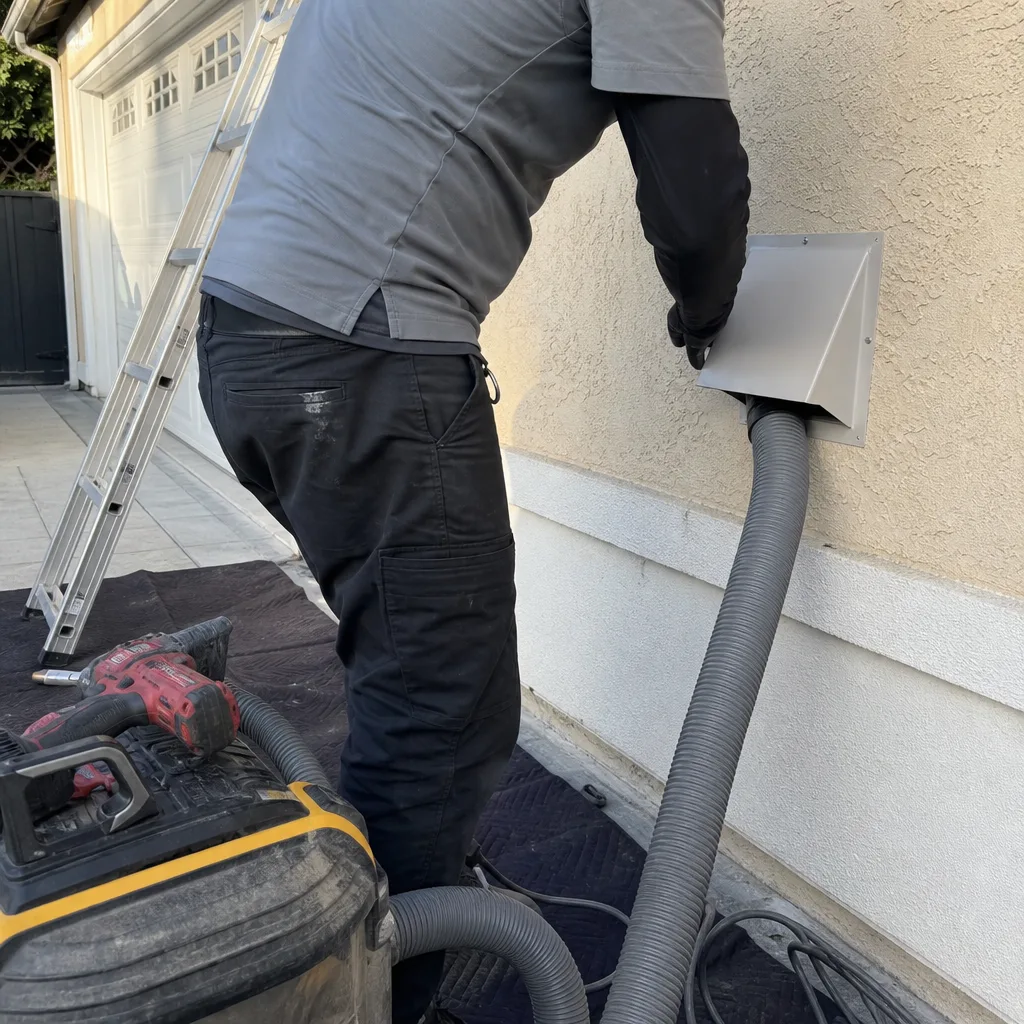
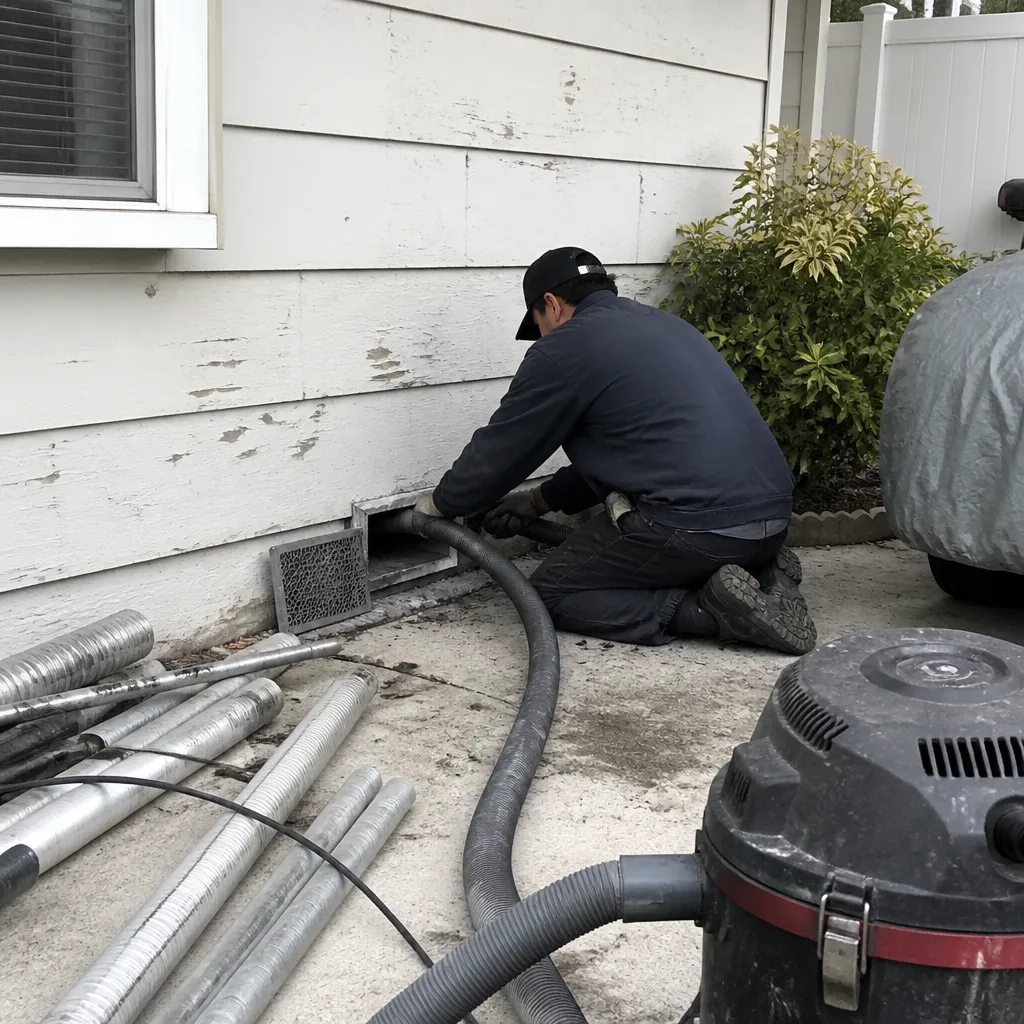
Dryer vent cleaning. This is a separate scope of work from air duct cleaning, and the dryer vent cleaning in Huntington Beach is its own service. Your dryer vent is a fire hazard waiting to be cleared: the U.S. Fire Administration tracks thousands of dryer fires annually, and the leading cause is accumulated lint in the vent run. The cost is lower than full duct cleaning because there’s typically one vent run, not a whole system. But it requires specific tools: a rotary brush that can navigate the vent, and the patience to clear the full run, not just the first few feet at the dryer connection.
Sanitizer application. This is an add-on, and it’s legitimate in specific situations. If your ducts have held visible biological growth, if a previous owner smoked indoors for years, or if you’ve just cleaned out heavy pet dander accumulation, a sanitizer fog can address residual odor and microbial activity. What it doesn’t do is substitute for the mechanical cleaning itself. Anyone offering to “sanitize” ducts without physically removing the debris is selling you a scent, not a solution.
Duct repair. This is the line item most homeowners don’t anticipate, and the one that separates full-service companies from cleaning-only operations. When we open up a duct system in an older Huntington Beach home, we often find disconnected sections in the crawl space, loose boots at the register, or sections that have been crushed by previous foundation work. Air duct repair in Huntington Beach isn’t an upsell in these cases. It’s the difference between cleaning air that leaks back into the crawl space and cleaning air that actually reaches your living room. Repair pricing depends on the scope: a simple reconnection is an hour of work. Replacing a crushed section is a more involved job.
The $99 Question: What Budget Operators Are Actually Doing
The $99 duct cleaning offer exists in every market, and Huntington Beach is no exception. Postcards arrive. Facebook ads run. The price is designed to get a van in your driveway. Here’s what happens once that van arrives.
The economics of a $99 service don’t support more than about 45 to 60 minutes of labor. That’s truck time, setup, teardown, and the actual cleaning combined. In that window, the technician can do one of two things. Option one: run a high-powered vacuum on the main trunk line while skipping most branch runs. Option two: clean a few visible supply registers, show you the dramatic dust collection on the filter, and present a “recommended upgrade” that brings the real price to $500 or more. That second path is the bait-and-switch model, and it’s the primary reason this industry has the reputation it does.
What a $99 operator cannot do in that time frame:
- Run negative-pressure containment on the full system so dislodged particles don’t recirculate through your living space
- Brush every duct wall mechanically rather than just vacuuming the center of the airstream
- Verify results with before-and-after camera footage
- Inspect for duct damage, disconnection, or leaks
- Spend any meaningful time on the HVAC unit itself
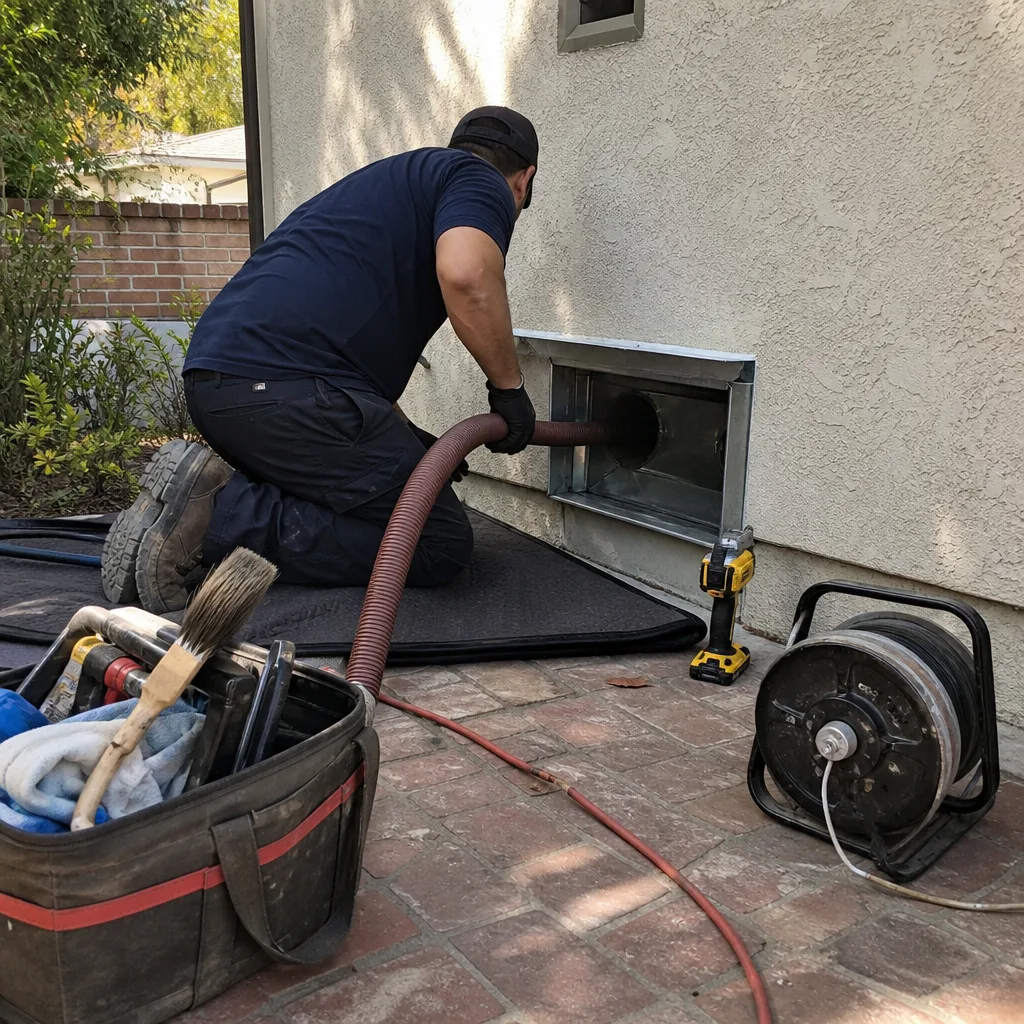
There’s an equipment component too. The professional systems worth knowing by name are Rotobrush and Nikro. A Rotobrush system agitates with a rotary brush head while simultaneously extracting with vacuum – it scrubs duct walls, not just the airspace in the middle. Nikro systems provide verified negative-pressure containment. Consumer-grade equipment doesn’t generate the same level of agitation or capture. When a Platinum Air Duct Cleaning home service crew shows up, the difference in equipment is visible before the first register is opened.
The takeaway isn’t that every low-priced company is dishonest. It’s that a $99 price point fundamentally cannot include the time, equipment, and scope that professional duct cleaning requires. If you see that price, know going in: either the scope will be much smaller than you expect, or the real price will be much higher than the postcard.
Why Huntington Beach Homes Cost What They Cost
Huntington Beach isn’t a new-build market. It’s a city of homes built in waves: the 1950s and 1960s tract housing across the interior, the beach bungalows closer to PCH, the 1970s and 1980s custom homes along the Bolsa Chica wetlands. Each era of construction affects duct cleaning pricing in specific ways.
Homes built in the 1950s through 1970s in Huntington Beach often have original metal ductwork. Galvanized steel ducts from that era are heavier than modern flex duct, and they hold up reasonably well, but they accumulate decades of dust, rust scale, and sometimes biological growth near the coast where humidity is consistently higher. Brushing metal ducts requires more patience. Too aggressive a brush can damage older seams. Too gentle an approach leaves behind 60 years of buildup. The right technique falls in the middle, and it takes time.
Pier-and-beam construction is common in the beach bungalow stock, particularly from downtown Huntington Beach up through Sunset Beach. Crawl spaces under these homes are tight, often damp from the water table, and host their own challenges for duct access. Cleaning a duct system that runs through a 24-inch crawl space is slower work than cleaning one in a walkable attic. Labor time increases, and pricing reflects it.
Multi-story homes present a different cost driver. A two-story home with a single HVAC system typically has longer duct runs, tighter chases, and more difficult access to the system’s upper reaches. The distance alone adds to the duration of the job. Homes with two separate HVAC systems (common in larger custom builds) essentially require two distinct cleaning projects, each with its own setup and teardown time.
The coastal environment of Huntington Beach has its own effect. Salt air and the fine sand that blows in from the beach both make their way into return ducts. Salt is corrosive and slightly hygroscopic – it attracts and holds moisture. That combination makes coastal Huntington Beach duct systems slightly more prone to contaminant adhesion than, say, an inland home in Fountain Valley. Not dramatically so, but enough that a professional cleaning in our city should include the air handler, not just the duct runs.
How to Verify You Got What You Paid For
Here’s where the professional tier distinguishes itself. A legitimate duct cleaning service should leave you with the evidence of what was done. Not a dirty rag. Not a glib “all set.” Actual verification. There are three specific forms that matter.
1. Before-and-after camera footage. A professional crew runs a duct camera through representative sections of your system before the cleaning, and again after. You should be able to look at both and see a measurable difference: clean metal or flex duct walls where there was previously visible debris. Some companies will give you a full video file. Others will show you stills on a tablet. Either way, the before-and-after comparison is the single most credible proof that work happened.
2. Airflow readings. A static pressure reading or simple airflow measurement at registers before and after cleaning tells you whether the cleaning improved system performance. This matters because an HVAC system with restricted airflow runs longer cycles, costs more to operate, and wears out components faster. If your registers are pulling more air after cleaning than before, the cleaning did its job. Professional crews carry the instruments to measure this. Blow-and-go operators don’t.
3. Written scope completion. You should receive a document that spells out what was cleaned: the number of supply ducts, the number of returns, whether the air handler was accessed, whether the trunk line was cleaned, what the camera inspection found, and what (if anything) was flagged for repair. This written record is your receipt for the work. If a company can’t or won’t provide it, that’s a signal about how they document their work.
What you should not rely on is the “look how much dust we pulled out” demonstration. A HEPA-filtered collection canister from a professional system will contain plenty of visible material, and it’s satisfying to see. But that demonstration tells you more about how dirty your system was than about how thoroughly it’s now clean. The camera footage and airflow readings are the real verification.
The Add-On Test: Which Extras Are Worth It, Which Aren’t
Every major purchase comes with add-ons, and duct cleaning is no exception. The question is always: does this add-on address a real problem in my home, or is it margin-generating pressure? Here’s the honest test for each common one.
Duct sealing. Legitimate and often worthwhile if your ducts are leaking. The U.S. Department of Energy estimates that typical homes lose 20 to 30 percent of conditioned air through duct leaks. In a Huntington Beach home with ductwork in a hot attic or damp crawl space, that’s real money leaving your system. The test: ask the company to show you the leaks. Camera footage of actual gaps or disconnections is evidence. If they’re recommending sealing without demonstrating where the leaks are, ask for the demonstration.
Antimicrobial coating or sanitizer. Legitimate in specific circumstances: post-contamination, persistent odor, or visible microbial growth confirmed by inspection. Not legitimate as a routine add-on for every cleaning. If your ducts are mechanically cleaned and the source of any moisture issue is addressed, routine ducts don’t need an antimicrobial fog. The test: ask why they’re recommending it. If the answer references something visible in the camera footage, fine. If the answer is a generalized “health benefits” pitch, that’s high-margin pressure.
UV light installation. A UV light can be a useful addition to an HVAC system, particularly for coil sterilization in humid climates. But it’s not a duct cleaning add-on. It’s an air quality product. Companies that bundle a UV light into a duct cleaning package are often using the cleaning as a loss leader to sell hardware. If you want a UV light, buy it as a separately quoted product after the cleaning is complete and verified. The test: if the UV pitch comes before the cleaning verification, proceed with caution.
Upgraded filtration (Honeywell, Aprilaire). This is a different category. A whole-home media filter or an Aprilaire air purifier addresses ongoing air quality in a way that cleaning, which is a one-time restorative service, does not. The cleaning removes what’s accumulated. The filtration prevents what’s coming next. They’re complementary. We supply and install Honeywell and Aprilaire products specifically because they integrate with the cleaning work. The test here is whether you’re being sold a product that fits your system, not a generic box. If the company is recommending filtration based on what they observed during the cleaning (heavy pet dander, visible particulate), that recommendation is data-driven.
Guardsman protective coating. This is a post-cleaning product applied to duct interior surfaces to maintain duct integrity and create a smoother surface that resists future accumulation. It’s a relatively new line item in the residential market. The test is the same as any add-on: what’s the evidence that it’s needed in your home, and what’s the cost relative to the base service?
How Often Does Duct Cleaning Actually Need to Happen
The honest answer: less often than the postcards suggest, and more often than a homeowner’s “well, we’ve never done it” would imply.
The National Air Duct Cleaners Association (NADCA) recommends cleaning every three to five years for most homes. That’s a wide range, and the right interval for a Huntington Beach home depends on specific factors covered in our Air Duct Cleaning Maintenance Checklist for Huntington Beach Homeowners:
- Pets. Homes with multiple indoor pets should lean toward the three-year end. Pet dander is a significant contributor to duct accumulation.
- Coastal exposure. Homes west of Edwards Street, closer to the ocean influence, see more fine particulate from salt air and beach sand. Three to four years.
- Occupancy history. Newly purchased homes with uncertain maintenance history should be cleaned. You don’t know what the previous owner’s pets, smoking habits, or renovation projects left behind.
- Renovation work. Any significant remodeling project – kitchen, bathroom, room addition – should be followed by duct cleaning. Construction dust is fine enough to travel through the entire system.
- Allergy or respiratory concerns. Households managing asthma, severe allergies, or immune-compromised occupants should stay at the three-year interval.
- Interior homes without pets or unusual contamination. Five years is reasonable.
The variable to watch is the dryer vent. Dryer vent cleaning is a separate service from air duct cleaning and operates on a faster cycle. The U.S. Fire Administration recommends cleaning dryer vents every year, and in Huntington Beach homes with longer-than-average vent runs – common in older bungalows where the laundry room sits far from an exterior wall – that annual recommendation is worth following. A plugged dryer vent is both a fire hazard and an efficiency problem: your dryer runs longer cycles when the vent is restricted, which costs you money every single load.
Common Mistakes to Avoid
- Hiring on price alone. The $99 special exists because enough people say yes to it. When the final invoice lands at $600 after “recommended” add-ons, the $99 special cost more than the honest quote would have. Get whole-system pricing up front and ask what’s included.
- Skipping the camera work. If a company has no duct camera, they’re working blind – and you’re paying for work you can’t see. Before-and-after footage should be part of any professional cleaning in 2026.
- Accepting per-vent pricing. Per-vent pricing creates an incentive to work fast and skip thoroughness. Whole-system pricing aligns the company’s incentive with doing the job properly.
- Treating dryer vents as an afterthought. Your dryer vent is a separate run with a separate fire risk. If the air duct cleaning company also offers dryer vent cleaning in Huntington Beach, bundle them and save a second trip charge. If not, book it separately.
- Ignoring duct damage discovered during cleaning. When the camera reveals disconnected sections or crushed runs, the cleaning is incomplete until those are repaired. A company that cleans and repairs under one roof – rather than referring you elsewhere – saves you the coordination headache.
- Assuming the filter protects the ducts. The filter on your HVAC system protects the equipment. It doesn’t prevent dust, dander, and particulate from entering the return side of the system and settling in ductwork. Cleaner air starts in the ducts, not the filter.
- Operating on “we’ve never noticed a problem.” Duct contamination is invisible in daily life. By the time you notice – excessive dust on furniture, allergies that flare whenever the AC runs, one room that never seems to reach temperature – the accumulation has been building for years.
When to Call a Professional
Some things you can assess yourself: visible dust around registers, unusual smells when the HVAC cycles on, rooms that consistently lag the rest of the house. But the inside of your ductwork is not accessible without specialized equipment, and the cleaning itself requires professional gear that generates negative pressure and HEPA-level filtration. Abatement Technologies air scrubbers, the equipment used to protect occupants during a professional cleaning, filter particles down to 0.3 microns. You cannot replicate that with a shop vacuum. If you’ve never had your ducts cleaned, it’s time. If you’re buying a home in Huntington Beach, include duct inspection in your due diligence. If you’ve completed any renovation work, schedule a cleaning. For additional guidance, see our Air Duct Cleaning Emergency Preparedness Guide for Huntington Beach Homes. Platinum Air Duct Cleaning offers free estimates in Huntington Beach – call (877) 824-2949.
Frequently Asked Questions
Professional air duct cleaning in Huntington Beach costs between $450 and $700 for a standard single-family home in 2026, with smaller condos running $350 – $480 and larger multi-zone homes reaching $650 – $900. This is whole-system pricing that includes all supply and return ducts, the main trunk line, and the air handler. Air duct cleaning in Huntington Beach at this price point should include camera verification and should not be priced per vent. Call (877) 824-2949 for a quote specific to your home’s system.
Because the scope is smaller, the equipment is lighter, and the time on site is shorter. A $99-to-$149 quote supports about 45 to 60 minutes of labor, during which a technician can either rush through a partial cleaning or use the low price as a door-opener for an upward re-pricing. There’s no way to do a legitimate full-system cleaning in that time frame, regardless of equipment or intent.
Ask for before-and-after camera footage from inside the ducts, and airflow readings that demonstrate improved system performance. A professional company will provide both as a standard part of the service, along with a written scope completion document. If a company can’t show you the inside of your ducts after cleaning, you don’t have verification that the work happened.
Every three to five years for most homes, with the shorter interval applying to homes with pets, coastal exposure, recent renovation work, or occupants with respiratory conditions. Dryer vent cleaning runs on a one-to-two-year cycle regardless, because lint accumulation is a fire hazard independent of duct cleanliness.
If you mean new construction, probably not for the ducts to be dirty – but construction debris in ductwork is common, and a cleaning is sometimes the only way to remove it. If you mean new to you, yes: a home purchase is the most common time we see deferred maintenance surface. Camera inspection during the cleaning will tell you exactly what you inherited. Browse our more guides & resources for additional home maintenance tips.
Duct cleaning removes accumulated debris from the interior surfaces of your duct system. Duct repair addresses structural issues: disconnected sections, crushed runs, loose boots at the register, leaking seams. The two services are related because cleaning often reveals damage that needs repair, but they’re separate scopes of work with separate pricing. A company that handles both in-house saves you the effort of coordinating two contractors.
The Bottom Line
Duct cleaning pricing in Huntington Beach is a spectrum: $99 buys you a promotional visit, $450 to $700 buys you a restorative service performed with professional equipment, and additional costs reflect legitimate repairs and add-ons that address what the camera reveals. The right approach is to get a whole-system price, insist on before-and-after verification, ask for the evidence behind any add-on recommendation, and choose a company that cleans
See the difference
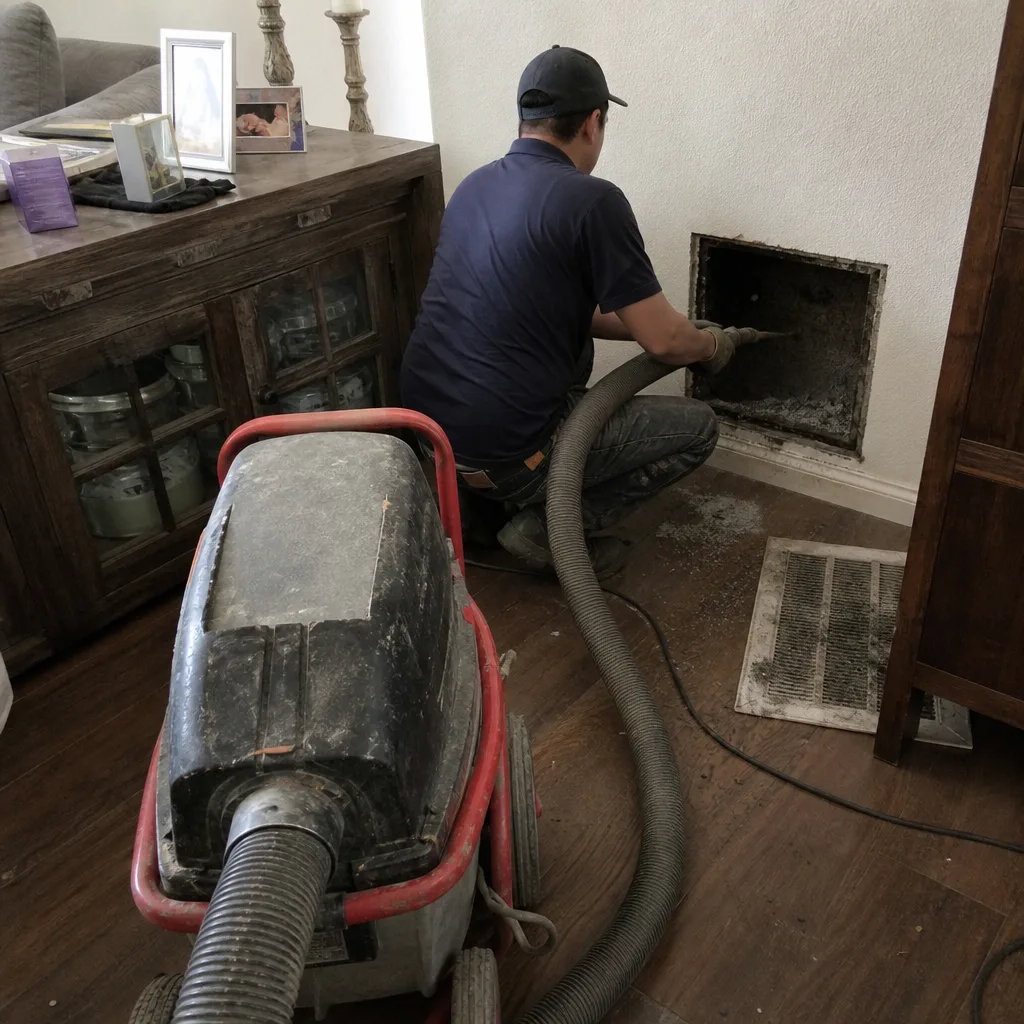 Before
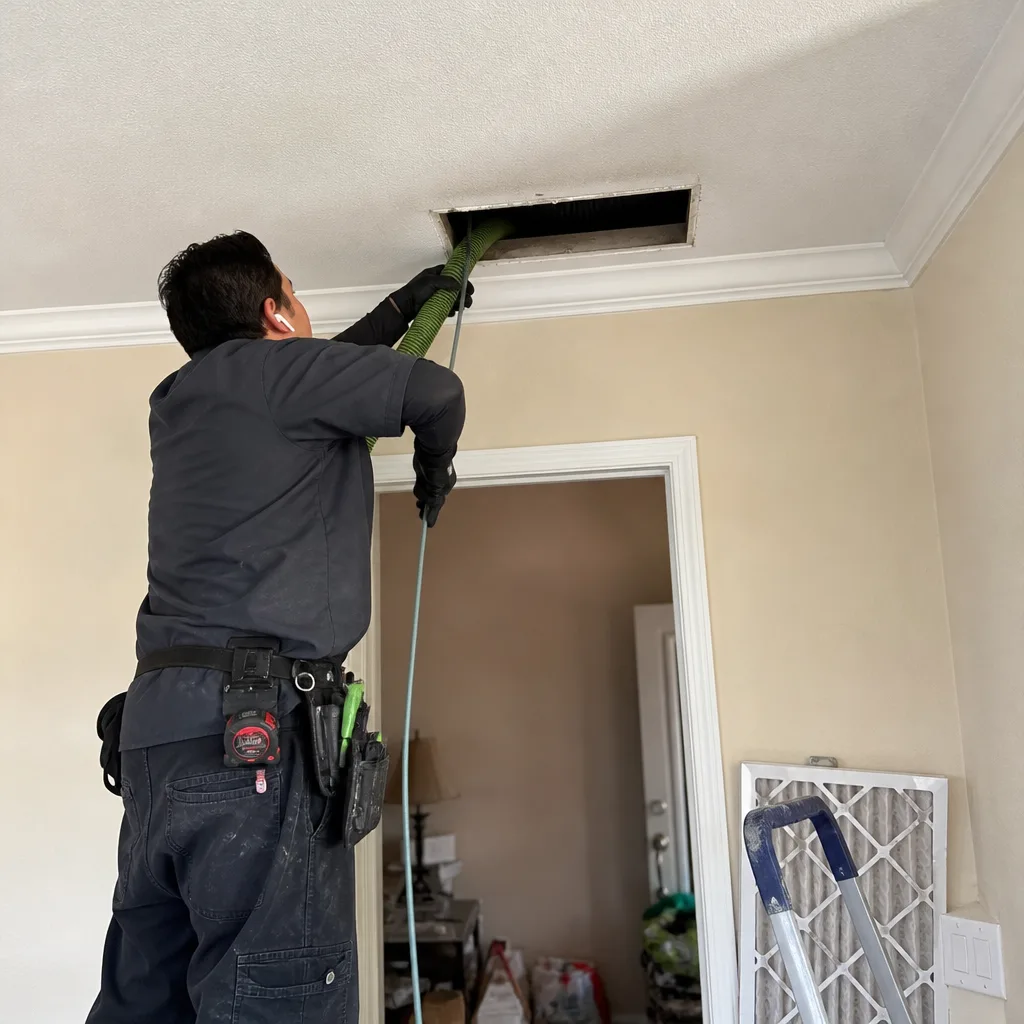 After
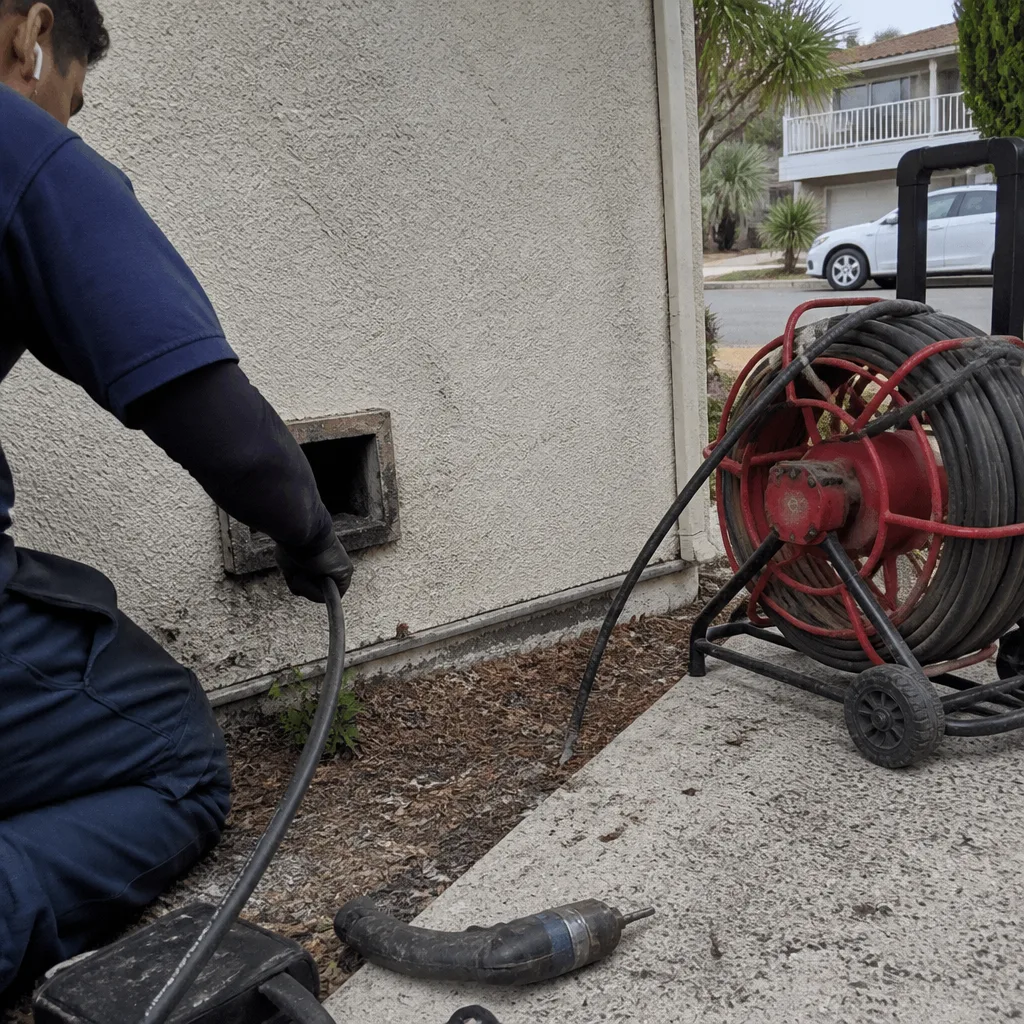 Before
 After
 Before
 After