
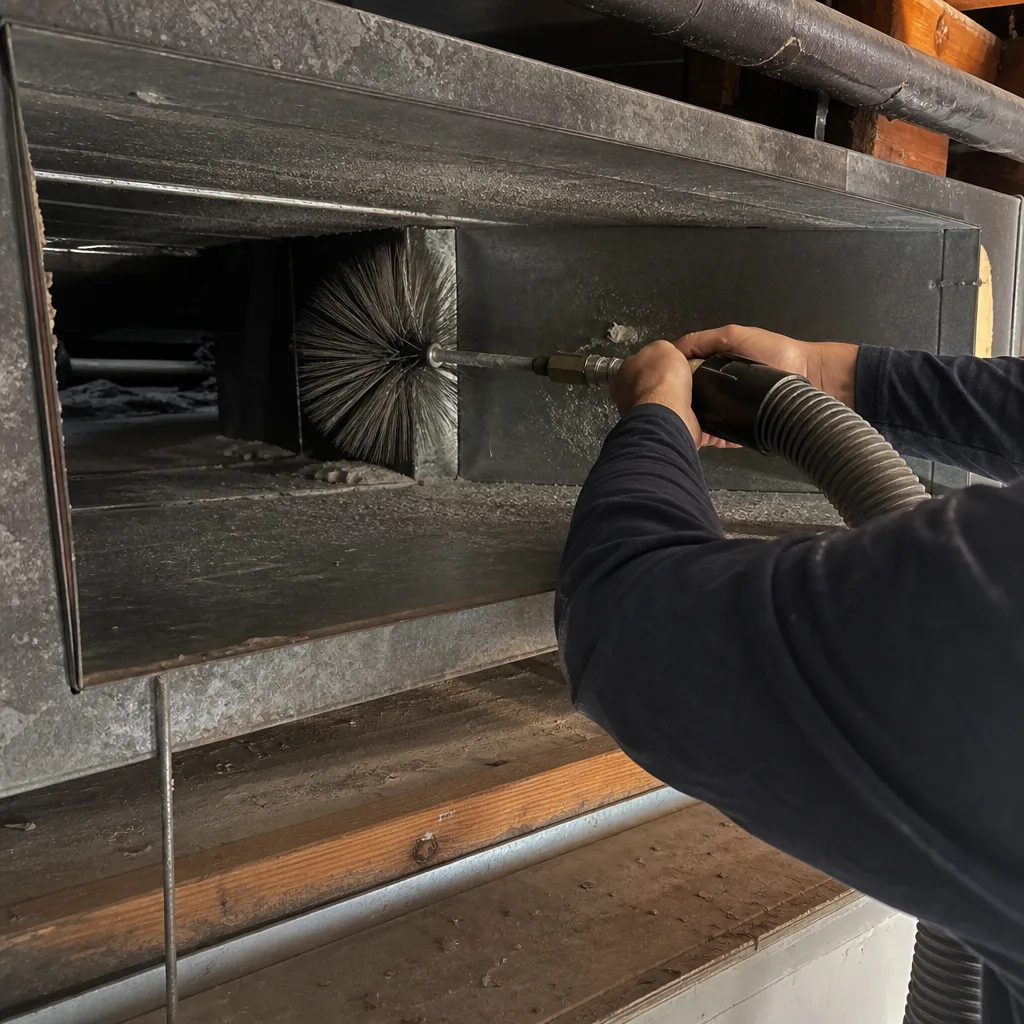
Last updated November 2, 2026
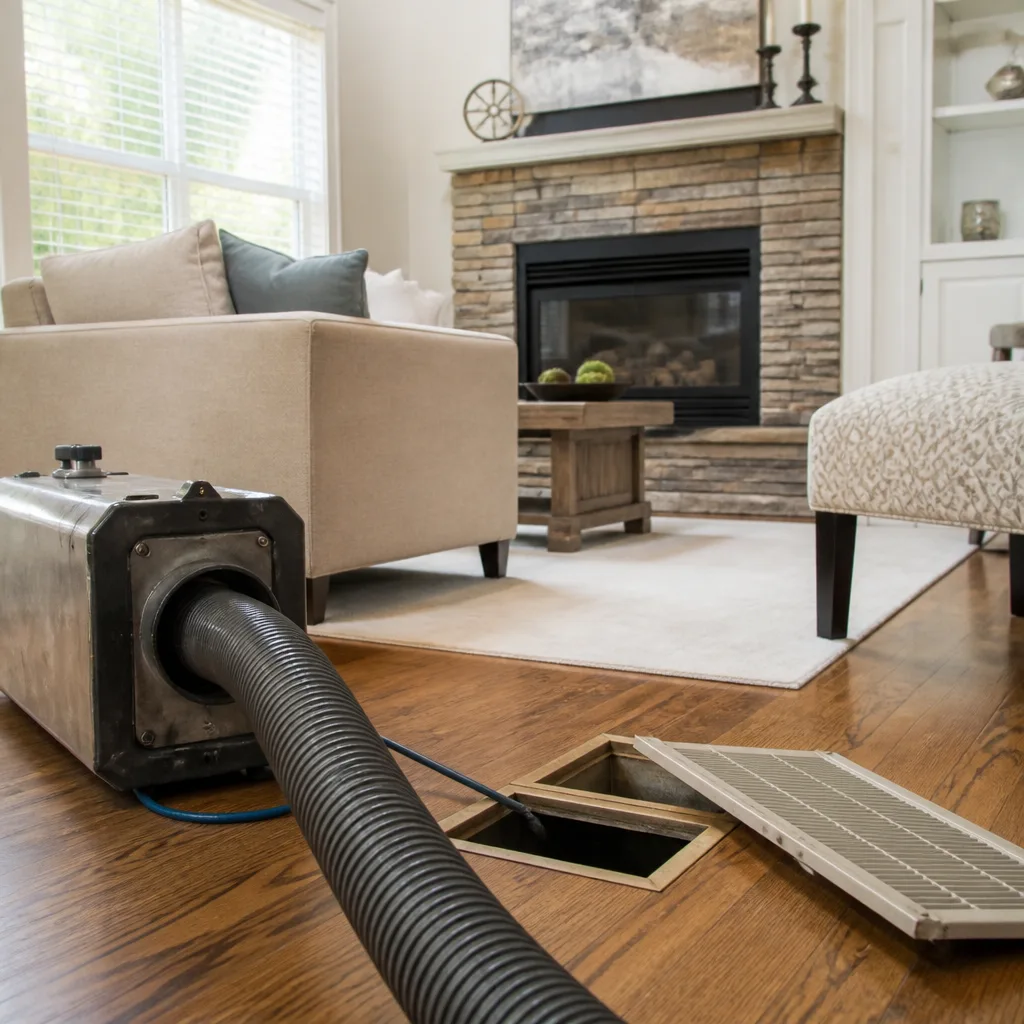 Whole-home duct cleaning
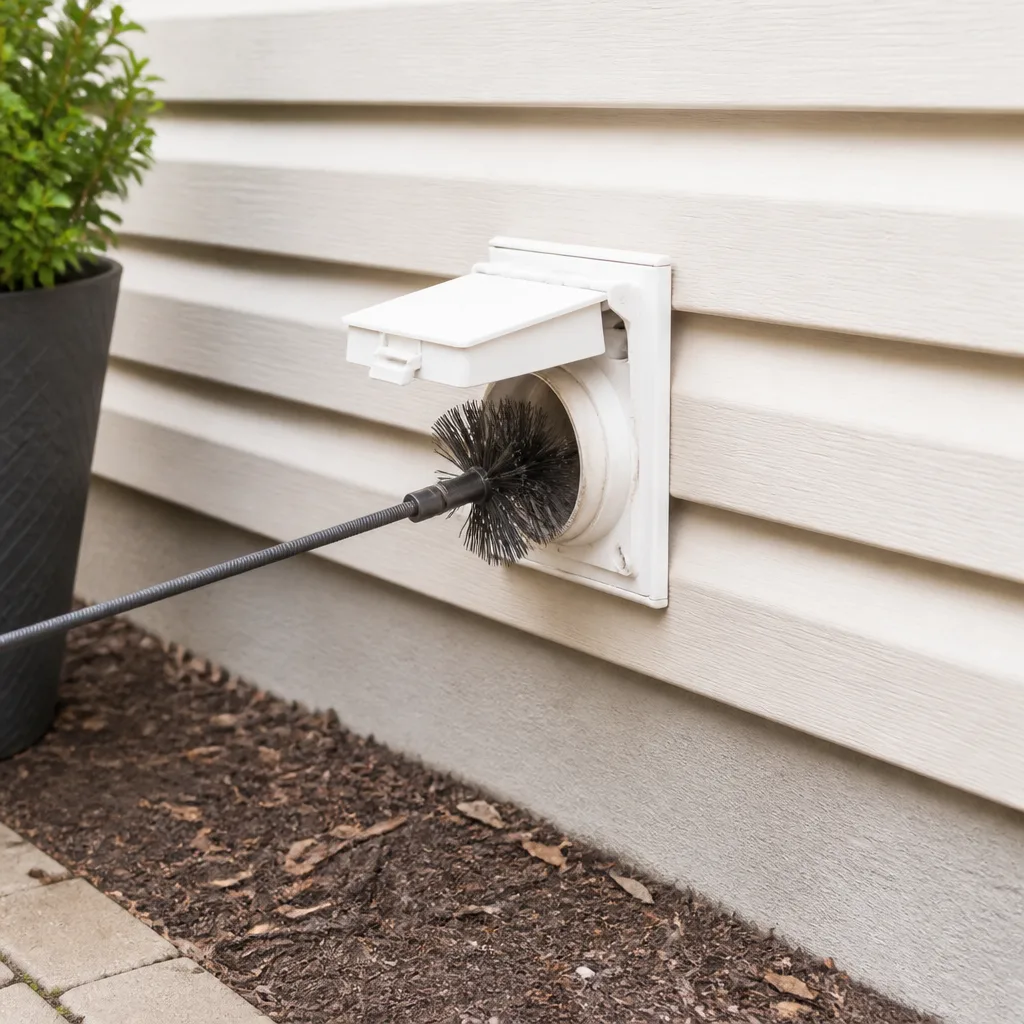 Dryer vent cleaning
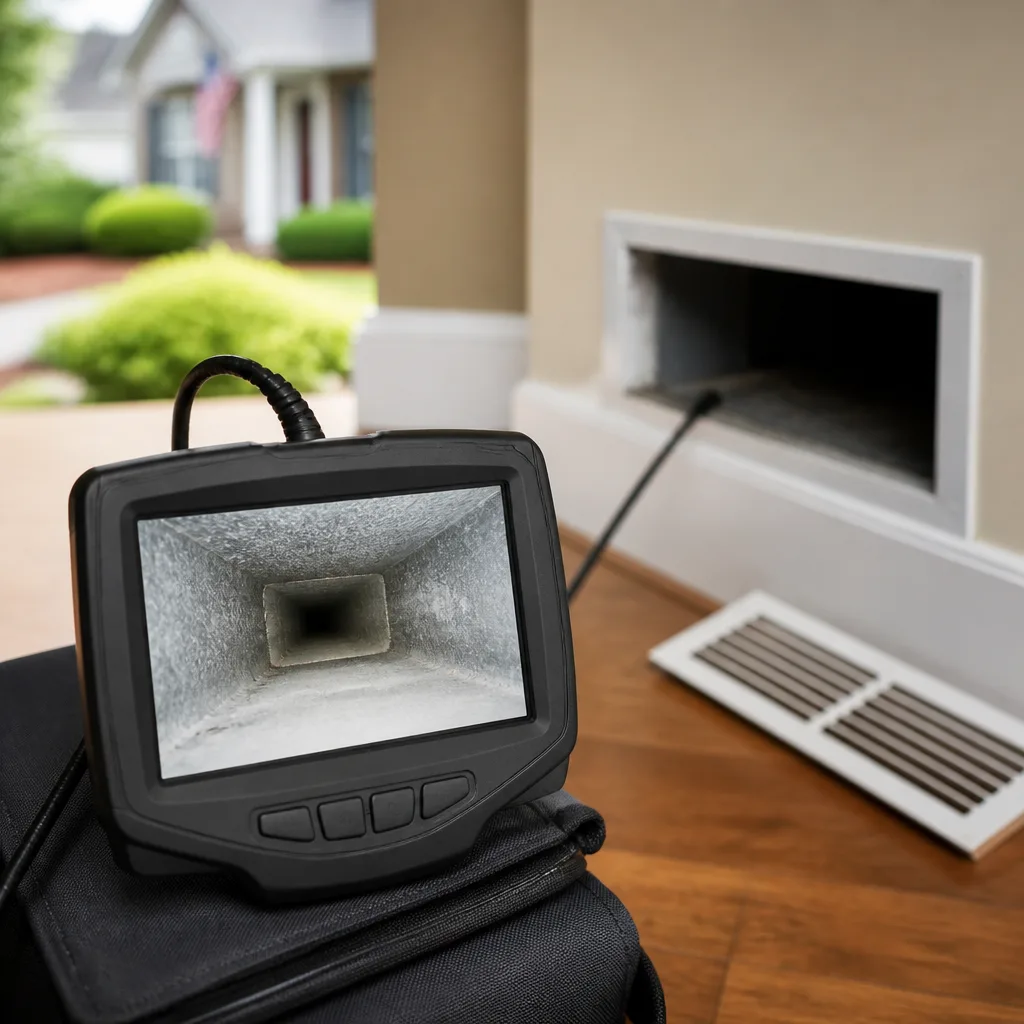 Camera inspection
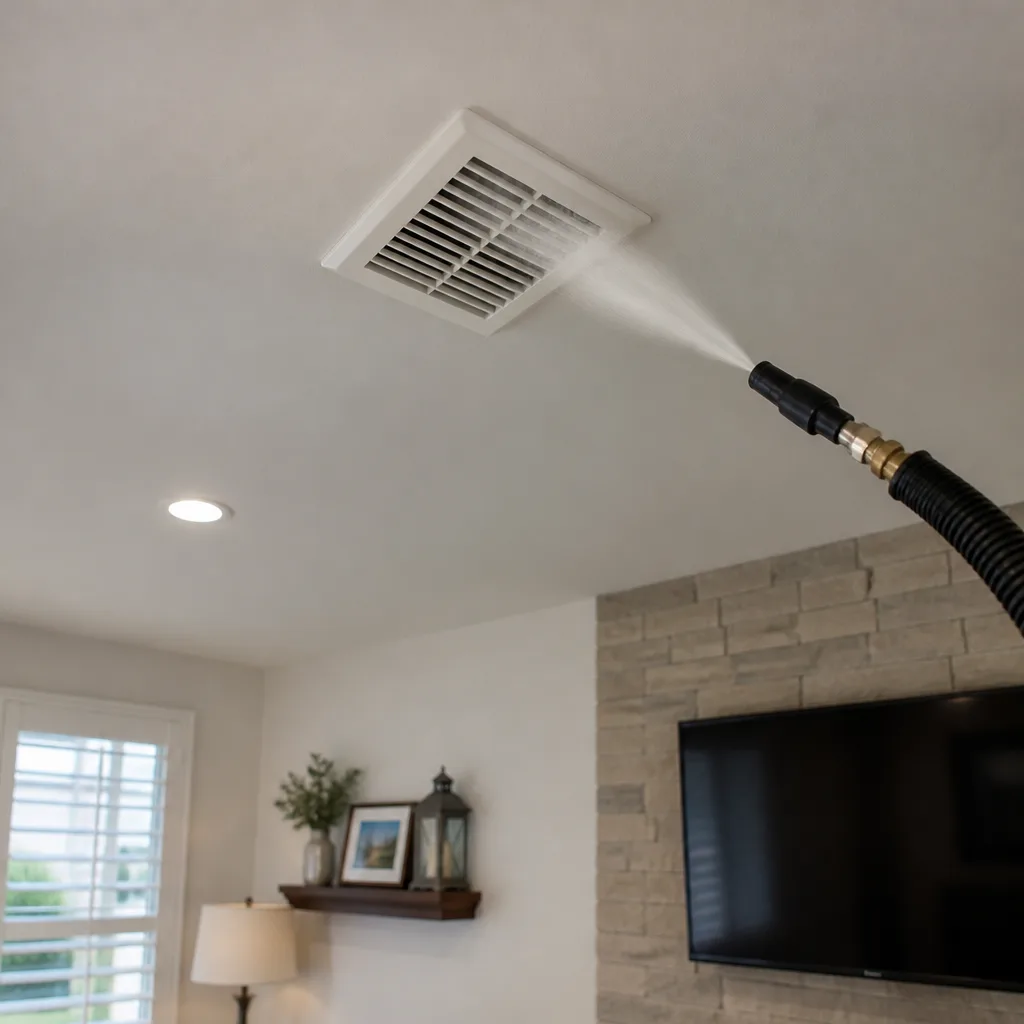 Sanitizing & deodorizing
Whole-system duct and dryer vent check with before-and-after photos - you see exactly what came out of your vents
That "$99 whole-house special" is a bait ad - the real number appears once they are in your hallway, or the "clean" is a shop-vac at the register. We photograph the inside of your ducts before and after instead.
DIY vs Professional Air Duct Cleaning: The Huntington Beach Homeowner’s Decision Guide
A $60 drill-attachment duct brush kit from Amazon will make your supply registers look cleaner. It will also aerosolize everything further into the system that you knocked loose but couldn’t capture – the opposite of what you wanted. In Huntington Beach, where coastal humidity mixes with household dust and pet dander to create a distinctly sticky duct-lining residue, this mistake plays out in hundreds of homes every year. This guide draws the exact line between what you can legitimately handle yourself and what requires our Air Duct Cleaning services with professional negative-air extraction. We’ll cover tools, technique, costs, scenarios where DIY backfires, and how to evaluate whether your ducts need real attention or just a register wipe-down.
Styles & brands we work with
- Whole-home duct cleaning
- Dryer vent cleaning
- Camera inspection
- Sanitizing & deodorizing
Quick Answer
DIY duct cleaning in Huntington Beach can address the visible surfaces: register grilles, the first 12 to 18 inches of takeoff duct behind each register, and return air grilles. It cannot create the negative air pressure required to extract debris from the full duct system, and without that extraction, brushing simply redistributes particulate deeper into the airstream. For anything beyond what your arm can reach, professional equipment – specifically a Nikro negative-air machine paired with a Rotobrush agitation system – is the difference between cleaning ducts and simply rearranging them. For How to Hire an Air Duct Cleaning Contractor in Huntington Beach: A Step-by-Step Guide, see our detailed walkthrough.
Table of Contents
- What DIY Duct Cleaning Can Actually Accomplish
- Why DIY Falls Apart Without Negative Air Pressure
- Huntington Beach Scenarios Where DIY Is Unwise
- What Professional Equipment Does That Consumer Gear Cannot
- The Cost-Benefit Math: When DIY Makes Sense and When It Doesn’t
- Step-by-Step: The Legitimate DIY Maintenance You Can Do
- Common Mistakes to Avoid
- When to Call a Professional
- Frequently Asked Questions
- The Bottom Line
What DIY Duct Cleaning Can Actually Accomplish
We need to be straight about this from the start: there is a legitimate role for homeowner maintenance in the duct-cleaning picture. It just isn’t the role most YouTube tutorials suggest. The average Huntington Beach home has supply registers that look dusty after eighteen months of coastal living, and that dust is real, visible, and removable without professional help. The question is whether removing it accomplishes anything meaningful for your air quality or system performance. In our experience, it accomplishes three things and nothing more.
The first legitimate DIY task is register grille cleaning. These stamped metal or plastic covers accumulate hair, dust, cooking residue, and a fine film of ocean-adjacent air particulate. You can remove them, soak them in warm soapy water, scrub them with a nylon brush, and reinstall them. This takes maybe forty minutes for a typical three-bedroom Huntington Beach home and produces an immediate visual improvement. It does not clean the duct behind the register, but it does remove a layer of contaminant from the surfaces you actually look at.
The second legitimate task is cleaning the first 12 to 18 inches of takeoff duct behind each register. A Shop-Vac with a narrow crevice attachment can reach this far, and a flexible dryer-vent brush can agitate what it touches. This is real cleaning of real surface area. It removes loose dust and light debris from the section of duct immediately behind the grille. For homes with metal ductwork, this is a reasonably safe and moderately effective maintenance procedure when done carefully.
The third legitimate task is return air grille vacuuming and filter replacement. The return side of your system is where air enters, and the grille and filter cavity do collect dust. Vacuuming the return grille face and the accessible filter box area, then replacing a standard one-inch media filter with a fresh one, is sensible homeowner maintenance that improves airflow and captures some particulate before it recirculates. If you are shopping for genuine filtration upgrades, products like the Aprilaire whole-home systems do far more than any one-inch filter, but standard replacement is still your monthly responsibility.
Beyond these three tasks, you are outside the range of consumer equipment. The average duct run in a Huntington Beach single-story rancher extends 20 to 40 feet from the plenum to the furthest register, with turns, drops, and transitions along the way. No drill attachment reaches that far. No shop vac has the lift to pull debris from that depth. Once you pass the 18-inch mark, everything changes, and the honest answer is that DIY stops being cleaning and starts being redistribution.
Why DIY Falls Apart Without Negative Air Pressure
The physics of duct cleaning is straightforward once you understand one principle: debris must be extracted at the moment it is agitated. Professional duct cleaning works because a negative-air machine creates continuous suction throughout the system while an agitation tool scrubs the duct walls. The extraction is simultaneous with the liberation. What comes loose gets pulled immediately into a HEPA-filtered collection chamber. Nothing is given a chance to resettle, recirculate, or drift into another section of the ductwork.
DIY approaches reverse this sequence. You agitate first and extract second, if at all. A spinning brush on the end of a cordless drill knocks dust loose, but the only suction available is whatever your shop vac generates through a three-foot hose. By the time you move the brush and position the vac, the loosened debris has already entered the airstream. When the system runs, that particulate is distributed through every register in the house. In our work across Huntington Beach homes, we have followed DIY attempts where the customer’s before-and-after particle counts actually increased in rooms far from the original register.
The Abatement Technologies air scrubbers we run during service exist specifically to solve this problem. These units filter down to 0.3 microns and maintain negative pressure throughout the cleaning process, so any debris that gets knocked free is captured rather than allowed to drift. That is a mechanical capability no consumer product replicates. A shop vac, even a strong one, filters with whatever cartridge or bag it shipped with, and its exhaust can discharge fine particles right back into the living space. The containment is not there, and without containment, cleaning becomes contamination.
There is also the matter of agitation quality. A drill-attachment brush spins in a circle. A professional Rotobrush system, which is the primary agitation tool we use on Air Duct Cleaning in Huntington Beach jobs, feeds a rotating brush head through the duct while a separate vacuum line extracts continuously. The brush reaches the full diameter of the duct, scrubbing walls rather than just stirring the center of the airstream. The combination of continuous agitation and continuous extraction is what makes professional cleaning measurably thorough. One without the other is cosmetic work.
Huntington Beach Scenarios Where DIY Is Unwise
Certain Huntington Beach homes have characteristics that make DIY duct cleaning a particularly bad idea. The first is flex duct. A significant portion of the housing stock in neighborhoods like Huntington Harbour, Seacliff, and the older tracts off Adams Avenue was built during eras when flexible ductwork was the standard. Flex duct is a spiral-wound wire coil wrapped in plastic and insulation. It is easy to puncture, and once punctured, it leaks conditioned air into unconditioned spaces – attics, crawlspaces, wall cavities. A spinning drill brush pushed into flex duct can tear through the inner liner in seconds. You will not know it happened until your energy bill rises and a room stops cooling.
The second scenario is older homes with metal ductwork installed before the 1980s. Some of these systems used asbestos-containing tape or wrap on the duct joints. Disturbing that material with a brush or vacuum can release fibers that belong nowhere near your lungs. If your Huntington Beach home dates from the 1960s or early 1970s, have a professional assess the ductwork before anyone disturbs it. This is not a scare tactic. It is a recognition that certain materials age into hazards, and the coastal humidity in Huntington Beach accelerates the deterioration of duct tape and wrap.
The third scenario is any sign of mold or rodent activity. If you see dark staining around a register, or smell something musty that intensifies when the system runs, or find droppings in the duct accessible from a register – stop. Do not DIY this. Disturbing mold spreads spores, and disturbing rodent contamination spreads pathogens. The tools to assess and address these conditions are outside the consumer range. Professional duct inspection is warranted, and in some cases, Air Duct Repair in Huntington Beach may be needed rather than cleaning alone.
The fourth scenario is connected to the Dryer Vent Cleaning in Huntington Beach conversation: if your dryer vent hasn’t been cleared in years, that is a fire hazard and a separate professional job, not a DIY side quest. The same reasoning applies to any duct system with a known or suspected leak. Leaky ducts in an attic depressurize the house, pulling hot ocean air into the system in summer and increasing cooling loads. Cleaning a leaky system without sealing it is like washing a car with a cracked windshield.
What Professional Equipment Does That Consumer Gear Cannot
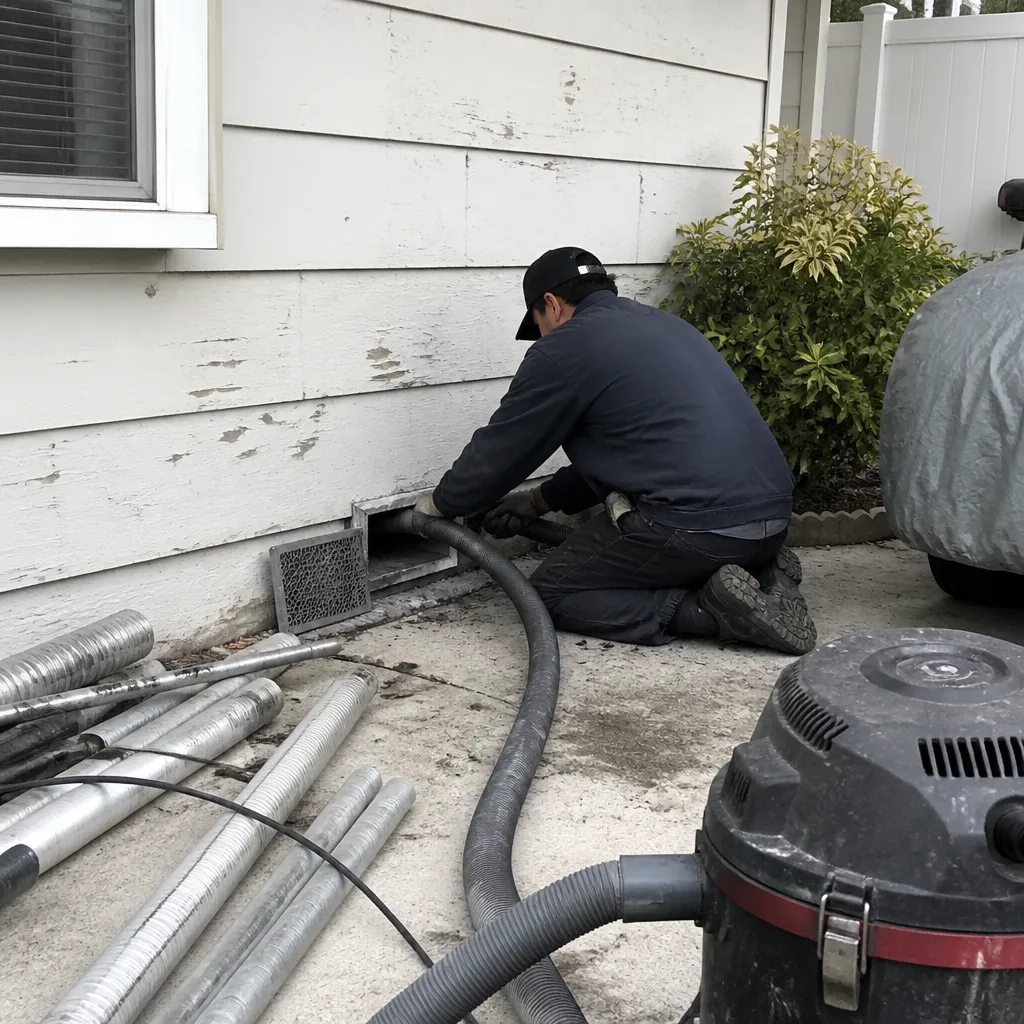
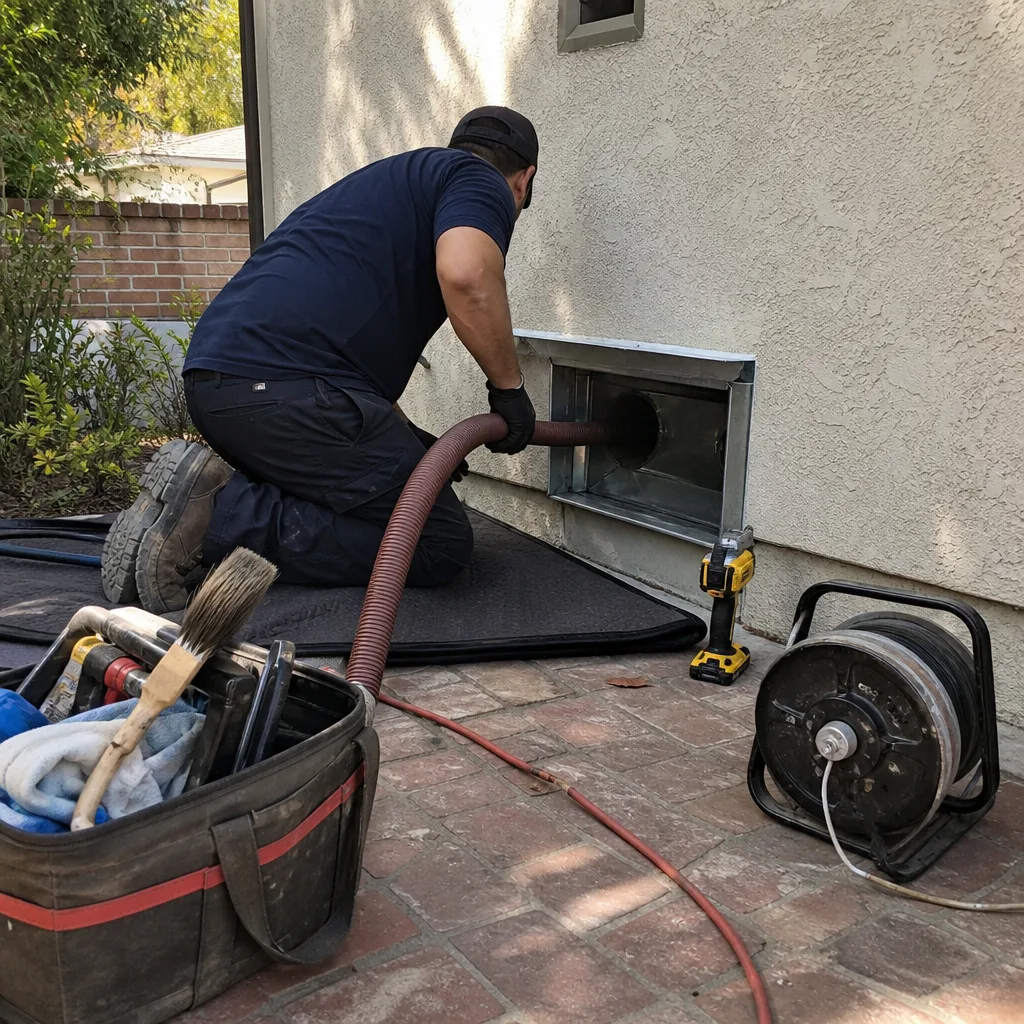
We lead with equipment because equipment is the honest differentiator. The Nikro negative-air machines we deploy are the same units specified by industrial hygienists for containment during remediation projects. They produce verified negative pressure in the duct system, which means air flows into the cleaning point rather than leaking out. Loose debris is pulled to the machine and captured in HEPA filtration. This is extraction, not redistribution.
The Rotobrush system handles agitation. Its brush head rotates at speed, scrubbing the full interior diameter of the duct and dislodging the layer of compacted dust, hair, and dander that adheres to duct walls. The brush feeds through the duct on a flexible shaft that reaches the entire run from the register to the plenum. This is the mechanical difference between cleaning the first 18 inches and cleaning the entire system. A drill brush reaches what your arm can reach. A Rotobrush reaches what the duct actually contains.
Abatement Technologies air scrubbers run in the living space during service. These HEPA-filtered units pull room air continuously, capturing anything that escapes the duct containment. The result is an active filtration barrier between the work area and the rest of the house. Homeowners with allergies or respiratory sensitivity will notice the difference on the day of service. The air in the room improves while the work is happening, not after. That specification is why we mention the brand: because the name tells you what the equipment does.
There is also the post-cleaning treatment step. Guardsman protective products applied after cleaning help maintain duct surface integrity and resist future buildup. This is not a miracle coating; it is a maintenance product that sits on the duct wall after it has been properly cleaned and slows the re-accumulation of household particulate. Combined with the cleaning and the HEPA containment, the full professional process addresses the duct system as a system – surface, air, and protection – rather than a collection of visible openings.
The same visit can address the full air pathway. Our crews handle dryer vent cleaning and duct repair in-house, which matters when a cleaning reveals a disconnected junction or a punctured flex run. The Platinum Air Duct Cleaning home philosophy is single-source accountability: we clean it, we repair it, and we do not send you to another contractor when the inspection finds something structural.
The Cost-Benefit Math: When DIY Makes Sense and When It Doesn’t
The DIY path for duct maintenance in Huntington Beach costs roughly $60 to $150 in materials: a drill-attachment brush kit, a shop-vac crevice tool, some register cleaning supplies, and a replacement filter. Time investment runs two to four hours for a typical three-bedroom home, assuming you are only doing registers and the first reachable inches of takeoff duct. What you get for that investment is a visual improvement at the register faces and a marginal reduction in surface dust in the first foot of takeoff duct. The rest of the system remains untouched.
Professional duct cleaning for a Huntington Beach home typically falls in a range that reflects the size of the system, the number of returns, and the condition of the ductwork. A standard single-system home might reasonably expect a full-system cleaning to run several hundred dollars, with larger custom homes or heavily contaminated systems exceeding that. The value delivered includes full-run agitation and extraction, HEPA containment during service, post-cleaning inspection of the entire system, and Guardsman treatment if requested. The air duct repair capability means that if the inspection finds a broken connection or a punctured flex run, the fix happens in the same visit rather than requiring a second appointment with a different company.
The point at which the math favors professional service is the point at which you are no longer satisfied with cleaning what you can see. If your concern is register appearance, DIY is fine. If your concern is the air you breathe, the particulate load in the full duct system, system airflow, or energy efficiency, the DIY approach does not address any of it. You are spending $60 and a Saturday morning to clean the door handle of a room that needs the floor scrubbed. Not worthless, but not the job you actually needed done.
We also see the cost-benefit equation from the other side: homeowners who paid a low-cost “blow-and-go” service and then call us to redo the work properly. The bait-and-switch reputation in this industry is real, and it has made Huntington Beach homeowners rightly skeptical of lowball quotes. The honest framing is that professional duct cleaning with real negative-air containment and genuine full-run agitation simply costs more than a service that pokes a vacuum hose into each register and calls it done. You are paying for equipment time, HEPA filtration, and a crew that actually reaches the entire duct system. That is either worth it to you or it isn’t, but the price difference is not arbitrary.
Step-by-Step: The Legitimate DIY Maintenance You Can Do
If you want to handle the homeowner-appropriate portion of the job yourself before scheduling a professional cleaning, here is the process we’d suggest. These steps are safe for most homes with standard metal or flex duct, provided you stay within the reach limits described. In Huntington Beach’s coastal air, doing this quarterly alongside filter changes keeps the visible layer manageable.
- Turn the system off. Set the thermostat to Off at the wall, not just to fan Auto. You do not want the blower running while registers are open and you’re agitating dust.
- Remove and soak register grilles. Take off every supply grille in the house. Soak them in warm water with a few drops of dish soap for fifteen minutes, then scrub with a nylon brush. Rinse, dry, set aside.
- Vacuum the return grille and filter cavity. Use a shop vac with a brush attachment on the return air grille faces. Remove the old filter and vacuum the filter box itself. Install a fresh filter. Write the date on the filter frame with a marker.
- Clean the first 12 to 18 inches of each supply takeoff. With the register off, shine a flashlight into the duct. Use a shop vac crevice tool to vacuum what you can see and reach. If you use a flexible brush, insert it no more than 18 inches and withdraw it slowly. Do not force it past a bend.
- Reinstall dry grilles. Make sure each grille is fully seated and the screws are snug. Loose grilles rattle and vibrate when the system runs, which creates noise and can allow bypass air.
- Run the system for ten minutes with windows open. This clears any dust you disturbed during cleaning. Close the windows after, and you’re done.
That is the entire legitimate DIY scope. It takes a couple of hours, costs about $30 to $75 if you already own a shop vac, and keeps the visible portion of your system tidy between professional cleanings. It is not a substitute for full-system extraction, and it shouldn’t be framed as one.
Common Mistakes to Avoid
- Using a leaf blower to “clean” ducts. We’ve seen this more than once in Huntington Beach homes. A leaf blower forces debris out of the duct at high velocity, into the living space, through return paths, and into the blower motor. It is actively destructive and accomplishes nothing.
- Pushing a brush too far into flex duct. Flex duct has an inner liner that tear easily. Once torn, you have a leak inside an attic or ceiling cavity that grows every month until it is patched. Stay under 18 inches.
- Cleaning without changing the filter. If you agitate the register areas but leave a clogged return filter in place, you’ve just created a fresh load of dust that will circulate as soon as the blower runs. The filter catches return-side air; it is the cheapest piece of the system and the most commonly neglected.
- Ignoring visible mold or staining. Dark spots around registers or a persistent musty odor are not cleaning problems. Disturbing those surfaces spreads spores. Stop and call for inspection.
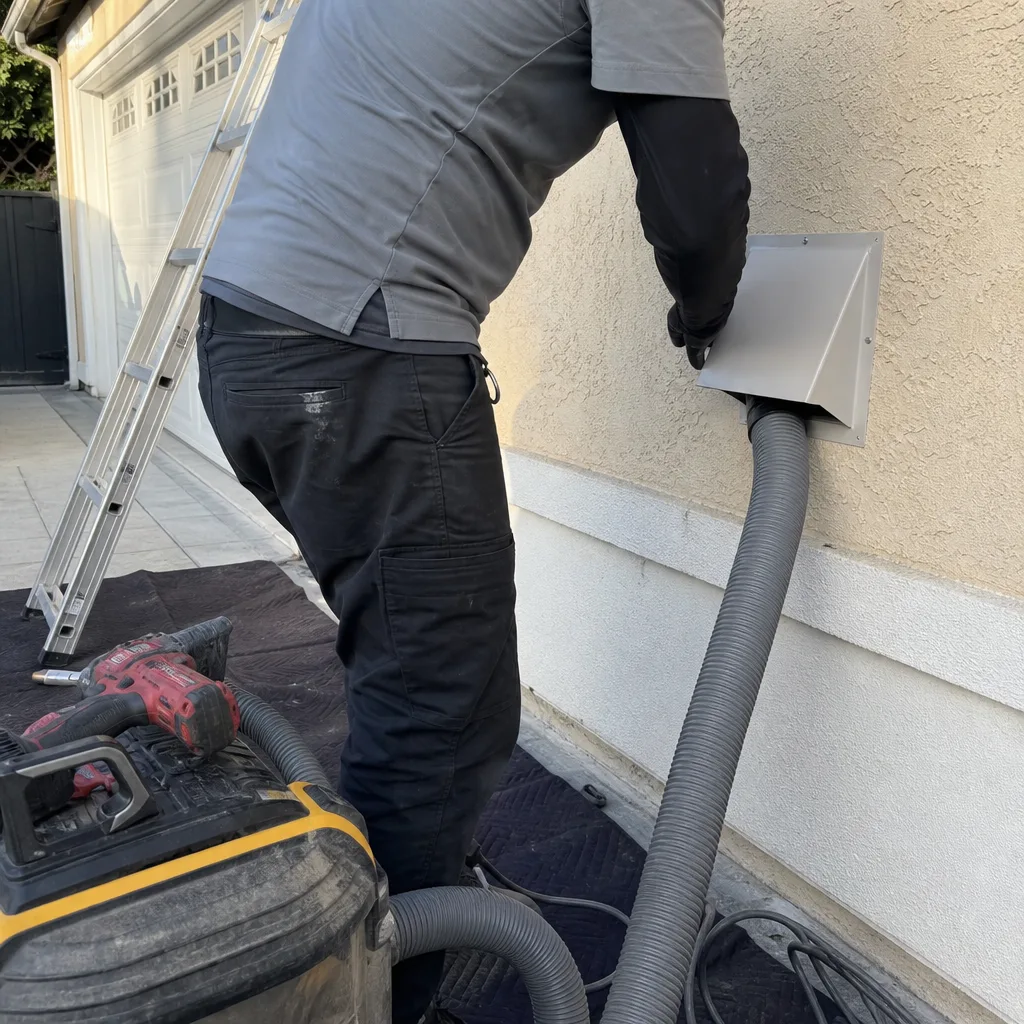
- Treating dryer vents and HVAC ducts as the same job. They are not. Dryer vents carry lint, heat, and combustion byproducts out of the house. A clogged dryer vent is a fire risk that requires its own professional attention. The tools and methods differ.
- Doing nothing because “the house isn’t that old.” Huntington Beach homes built in the 1980s and 1990s have duct systems approaching 30 to 40 years old. Age alone doesn’t mean contamination, but it guarantees some level of accumulated debris. Ductwork doesn’t clean itself, and coastal air adds the moisture that makes dust adhere.
- Assuming a higher MERV filter fixes dirty ducts. A better filter captures more particles going through the return, but it doesn’t remove what has already settled in the ductwork. In some cases, a high-MERV filter on an older blower can reduce airflow enough to shorten motor life. The duct problem stays a duct problem.
When to Call a Professional
Call a professional when the problem is beyond what you can see and reach: visible dust blowing from registers when the system starts, a musty odor that intensifies with airflow, rooms that heat and cool unevenly despite a balanced thermostat setting, increased dust accumulation on surfaces within days of cleaning, or allergy symptoms that spike when the system runs. Any sign of rodent activity, water staining, or mold around duct openings moves you past cleaning into inspection territory. If you bought a Huntington Beach home and the previous owners have no record of duct cleaning, assume the system contains years of accumulated particulate. Platinum Air Duct Cleaning offers free estimates in Huntington Beach – call (877) 824-2949 and we’ll assess what your system actually needs.
Frequently Asked Questions
Professional air duct cleaning in Huntington Beach typically runs several hundred dollars for a single-system home, with larger homes, multiple systems, or heavily contaminated ductwork pushing the total higher. The price reflects full-run agitation and extraction with professional equipment, HEPA containment during service, and system inspection. Exact numbers depend on system size, duct condition, and access. Call (877) 824-2949 for a free estimate specific to your home.
Cheaper quotes usually correspond to cheaper method: a crew with a single vacuum hose, no negative-air containment, no HEPA filtration, and a limited time budget per register. They may clean the visible duct openings without reaching the full duct run. The result looks fine on the day of service but does not address the internal surfaces where contamination actually lives. The price difference reflects equipment capability and thoroughness, not marketing markup.
DIY duct cleaning is worth doing as register-level maintenance: soaking grilles, vacuuming the first 12 to 18 inches of takeoff duct, replacing filters, and keeping return air paths clean. It is not worth doing as a full-system solution, because without negative-pressure extraction the debris you dislodge stays in the system and redistributes through the house. Do the visible maintenance, then have a professional handle the full system.
Ask for before-and-after photos of your duct interiors. Reputable Huntington Beach duct cleaners photograph the interior of supply and return runs before work begins and after extraction is complete. If a company cannot or will not show you the surfaces they cleaned, you have no way to verify the work. Rotobrush and similar equipment access the full duct interior, which makes interior photography straightforward.
The National Air Duct Cleaners Association recommends cleaning every 3 to 5 years under normal conditions. Huntington Beach’s coastal humidity, combined with pets, smoking, recent renovations, or allergy sensitivity, can justify more frequent service. For Seasonal Air Duct Cleaning Care for Huntington Beach: Year-Round Homeowner’s Guide, see our seasonal maintenance breakdown. Homes with dogs or cats that shed heavily, or homes where windows are rarely opened and the HVAC runs year-round, tend to accumulate faster. If you can see debris around the register faces and the system hasn’t been cleaned in over five years, it’s due.
You can remove accessible lint from the first foot or two of the dryer vent duct with a brush kit, but that does not address the full vent run to the exterior. Most Huntington Beach dryer vents run through walls, floors, or crawlspaces, and the blockage risk comes from deep lint accumulation that a hand-fed brush rarely reaches. A professional dryer vent cleaning uses powered rotary equipment and verified airflow to clear the entire run. That matters because lint blockage is a genuine fire hazard, not a convenience problem.
The Bottom Line
DIY duct cleaning has a legitimate but narrow role: register faces, the first foot to foot-and-a-half of takeoff duct, return grilles, and filter replacement. Everything beyond that requires negative-air extraction to remove debris rather than redistribute it, and no consumer-level tool provides that. In Huntington Beach, where coastal humidity, flex-duct construction, and older housing stock combine to make the duct system more vulnerable to contamination and damage, the practical line is clear: do the register-level maintenance quarterly, and have a professional full-system cleaning every three to five years. The equipment you cannot replicate – Nikro negative-air containment, Rotobrush full-run agitation, HEPA air scrubbers – is the reason professional service costs what it does and delivers what it should. Explore more guides & resources on maintaining healthy indoor air. Where the air you breathe is concerned, half measures are not half the price. They are just half the job.
Written by the team at Platinum Air Duct Cleaning, serving Huntington Beach since 2017.
See the difference
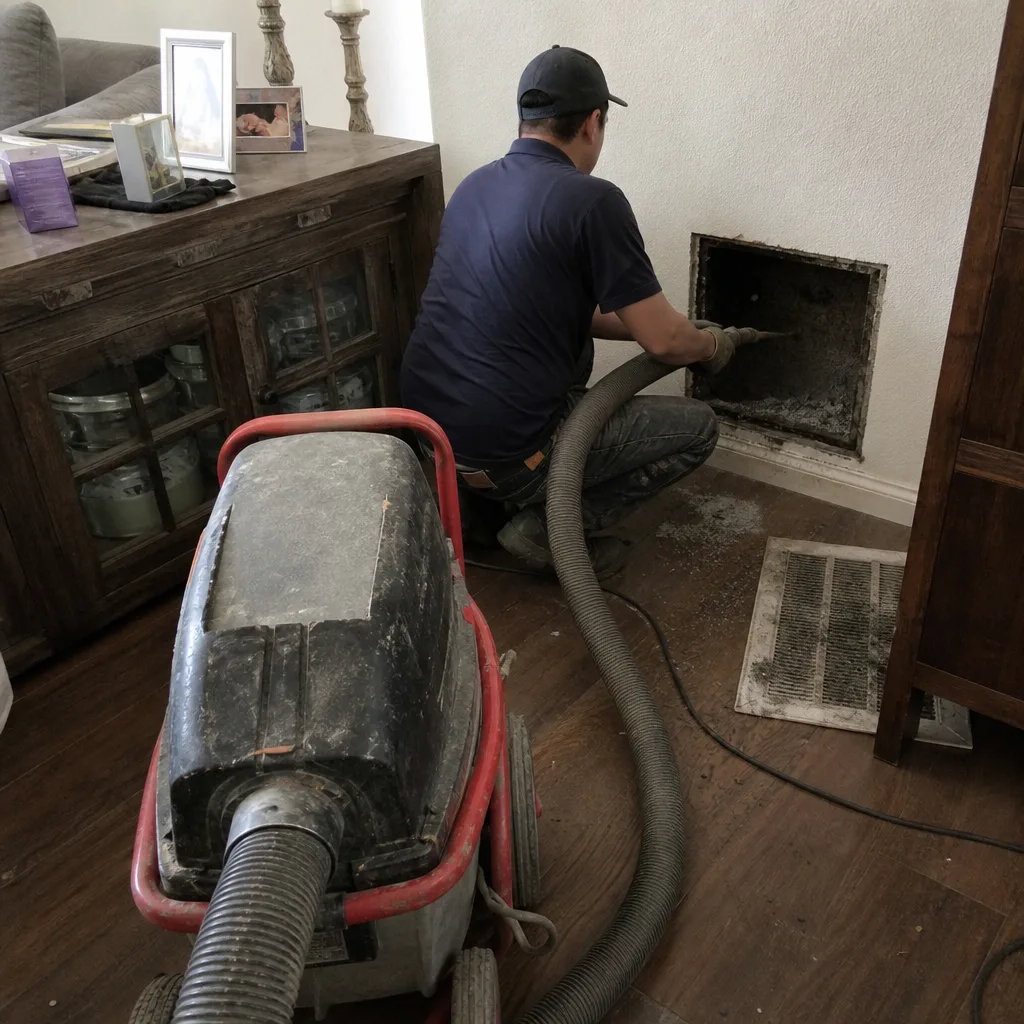 Before
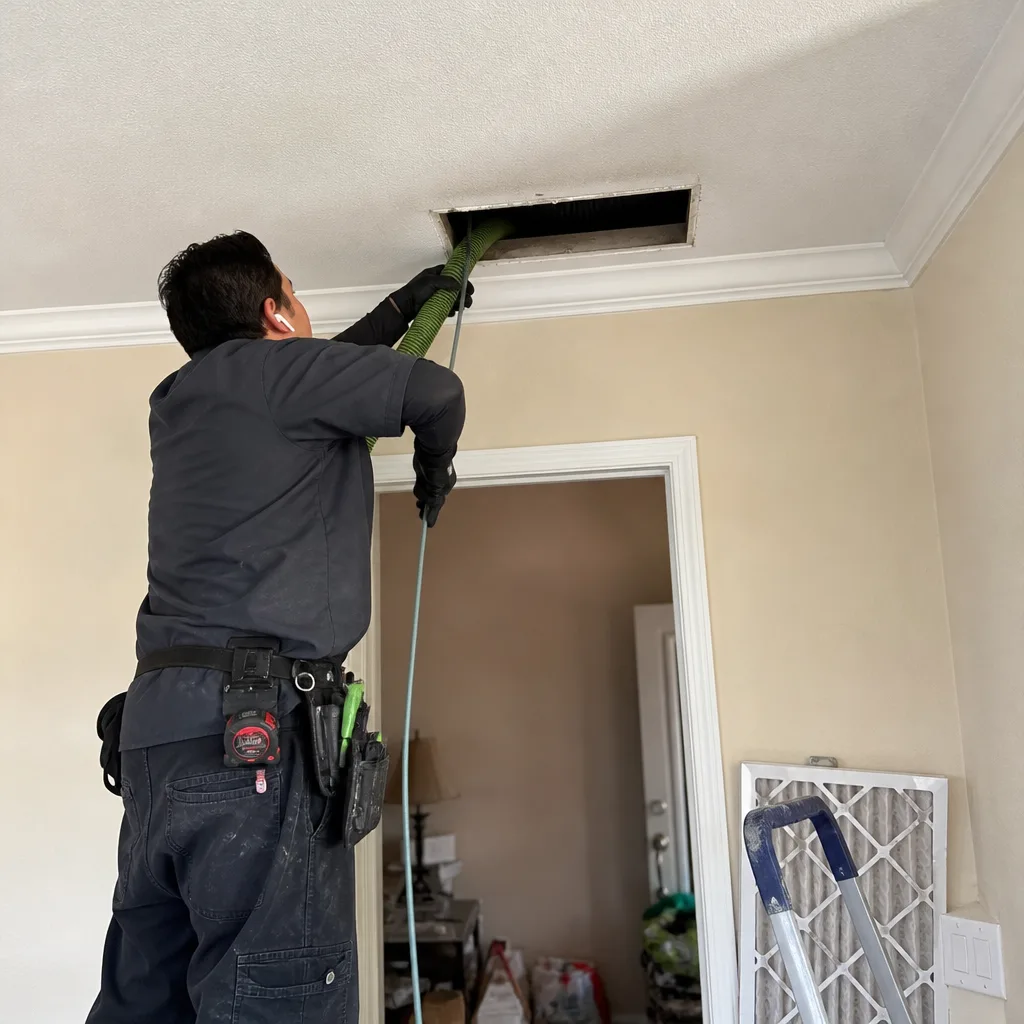 After
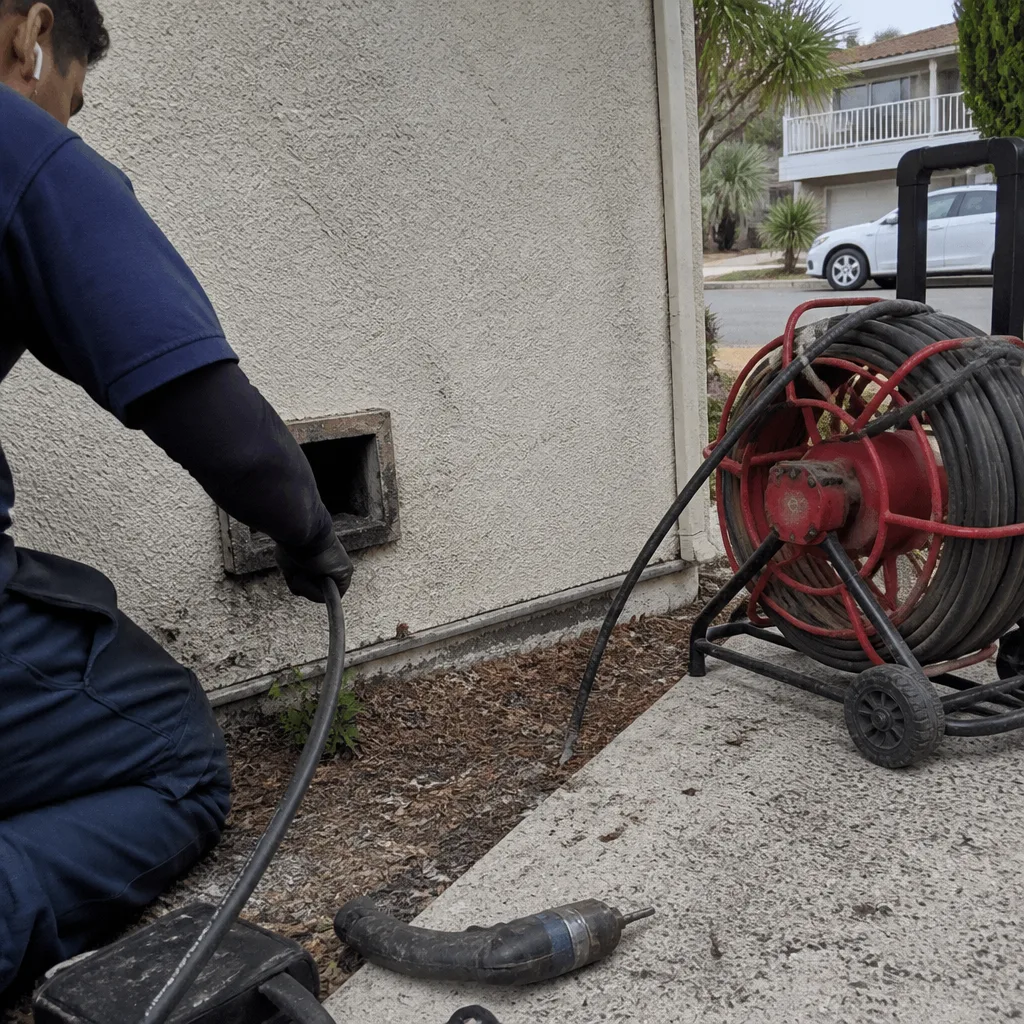 Before
 After
 Before
 After