
Last updated November 2, 2026
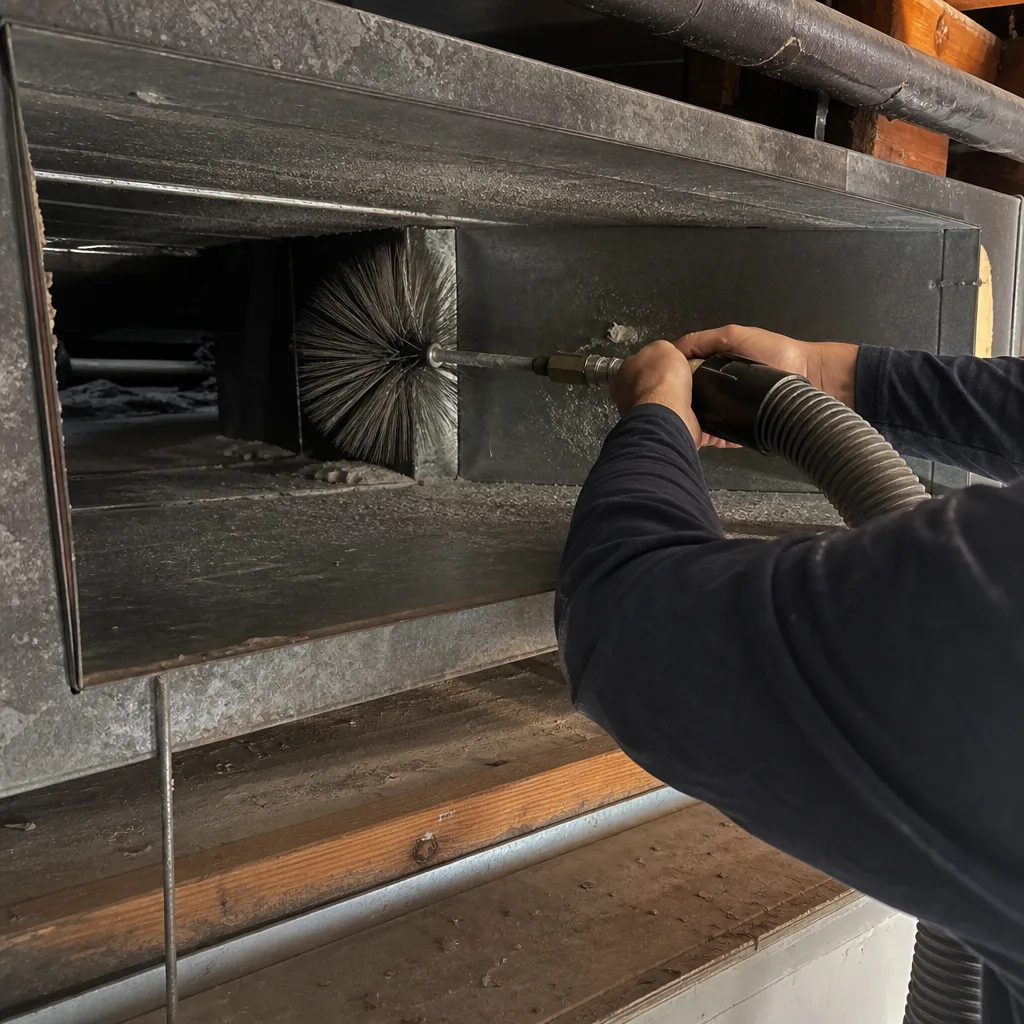
 Whole-home duct cleaning
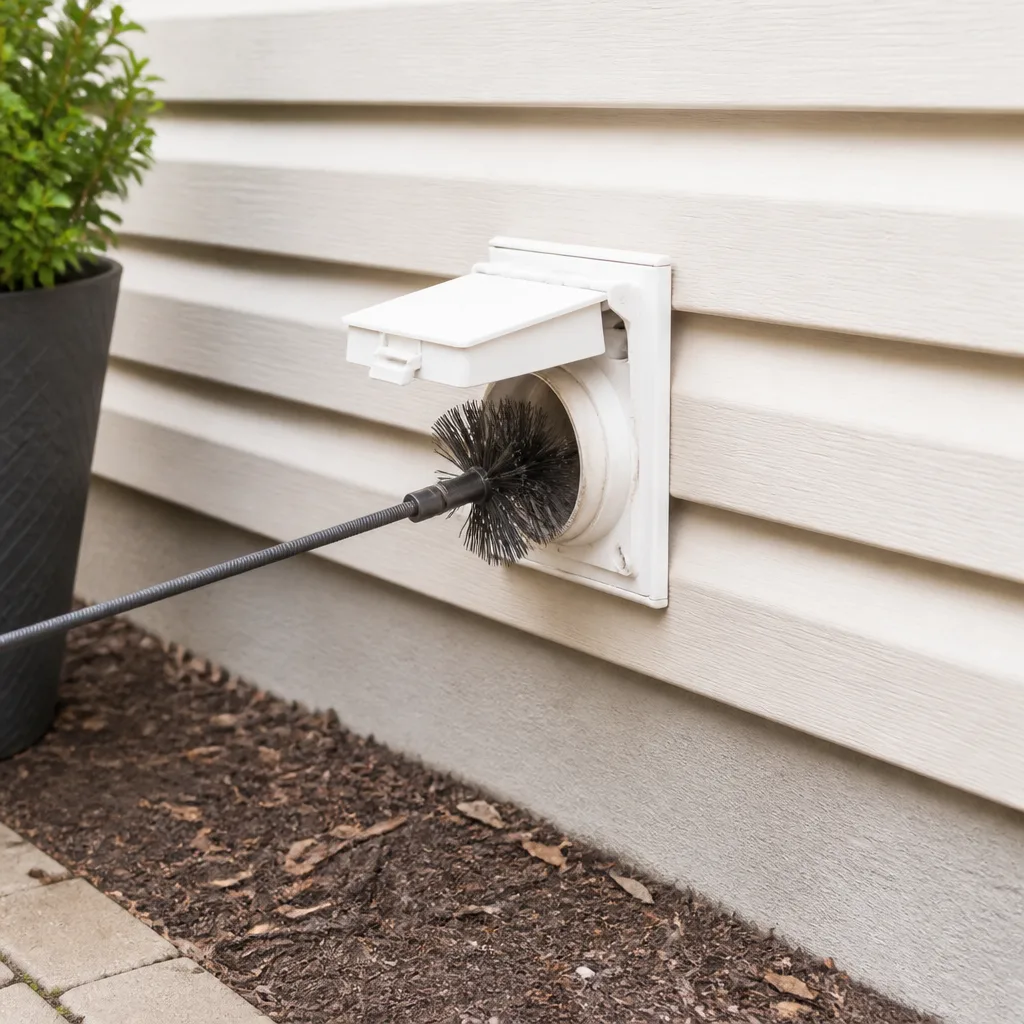 Dryer vent cleaning
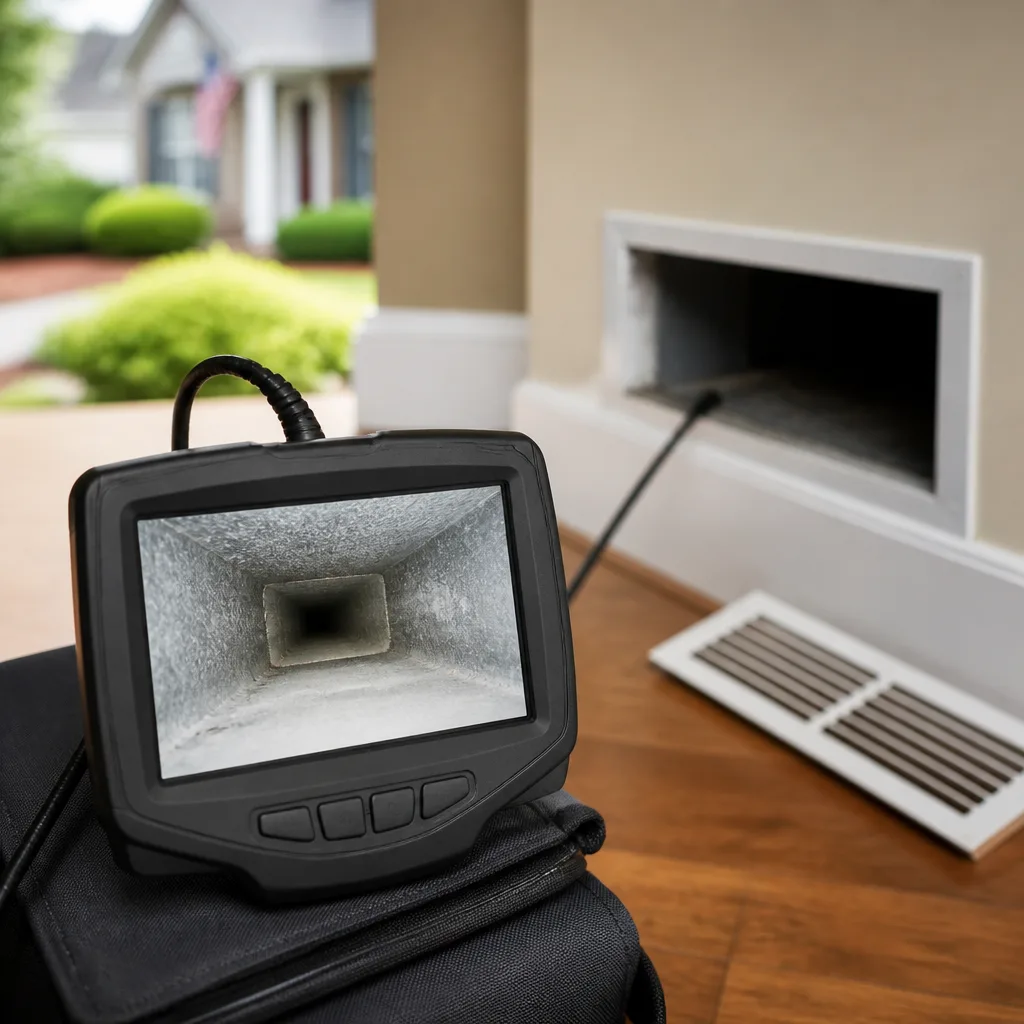 Camera inspection
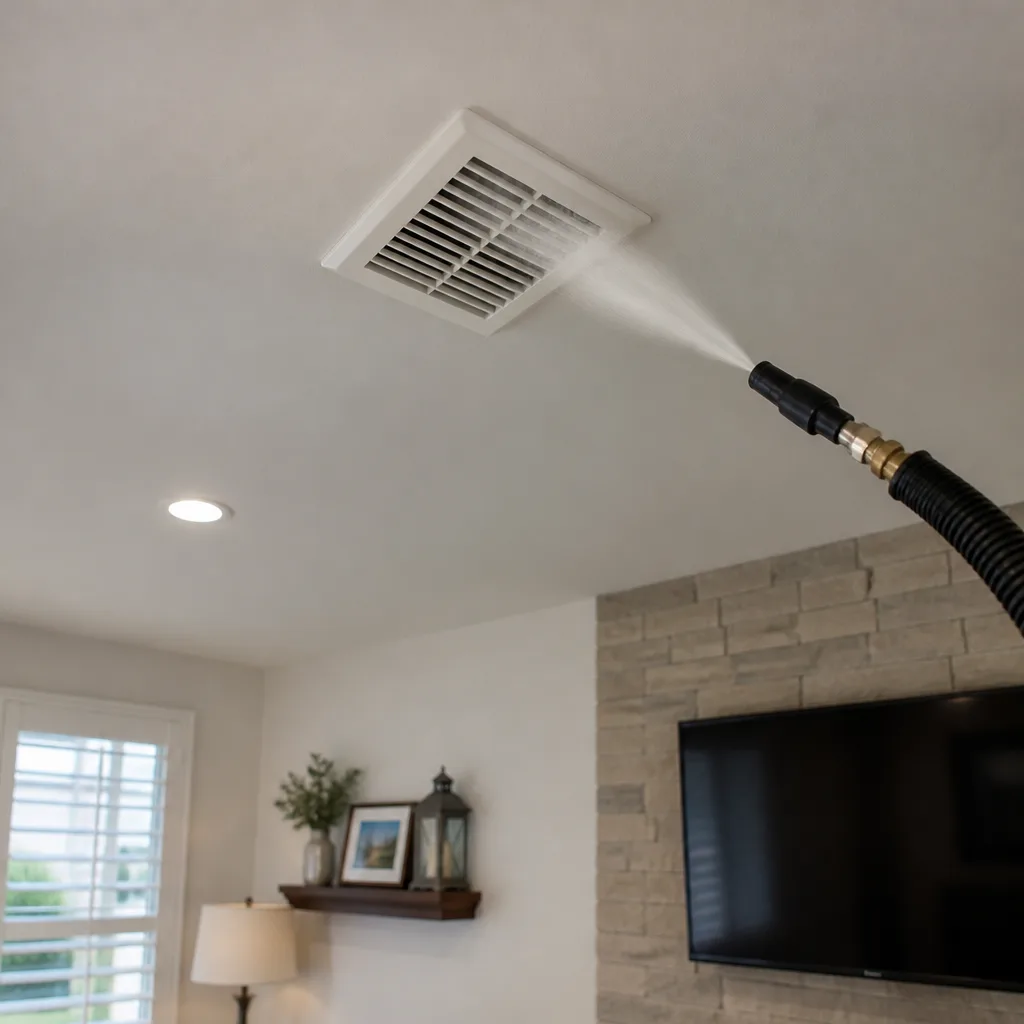 Sanitizing & deodorizing
Whole-system duct and dryer vent check with before-and-after photos - you see exactly what came out of your vents
That "$99 whole-house special" is a bait ad - the real number appears once they are in your hallway, or the "clean" is a shop-vac at the register. We photograph the inside of your ducts before and after instead.
Seasonal Air Duct Cleaning Care for Huntington Beach: Year-Round Homeowner’s Guide
Huntington Beach homeowners don’t think of their city as having dramatic seasonal swings – and that’s exactly why their ducts accumulate problems that go unnoticed. The threats here are quieter than a Midwest blizzard but just as damaging to an HVAC system. Our coastal marine layer, offshore winds, and wildfire smoke each deposit a different kind of contaminant into ductwork, and each requires a different homeowner response. This guide maps the four distinct air-quality events that shape life in Huntington Beach and lays out exactly when to inspect, clean, and upgrade your duct system through the calendar year.
Styles & brands we work with
- Whole-home duct cleaning
- Dryer vent cleaning
- Camera inspection
- Sanitizing & deodorizing
Quick Answer
In Huntington Beach, air duct cleaning isn’t a once-a-decade chore tied to a single season – it’s a response to four recurring coastal air-quality events that each leave a different residue in your ductwork. June Gloom introduces moisture that can dampen duct liner and insulation, summer brings coastal ozone and particulate from PCH traffic, Santa Ana winds deposit fine grit into return pathways, and winter wildfire smoke leaves sub-micron particles that penetrate deep into duct walls. The single most effective service call for a Huntington Beach homeowner is a post-Santa Ana, pre-cooling-season Air Duct Cleaning services inspection in October or November, with a follow-up cleaning if moisture or smoke incursion occurred.
Table of Contents
- June Gloom and Ductwork Moisture: May Through July
- Summer Coastal Ozone and PCH Particulate: July Through September
- Santa Ana Winds and Fine Debris: October Through November
- Wildfire Smoke Incursion: December Through February
- Filter Upgrades and Timing for Huntington Beach Air
- Dryer Vent Cleaning as a Seasonal Safety Task
- A Seasonal Duct Inspection Checklist for Huntington Beach Homes
- Common Mistakes to Avoid
- When to Call a Professional
- Frequently Asked Questions
- The Bottom Line
June Gloom and Ductwork Moisture: May Through July
Huntington Beach has a fifth season that most of the country doesn’t: June Gloom. From May through July, a persistent marine layer sits over the coast for days or weeks at a time, holding relative humidity at 70 – 85% for extended stretches. That humidity doesn’t stay outside. It moves through your return air grilles, into your duct runs, and settles in the places you can’t see: the inner liner of flex ducts, the seams where branch lines meet the trunk, and the first few feet of the return plenum. Over time, sustained moisture in these conditions can dampen the fiberglass liner inside older ducts, creating a soft, musty odor every time the system cycles on. This isn’t a hypothetical for coastal Orange County homes – it’s what we see every summer in Huntington Beach neighborhoods from Edwards Hill to Sunset Beach, where the marine layer hangs longest and homes are closest to the salt air.
Moisture intrusion into ductwork shows itself in three ways. First, a persistent musty smell when the system starts, strongest in the first thirty seconds of the fan cycle. Second, visible condensation forming on the outside of the supply plenum or on the flex duct near the air handler, which indicates the conditioned air inside is significantly cooler than the dew point of the surrounding garage or attic air. Third, an unexplained rise in household dust or allergy symptoms during late May and June, which happens when damp duct liner becomes a catch point for fine particles that would otherwise pass through. These are all reasons to schedule a duct inspection during or immediately after the Gloom season, particularly if your home was built before 2000, when duct liner material was more common and less moisture-resistant than what’s used today.
Summer Coastal Ozone and PCH Particulate: July Through September
Summer in Huntington Beach is beautiful, but the same ocean breeze that makes it livable also carries what’s called coastal ozone. This is formed when vehicle emissions from Pacific Coast Highway and the 405 corridor interact with strong July sunlight over the ocean, creating ground-level ozone that blows inland with the afternoon sea breeze. Ozone doesn’t accumulate in ducts the way dust does. Instead, it chemically interacts with materials inside the air stream: it accelerates oxidation of flex duct outer jackets, it breaks down certain filter media more quickly, and it contributes to the breakdown of plastic components near the indoor coil. What does accumulate in ducts during summer is the fine particulate that PCH traffic generates – brake dust, tire wear, and partially combusted road grime – which is extremely fine and travels further into duct runs than the coarser dust of other seasons.
The practical response for a Huntington Beach homeowner during July through September is a filter evaluation, not necessarily a full duct cleaning. A standard pleated MERV 8 filter captures 60 – 70% of coarse particles, but the fine summer coastal particulate passes through it and into your ductwork. Moving to a MERV 11 filter during the summer months, particularly for homes within a quarter mile of PCH or Main Street, captures substantially more of the fine particulate without the airflow penalty of a MERV 13, which can strain older systems. If you’re running a Honeywell or Aprilaire media cabinet, a MERV 11 media filter is a straightforward swap that doesn’t require duct modification. The key timing: install the upgraded filter in early July, before the heaviest ozone months, and remove it at the end of September if you have an older system that struggles with the added resistance. We install these filtration upgrades as part of our Air Duct Cleaning in Huntington Beach service, because cleaning without addressing filtration means the problem returns quickly.
Santa Ana Winds and Fine Debris: October Through November
If there’s one season that most obviously fills Huntington Beach ductwork with debris, it’s Santa Ana season. From October through November, offshore winds from the desert interior push dry, gritty air toward the coast at 30 – 50 mph, carrying a load of fine dust, pulverized vegetation, and road grit from inland. This is when you’ll notice a thin film of dust on window sills and furniture within 24 hours of a wind event. That same dust enters your return air grilles whenever the system runs, but Santa Ana grit behaves differently in ductwork than ordinary household dust: it’s mineral-heavy, meaning it’s denser and more abrasive. It doesn’t drift through the system the way lint does. It falls out of the airstream in the horizontal runs of return ducts and accumulates in the bottom third of the duct, where it sits until the next pressure change sends it back into your living space.
A Santa Ana event is the one time we recommend a duct cleaning or inspection based on a weather event alone, because the volume of material entering the home in a 48-hour wind event is comparable to several months of normal occupancy dust. The reason this matters more in Huntington Beach than inland is that many coastal homes have return air pathways that run through the slab or through low crawlspaces, where Santa Ana grit can mix with existing construction dust and pet hair into a compacted layer that a standard filter can’t catch. After a strong Santa Ana event, a walk-through of the return registers with a flashlight will often reveal a visible accumulation of fine tan-colored dust – that’s your cue to call for an inspection. The timing here matters: October to November is the best window to identify and remove Santa Ana debris before winter heating season forces it through the supply side of the system.
Wildfire Smoke Incursion: December Through February
Winter in Huntington Beach increasingly means one thing: wildfire smoke. Events like the 2020 Bond Fire and the 2025 Palisades Fire pushed heavy smoke into coastal Orange County for days at a time, and each incursion leaves a measurable residue in duct systems. Smoke particles are different from dust in ways that matter for cleaning. They’re sub-micron, meaning they pass through even the most efficient residential filters; they’re oily, meaning they adhere to duct walls rather than resting on them; and they penetrate porous materials like duct board, fiberglass liner, and insulation, where they can off-gas odors for months after the event. Smoke-contaminated ductwork is one of the few situations where a visual inspection fails: the oily residue is nearly invisible against the gray surface of a fiberglass liner, but it’s there, and it’s the source of the lingering campfire smell that returns. See our Air Duct Cleaning Emergency Preparedness Guide for Huntington Beach Homes for steps to take before the next wildfire season.rns every time the heat kicks on.
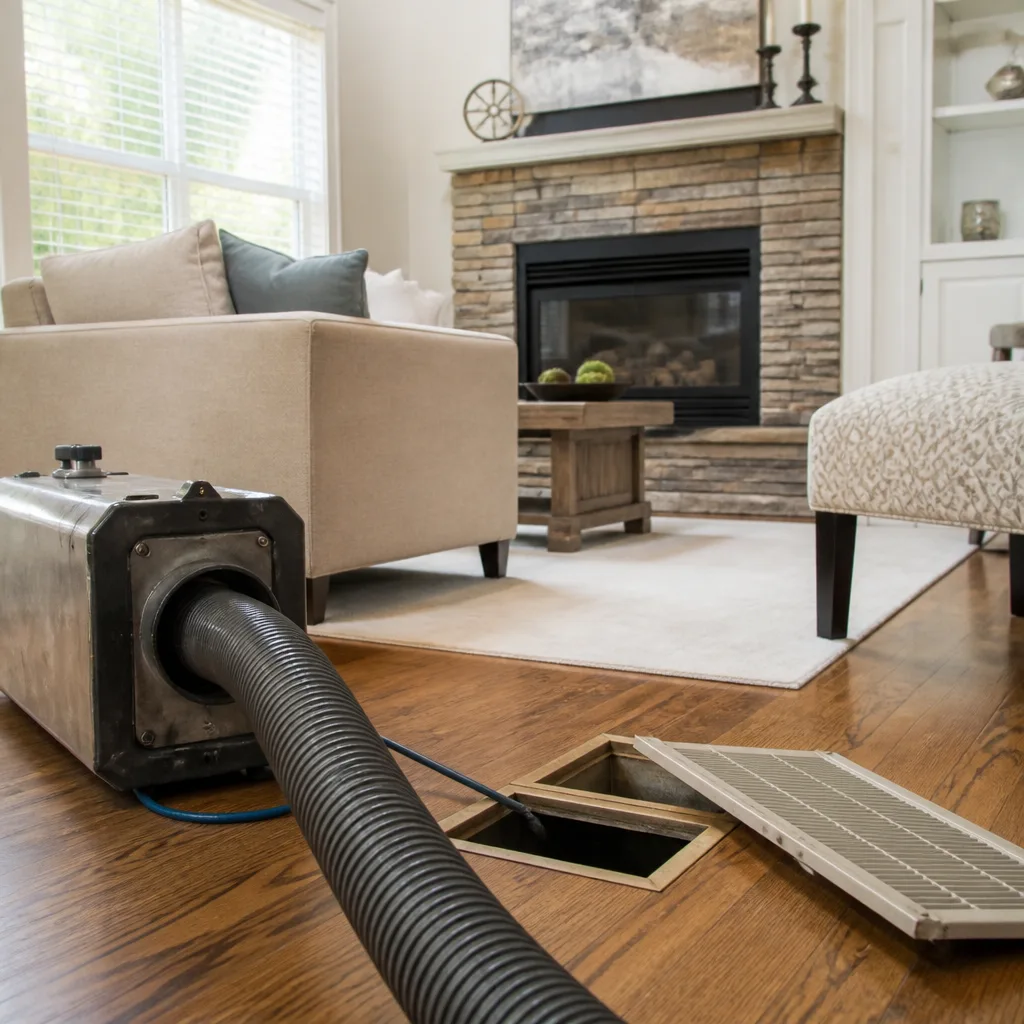
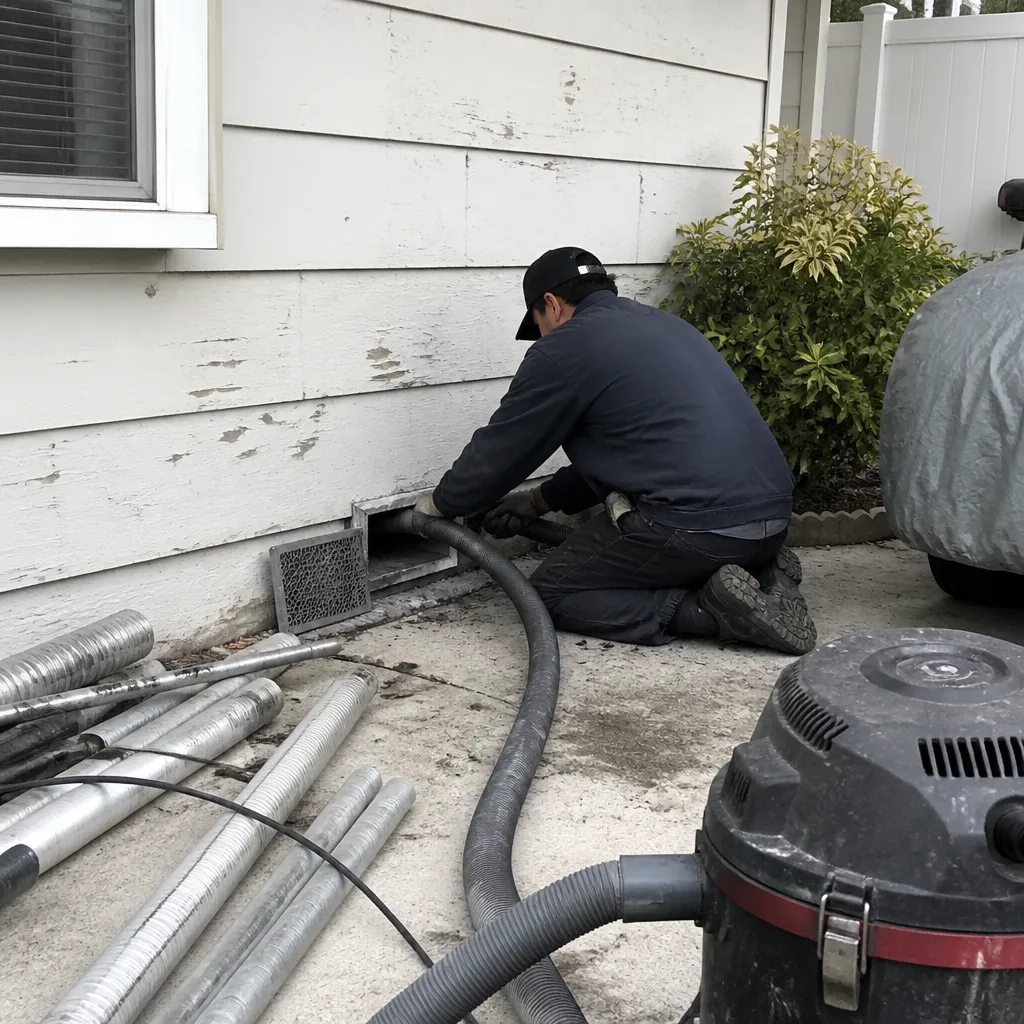
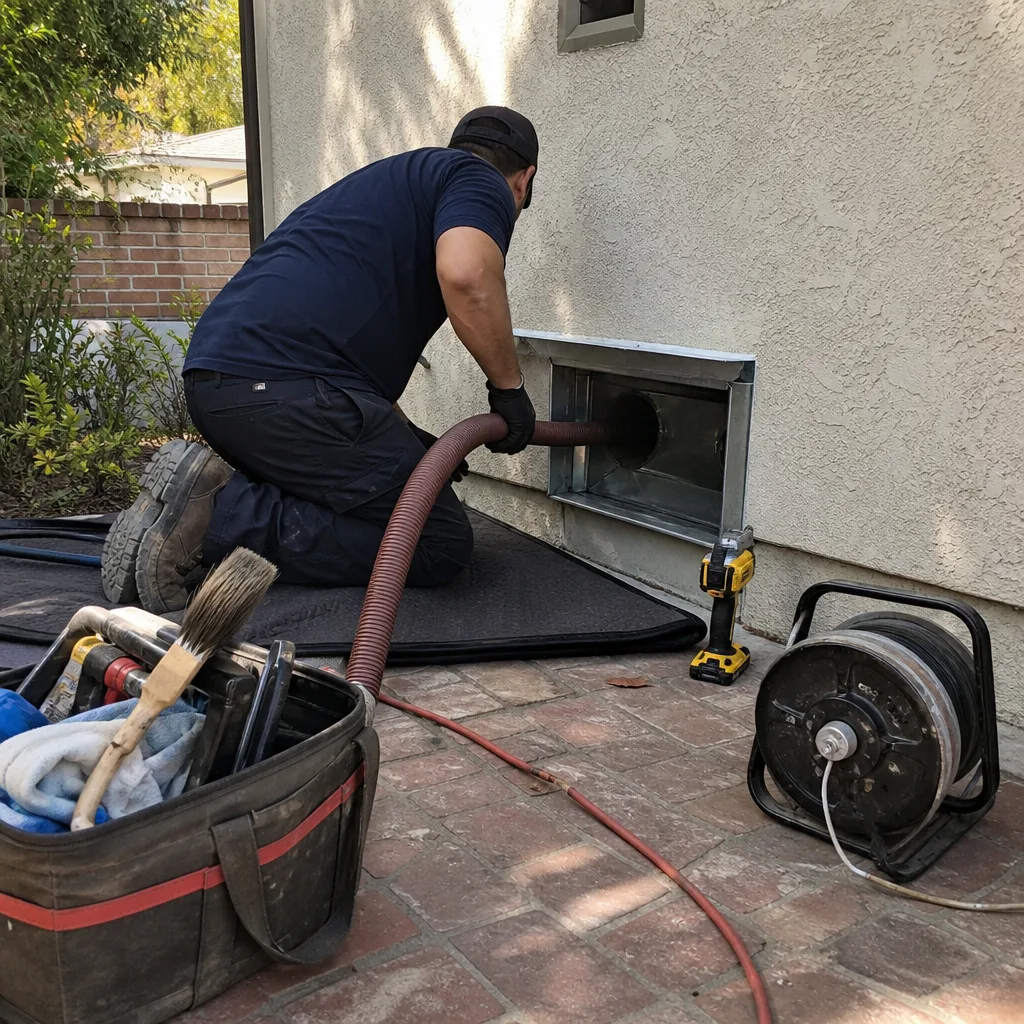
Extraction of smoke residue requires a different approach than routine dust removal. A standard rotary brush pass will remove loose material, but the oily film requires agitation that breaks the physical bond between the residue and the duct wall, combined with extraction and HEPA filtration that keeps the dislodged material out of your living space. This is where our Rotobrush system and the negative-pressure containment of our Nikro HEPA vacuum make the difference: the brush scrubs the residue, the vacuum captures it at the point of agitation, and the Abatement Technologies air scrubber runs continuously during the work, filtering particles down to 0.3 microns so that the cleaning process doesn’t redistribute what it removes. If you live west of Edwards Hill or any neighborhood where smoke pooled during a winter event, a duct cleaning within 60 days of the event is the most effective way to prevent long-term odor and airborne particulate. For a deep dive into what a cleaning actually involves in coastal homes, see our guide on Air Duct Cleaning in Huntington Beach.
Filter Upgrades and Timing for Huntington Beach Air
Huntington Beach has four distinct air-quality events each year, and a thoughtful filter strategy changes with each one. The table below maps the season, the hazard, and the appropriate filter response. The right filter for a June Gloom week isn’t the right filter for a Santa Ana event, and using one filter year-round means you’re optimized for only one season.
- June Gloom (May – July): Standard MERV 8 pleated filter is sufficient. The primary concern is moisture, not particulate. Keep the filter dry and replace it if you see visible dampness or warping of the media, particularly during extended marine layer stretches.
- Summer ozone (July – September): Upgrade to MERV 11 if you’re within a quarter mile of PCH, Main Street, or the 405 corridor. The fine coastal particulate and ozone degradation products are the concern. Replace at the end of September.
- Santa Ana (October – November): Use the highest MERV rating your system tolerates without tripping the high-limit switch, typically MERV 8 – 11, and check the filter after every sustained wind event. A filter can load completely within 48 hours during a strong Santa Ana.
- Wildfire smoke (December – February): A MERV 11 filter captures a meaningful fraction of smoke particulate, but no standard residential filter stops sub-micron smoke particles entirely. The real defense is source removal: a duct cleaning after the event. Run the fan continuously during active smoke events to keep air moving through the filter.
If the filter strategy sounds like it requires attention, it’s because it does. Coastal air isn’t static, and neither is what your HVAC system breathes. A homeowner willing to swap a filter seasonally will extend the life of any duct cleaning by months, and will notice the difference most in the summer months when coastal ozone degrades filter media faster than inland dust ever will. We supply and install Honeywell and Aprilaire media cabinets as part of our duct-cleaning work, which converts a disposable filter into a cartridge system that’s easier to swap seasonally.
Dryer Vent Cleaning as a Seasonal Safety Task
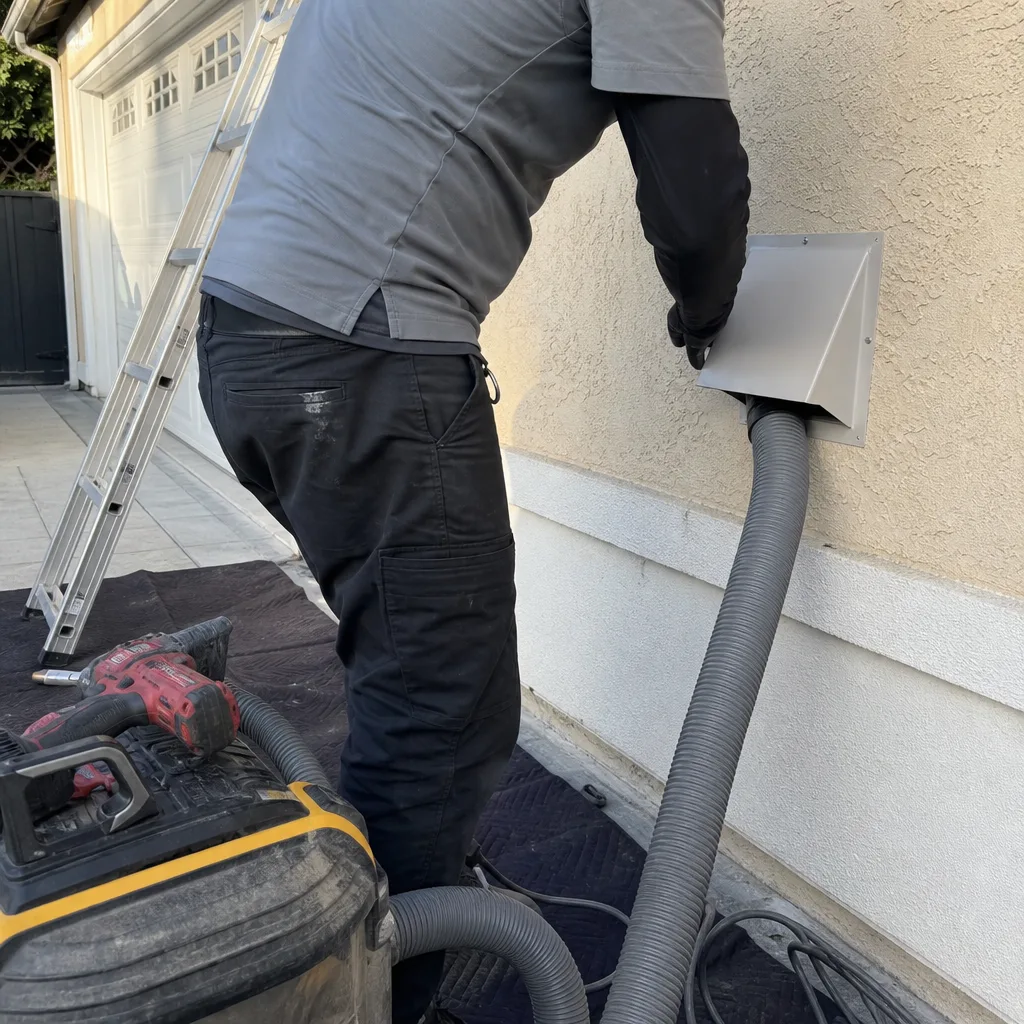
Dryer vent cleaning gets treated as a separate chore from duct cleaning, but in Huntington Beach they share a calendar. The lint that collects in a dryer vent is a fire hazard first and an efficiency problem second, and certain times of year make it worse. Coastal humidity in late spring and early summer causes lint to cling to the walls of the vent run rather than blow freely, and it compacts into a denser blockage. Then Santa Ana season adds its own contribution: fine grit enters through the exterior vent hood and mixes with the existing lint, creating a coarse, abrasive plug that’s harder to dislodge and more likely to trap heat. For a detailed look at how vent length, bends, and coastal conditions interact, see our page on Dryer Vent Cleaning in Huntington Beach.
The seasonal cue for dryer vent attention in Huntington Beach is simple: if your dryer has been in service through a summer of coastal humidity and a fall of Santa Ana wind, schedule a vent cleaning before the winter months, when drying loads increase and the system runs longer cycles. A clogged vent is the most common cause of dryer-related fires, and it’s one of the few home hazards that gives a clear early warning: longer dry times, a hot exterior wall behind the dryer, and a burning odor during operation. These signs don’t mean the vent is dirty. They mean the vent is obstructed enough that it’s already a fire risk. Cleaning it is the same in-house service we provide as part of our Platinum Air Duct Cleaning home services, and it’s a job we handle with the same Rotobrush and HEPA containment approach as our duct work.
A Seasonal Duct Inspection Checklist for Huntington Beach Homes
Every homeowner can check a few things without opening the duct system. These take minutes and flag problems before they become expensive. Run through this list at the start of each air-quality season if you want to stay ahead of what Huntington Beach’s climate does to ductwork.
- Check the return grilles. Remove one return grille in a common area and shine a flashlight into the duct. In June Gloom season, look for moisture or water staining on the duct walls. After Santa Ana season, look for a tan-colored film of fine grit on the bottom of the duct run. After smoke events, run a clean white cloth lightly along the duct wall – oily residue will leave a visible gray smear.
- Check the filter at the start of each season. Note its condition: discoloration means it’s doing its job. Warping, moisture rings, or a musty smell in May or June means dampness has reached the filter media and the ductwork around it.
- Run the fan continuously for 15 minutes during June Gloom. If the air coming from the supply registers feels humid or smells faintly musty, moisture is likely sitting in the duct liner or the plenum. This is worth a professional inspection.
- Inspect the exterior dryer vent hood. Ensure the louver opens freely. A stuck louver means the vent is obstructed, and a louver that doesn’t close fully means coastal moisture is entering the vent run whenever the dryer isn’t running.
- After any wind event above 40 mph, check window sills. If you see fine tan dust on interior sills, the same material has entered your return air grilles. Note the surface condition of the grille: Santa Ana grit leaves a slightly gritty texture, not just dust.
- Listen for a change in air velocity. When a duct system accumulates debris or develops a leak, supply air feels weaker at the farthest registers in the house. Bedrooms at the end of long runs are the first to show it.
None of these checks requires a tool or a service call. They simply convert the seasonal threat into a schedule: check moisture in June, check filters in July, check for grit after Santa Ana events, and check for oily residue after fire season. If any of these checks turns up a concern, the fix is a single call to a duct-cleaning company that can diagnose and clean in the same visit.
Common Mistakes to Avoid
- Cleaning only when the system looks dirty. The most damaging contaminants in Huntington Beach ductwork are the ones you can’t see: oily smoke residue, sub-micron coastal particulate, and moisture in the duct liner. Waiting for visible dirt means waiting until the problem is advanced.
- Using a high-MERV filter year-round. A MERV 13 filter during June Gloom increases airflow resistance without capturing anything useful, because the main hazard is moisture, not particulate. It can also starve an older system and reduce the life of the blower motor. Match the filter to the season, not to fear.
- Assuming Santa Ana winds only affect windows and patios. The same dust that coats your furniture enters your return air grilles and settles in the horizontal runs of your duct system. Ignoring this means the next time the system cycles, that dust is blown back into the living space.
- Treating a duct cleaning as a one-time fix. Huntington Beach air quality is cyclical. A cleaning in January removes what June Gloom, summer ozone, and Santa Ana winds deposited. A year later, the same events have deposited the same material again. Annual or bi-annual cleaning based on the seasonal events is the sustainable approach.
- Neglecting the dryer vent because the dryer works. A dryer vent can be 70% obstructed and still dry clothes. The failure mode is a lint fire, not a malfunction, and coastal humidity plus Santa Ana grit accelerates that obstruction more in Huntington Beach than in dry inland cities.
- Hiring the cheapest local service without asking what equipment they use. A shop-vac cleaning that pulls loose material from the center of the duct run without agitating the walls leaves most of the contamination in place, especially the oily smoke residue that’s the hardest to remove. The equipment determines the result. If they can’t name the extraction system, don’t book the appointment.
- Assuming your home is too new to need it. Homes built in the last 10 years in Huntington Beach have tighter envelopes and more aggressive filtration requirements, but they also have more complex duct layouts and more branch-line connections. New construction dust from the build itself often sits in the return duct for years before the first cleaning.
When to Call a Professional
A duct inspection is worth a professional call when any of these conditions appears: a musty odor that persists after June Gloom ends, visible dust release from supply registers on system start, a faint burning smell from the dryer that’s not explained by the lint screen, an increase in allergy or asthma symptoms during July through September, or a wildfire smoke event that lingered over Huntington Beach for more than a day. A professional cleaning uses agitation and extraction equipment – our Rotobrush system scrubs the duct walls, our Nikro HEPA vacuum maintains negative pressure to prevent debris from entering the living space, and our Abatement Technologies air scrubbers filter down to 0.3 microns. Platinum Air Duct Cleaning offers free estimates in Huntington Beach – call (877) 824-2949 to schedule an inspection or ask a question about your specific system.
Frequently Asked Questions
Air Duct Cleaning Cost Breakdown: The Huntington Beach Homeowner’s Reference for 2026 covers how air duct cleaning for a typical single-family home in Huntington Beach runs from $400 to $900, depending on the number of systems, the home’s square footage, and whether the ducts are accessible from the attic, crawlspace, or slab. Homes with two systems or complex duct layouts will be at the higher end. This includes agitation of the entire duct system, extraction with HEPA filtration, and post-cleaning verification. Call (877) 824-2949 for a free, specific estimate for your home – no per-vent pricing, one flat price agreed before work starts.
For most Huntington Beach homes, every two to three years is the right interval, with an annual inspection if you live west of Edwards Hill or within a quarter mile of PCH, where coastal ozone and traffic particulate are strongest. Homes with pets, allergy sufferers, or recent construction should lean toward every 18 to 24 months. The seasonal events described in this guide are the best predictors: if you’ve had a Santa Ana season with multiple strong wind events or a winter with wildfire smoke, cleaning sooner is justified. Call (877) 824-2949 if you’re unsure whether your system is due – we’ll help you assess it honestly.
The low-cost quotes you see for $99 or $199 whole-home deals are from companies that perform a visual cleaning: they insert a wand into a few supply registers, pull some loose debris from the center of the duct run, and leave the duct walls, return lines, and branch connections untouched. A real cleaning agitates and extracts from every register, the full return pathway, and the plenum, and it requires commercial equipment – a rotary brush system and a negative-pressure HEPA vacuum. The cheap quote doesn’t reflect a discount. It reflects a different job. One flat price per system means you know what the real job costs before the crew arrives.
The most reliable verification is a before-and-after inspection of the duct interior using a camera, or a bench test that measures the airflow through the system before and after cleaning. At Platinum Air Duct Cleaning, we provide before-and-after visual documentation of your duct system during the service, so you can see the change in the duct walls and the return runs. A cleaning that doesn’t offer any verification is a cleaning that’s relying on your trust rather than your inspection. Ask for documentation before you book.
Yes, June Gloom affects Huntington Beach ductwork, but the mechanism is humidity, not visible moisture. Sustained 70 – 85% relative humidity from May through July means the air in your return duct never fully dries, and that dampness settles into fiberglass duct liner and insulation. It doesn’t flood anything; it creates a persistent damp condition that supports odor-causing microbial growth on the liner surface. This is a real, documented effect in coastal Southern California homes, and it’s the reason many homeowners notice a musty smell when the system first starts in late June.
Air duct cleaning addresses the HVAC distribution system – the supply and return ducts that move conditioned air through your home. Dryer vent cleaning addresses the exhaust line from your clothes dryer to the outdoors, where lint accumulates and creates a fire hazard. They’re different systems, different tools, and different hazards. We handle both in-house at Air Duct Repair in Huntington Beach, because the same home that has dirty ducts often has a blocked dryer vent, and both respond to the same seasonal conditions. A complete seasonal check covers both.
The Bottom Line
Huntington Beach doesn’t have four seasons of weather, but it has four seasons of air-quality events, and each one leaves a different residue in your ductwork. June Gloom brings moisture. Summer brings coastal ozone and PCH particulate. Santa Ana winds bring abrasive grit. Wildfire smoke brings oily, sub-micron residue. The response that works for each is different: an inspection in June, a filter upgrade in July, a post-wind cleaning in October or November, and a smoke-specific extraction after fire season. Schedule a post-Santa Ana, pre-cooling-season check as your annual rhythm, and you’ll catch most of what coastal air throws at your system before it becomes a problem. For more guides & resources on protecting your home’s air quality year-round, visit our blog. Platinum Air Duct Cleaning handles duct cleaning, dryer vents, and duct repair with the same professional equipment – Rotobrush agitation, Nikro HEPA extraction, and Abatement Technologies air filtration – all under one roof in Huntington Beach. Call (877) 824-2949 for a free estimate.
Written by the team at Platinum Air Duct Cleaning, serving Huntington Beach since 2017.
See the difference
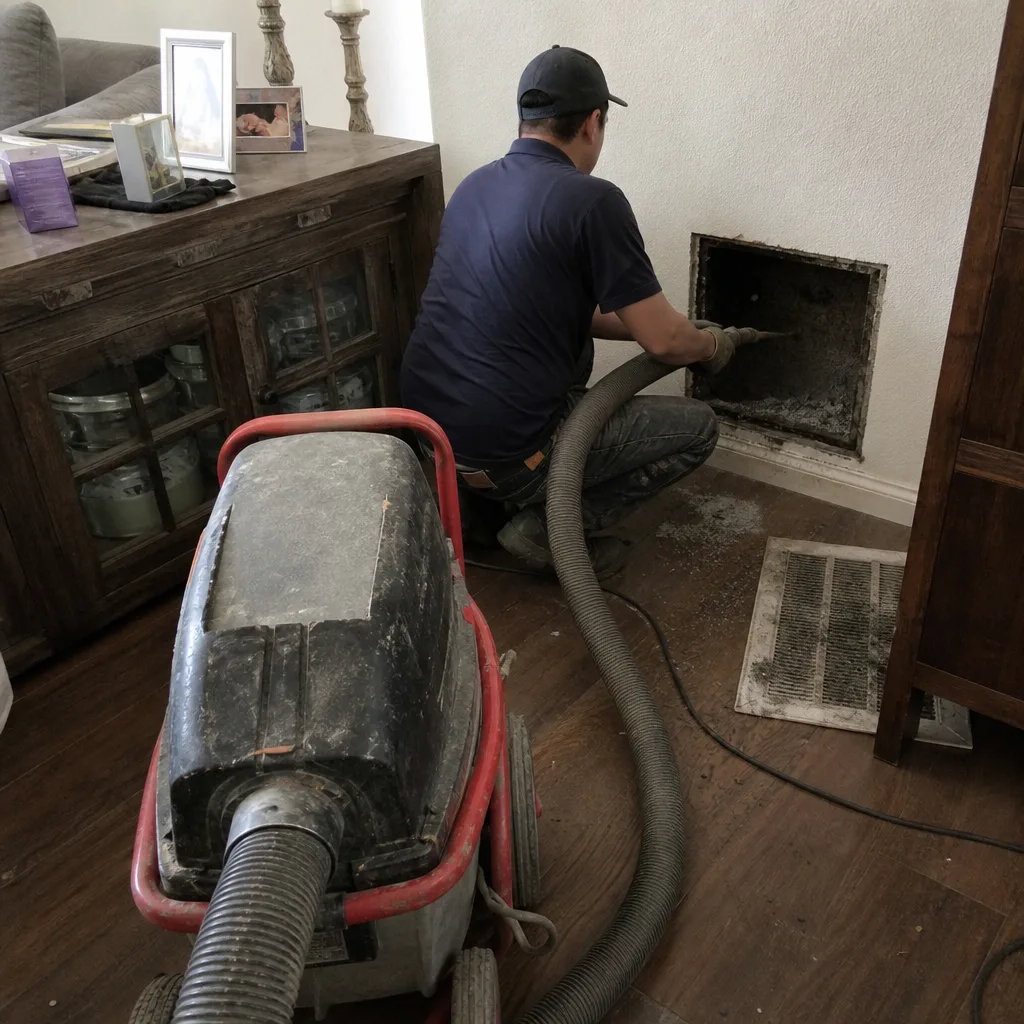 Before
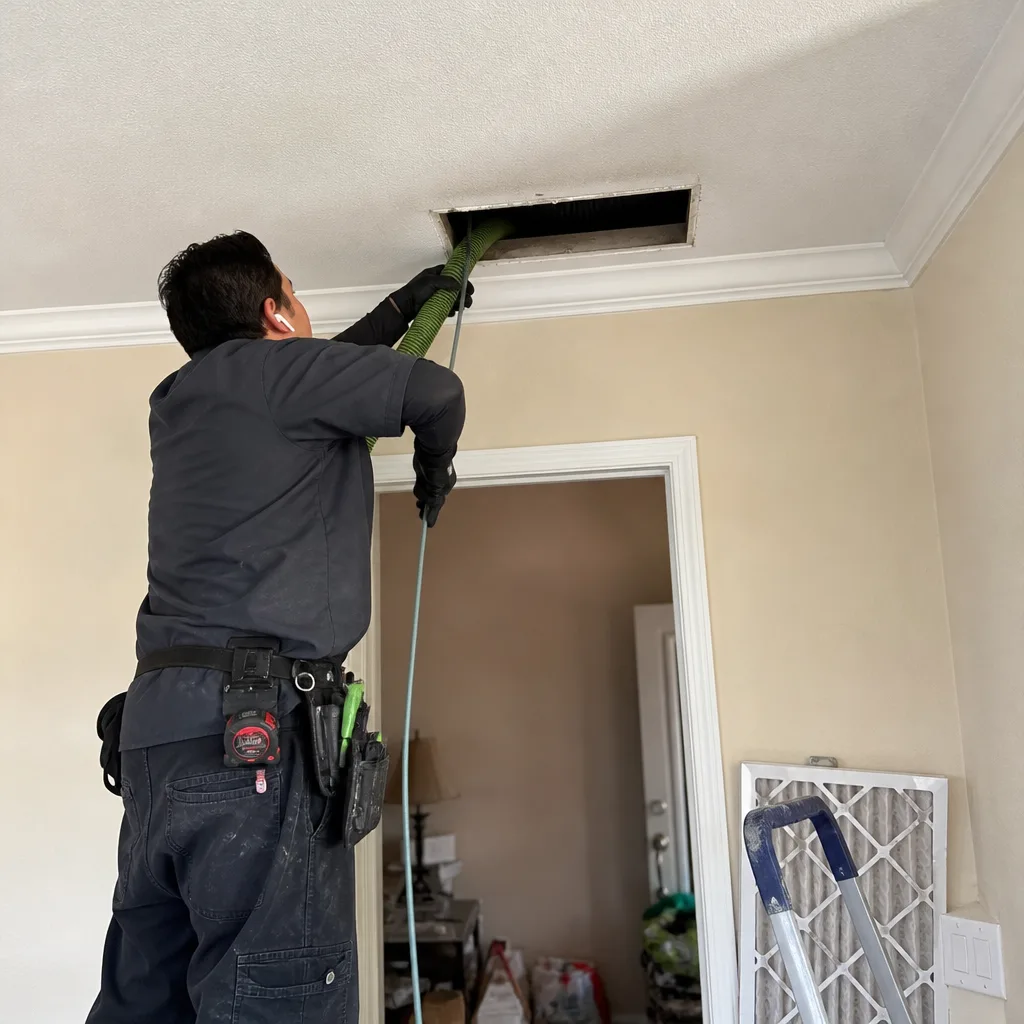 After
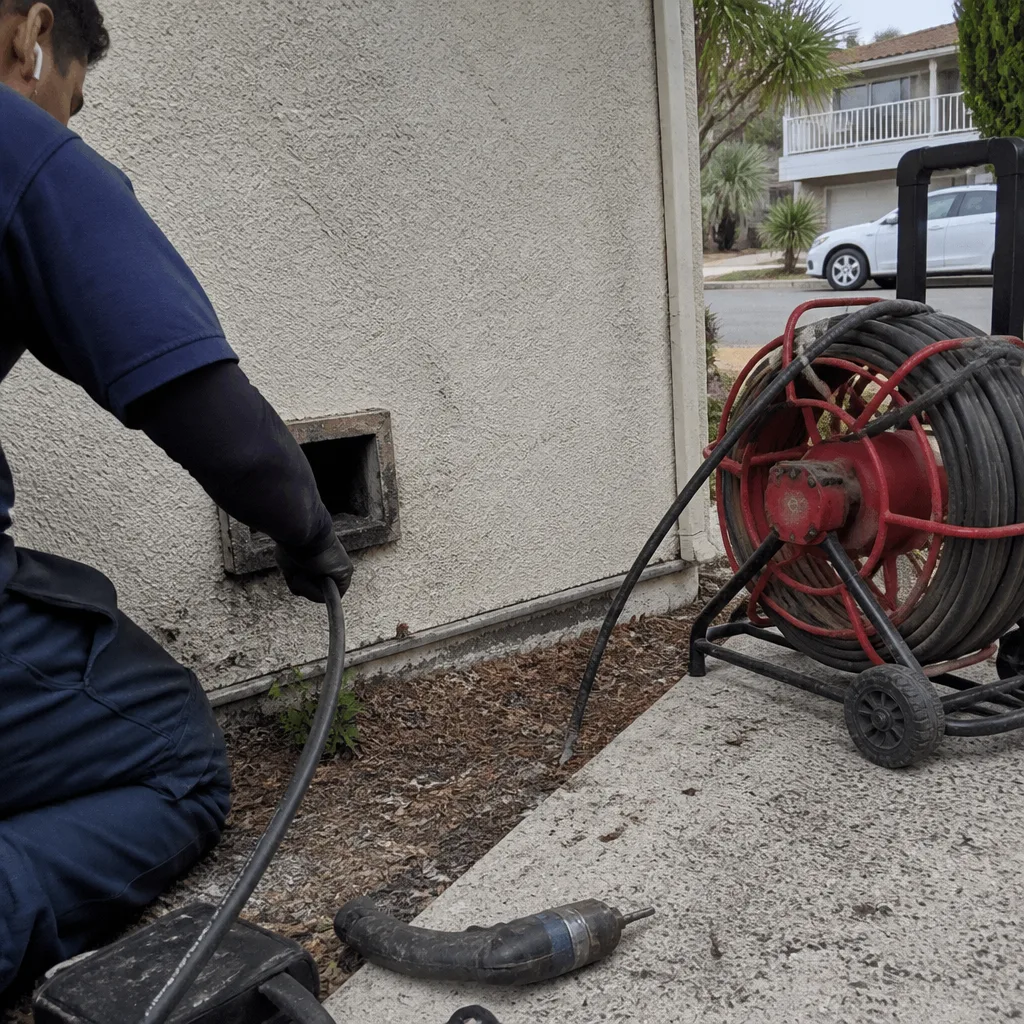 Before
 After
 Before
 After